Home › Blog › Blockchain & Web3
What Is DeFi? Understanding Decentralized Finance at Its Core
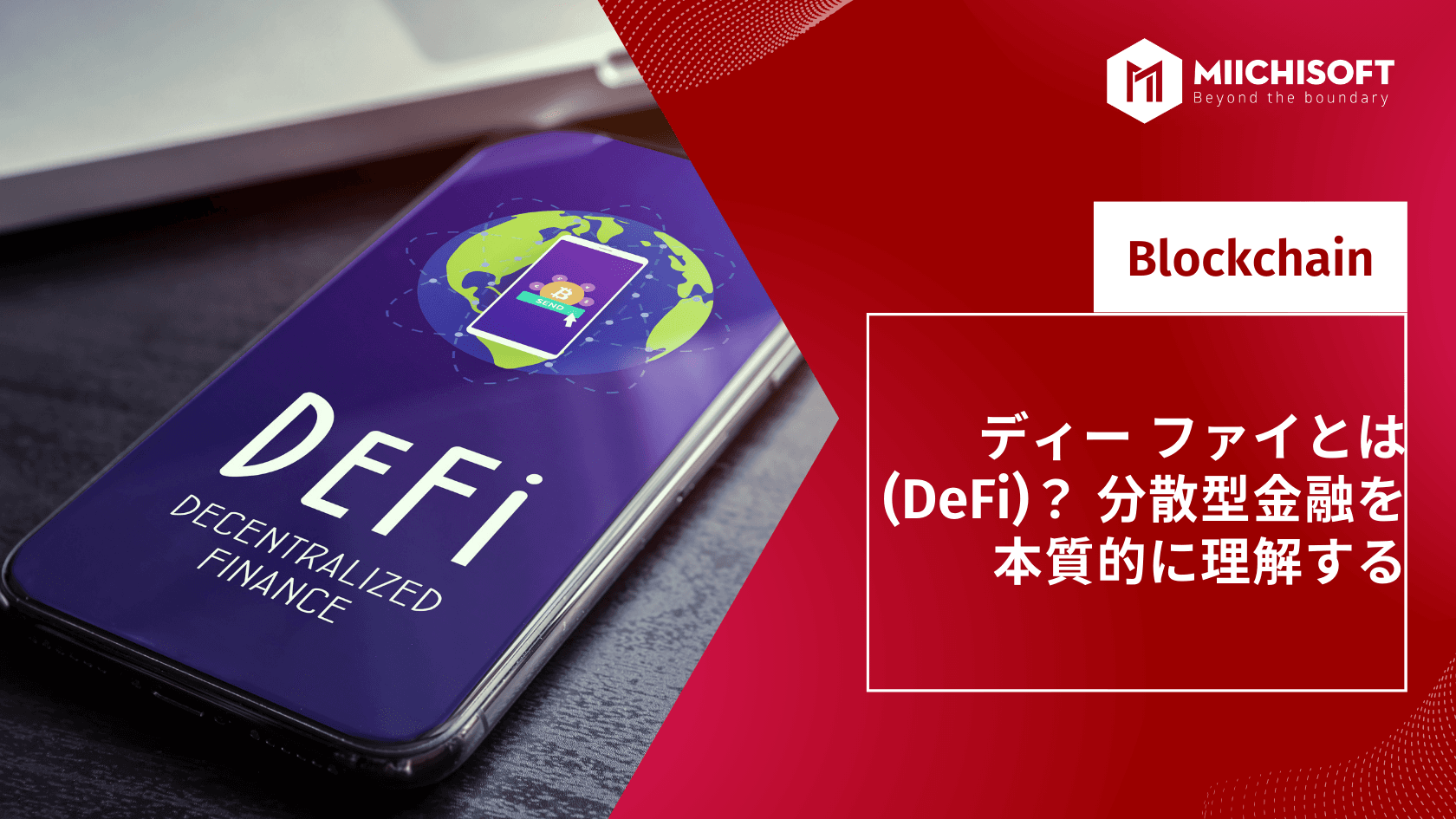
DeFi, or decentralized finance, uses blockchain methods to cut out intermediaries when receiving, using, distributing, and holding money. It's a global, peer-to-peer (directly between two people, without a centralized system) financial ecosystem, anonymous and open to everyone.
1. What exactly is DeFi (decentralized finance)?

DeFi (Decentralized Finance) is based on blockchain technology, letting a copy of each transaction be stored in multiple places at once, with no organization able to control or alter it.
DeFi differs from traditional finance in expanding blockchain use from simple value transfers to far more complex financial use cases. You essentially become your own bank, freely replicating loan, borrowing, insurance, asset-trading, and derivative services just by filling out forms.
2. Difference between DeFi and traditional finance
Picture an ordinary situation in daily life.
For example, imagine going to the same cafe for lunch every day because the food is so good.
You pay with your credit card. But have you thought about the fact that you're not paying the business directly — you're going through an intermediary called a bank?
If the bank is unhappy about something, or finds it suspicious, your payment could be declined or handled in a particular order.
And it could be reviewed against your entire banking history — even though you just went out for lunch.
- Related article: A Thorough Explanation of the Characteristics and Differences Between Web 2.0 and Web 3.0
It isn't just direct purchases that centralized institutions watch. The same is true for:
- Loans
- Insurance
- Crowdfunding
- NFTs
- Fees
- Securities, and so on
With DeFi, this inconvenience disappears. You pay directly from your own wallet to the other party's wallet. Some forward-thinking companies have even started paying salaries in cryptocurrency.
According to MarketsandMarkets, the blockchain technology market is expected to reach nearly $70 billion by 2026.

3. How does it work?
DeFi takes the core premise behind Bitcoin — digital money — and expands on it to create a fully digital solution that can replace stock exchanges. But here, you don't need a giant office spanning several floors of an elite business center. A gadget with internet access is enough.
That's why DeFi enthusiasts talk about nothing more or less than an open, free, and fair financial market that anyone can access.
DeFi uses cryptocurrency and smart contracts to provide financial services while cutting out intermediaries. Users typically interact with DeFi through software called DApps (decentralized applications). Most of these currently run on the Ethereum blockchain.
In DeFi, smart contracts replace the transactions financial institutions would otherwise handle. A smart contract is a type of Ethereum account that can hold, send, and return funds under specific conditions.
This smart contract can't be changed once it's running — it always behaves exactly as programmed. Contracts are published for review and audit. This means a bad contract often quickly becomes the focus of community scrutiny.
Because DeFi is open-source, its protocols and applications are, in theory, available for users to test and innovate on. As a result, by building their own DApps, people can combine and remix protocols, unlocking unique combinations of possibilities.

4. Pros and cons of DeFi
Every innovative technology is designed to make ordinary people's lives easier and improve their quality of life.
From this angle, DeFi is an extremely compelling concept that still holds a lot of potential. At the same time, anything new, in one way or another, comes with drawbacks — both technical flaws and human factors. Let's take a closer look at the pros and cons of DeFi.
The pros of DeFi include the following.
- No need for intermediaries in transactions (a plus for both security and finances)
- The ability to take out a loan without the "baggage" of a credit history
- Interest rates driven by market dynamics
Interestingly, the cons of DeFi are the flip side of its pros.
- Your data stays secure, but if you forget your password, you could lose your assets, since there's no governing body you can call to reset your password after answering a question about your mother's maiden name.
- You can take out a loan without worrying about your credit history catching up with you, but there's no guarantee of consumer-rights protection.
- You can earn substantial money at high interest rates, but high volatility always comes with risk.
5. Types of DeFi
The most popular (but not the only) types of DeFi are as follows.
- Decentralized exchanges (DEX)
- Stablecoins
- Lending platforms
- Prediction markets
5.1. Type of DeFi, #1: Decentralized exchange (DEX)
Broadly speaking, it's similar to a bank's currency exchange counter, except it deals only in cryptocurrency instead of banks, and there's no intermediary.
In real life, when exchanging real money, that high a probability of ending in fraud on one side is possible; but on an online exchange where transactions are stored across multiple mediums, fraud is nearly impossible.
5.2. Type of DeFi, #2: Stablecoins
These are cryptocurrencies whose stability outside the internet is confirmed by the currencies we're already familiar with, such as the yen or the dollar.
Since the stability of cryptocurrencies isn't as strong as that of fiat currencies, measures like this are needed to keep crypto prices stable.
5.3. Type of DeFi, #3: Lending platforms
These are intermediaries in the digital world of decentralized finance. If you can get a loan from a bank, why couldn't you borrow cryptocurrency? Odds are, you'll want to use an intermediary platform that connects you to a solid crypto-finance source.
Similarly, using an intermediary platform lets you serve as a cryptocurrency lender. The interest rate for the service varies with demand. To take out a loan, users need to deposit collateral — often ether, the token that powers Ethereum. This means users don't have to reveal the identity and credit score required for a loan the way they would with a traditional, non-DeFi loan.
5.4. Type of DeFi, #4: Prediction markets
Same idea as a betting shop, again with no intermediary. As you know, betting shops aren't legally allowed to operate in every country in the world.
Here, you can bet on any event — from the next presidential election to this summer's corgi race — without worrying that you won't receive your funds even if you win.

6. What is DeFi in cryptocurrency?
DeFi usually plays a key role in conversations about cryptocurrency (virtual currency), but it isn't just about creating alternative digital currencies or value. Instead, DeFi is working to replace the role of the traditional financial system with smart contracts.
As of 2021/12, Investing.com reported that 9,822 types of cryptocurrency were tradable. For comparison, there were 3,000 in 2019.
DeFi is designed to use cryptocurrency for transactions. That said, since the technology is still evolving, it's hard to pinpoint exactly how existing cryptocurrencies will be implemented. According to Coin Metrics, five different cryptocurrencies each process more than 100,000 transactions daily.
6.1. How is DeFi different from Bitcoin?
Bitcoin is a decentralized digital currency that runs on the blockchain and is mainly used as a store of value, whereas DeFi is a concept representing financial services built on public blockchains like Bitcoin and Ethereum. Users can earn interest on, or borrow against, their crypto assets.
DeFi consists of many applications tied to financial services such as trading, borrowing, lending, and derivatives.
6.2. Ethereum and DeFi
Here, we're discussing Ethereum not as a cryptocurrency, but as the platform on which DeFi applications are built.
Because Ethereum is considered the most manageable base for building DApps, most applications are created on this platform. As a result, you can borrow a token on one site and exchange it for interest tokens in a completely different market through an entirely separate application. This process is similar to withdrawing cash from a "foreign bank" when your own bank isn't nearby.
DeFi on Ethereum isn't just a blockchain — it's also assets, protocols (smart contracts), and finally, the full-fledged product applications that power those protocols.
7. How can you make use of DeFi?
Along with the complete freedom of peer-to-peer trading mentioned earlier, lending to others and earning interest can also create ideal conditions for passive income. You can also trade tokenized versions of investments such as stocks, funds, and NFTs.
DeFi can also be viewed as a long-term benefit. You can deposit part of your cryptocurrency into a separate savings account and earn a higher interest rate than a regular bank.
8. Why does DeFi matter?
That said, don't forget that investing in DeFi is a high-risk endeavor at this point.
In 2021, roughly $2.2 billion was stolen from DeFi protocols altogether. On top of that, many scammers mimicked the "security" of sites that reckless crypto investors trusted with their money, using plausible pretexts to steal it. So if your financial advisor doesn't fully understand this space, we'd recommend investing in something more stable.
Decentralized finance is still in the early stages of development. First, since it isn't regulated, the ecosystem is still full of infrastructure failures, hacks, and fraud. Other issues include system stability, energy requirements, carbon emissions, system upgrades and maintenance, and hardware failures.
That said, if you ride the wave at the forefront of business, understand every trend, and actually apply them well, you can reap significant profits — and with a bit of luck, even earn global recognition.
Now that the DApps market isn't yet saturated with offerings, the time has come to start developing applications for DeFi. If you have a development need, please feel free to reach out to Miichisoft.
Source: The App Solutions (What is DeFi? The basics of decentralized finance)
9. DeFi FAQ
Q1: What is decentralized finance (DeFi)
Decentralized finance (DeFi) provides accessible finance as an alternative to the traditional, centralized financial system. Built on blockchain networks, DeFi enables various open-source, decentralized platforms and applications that let participants communicate and execute digital asset transactions.
Q2: What problem does DeFi solve
DeFi aims to fix the structural problems of centralized institutions by introducing a decentralized network where individuals can freely develop, collaborate, and trade. DeFi users can manage their funds in their own crypto wallets without depending on banks or brokers, using financial services with greater efficiency and transparency.
Q3: What is Total Value Locked (TVL)
TVL (Total Value Locked) refers to the amount of digital assets stored in DeFi protocols, similar to a financial institution's assets under management (AUM). Because DeFi's development stack is layered so heavily, downstream applications rely on the underlying infrastructure to operate. This dependency strengthens and grows TVL, and encourages the development of various complementary protocols, each offering different advantages.
Q4: How does DeFi lending and borrowing work?
Individuals become liquidity providers by depositing funds into DeFi lending and borrowing platforms. Users can then borrow funds and pay interest to the liquidity providers. Compared with traditional markets, DeFi optimizes borrowing and lending by cutting out intermediaries (usually banks or corporations) that impose high barriers to entry, such as proof of income, bank statements, and credit history.
Related Articles

What Is a Decentralized Autonomous Organization (DAO)? Features, How It Works, and Examples
What Is an NFT? A Thorough Explanation of Examples, Characteristics, and Future Potential of Non-Fungible Tokens
What Is an ERC-20 Token? Pros, Cons, and How to Create One
A Deep Dive into Promising DeFi Services and the Development Flow
What Are DApps? Understanding Decentralized Applications at Their Core