Home › Blog › Blockchain & Web3
What Are DApps? Understanding Decentralized Applications at Their Core
The past 10 years of internet technology have been defined by the complete dominance of Web 2.0, which means centralization.
This means every application you deal with is owned and operated by a single person or group of stakeholders who decide what the app should look like and where it should go. This course is often set by business law, contrary to the wishes of users, who have no recourse beyond declaring a boycott.
However, the alternative to an impressive app is often the same app with nearly identical rules and terms. So how do we break out of this vicious cycle? Decentralized applications could be one such solution.

What Is a Centralized Application?
To understand how decentralized applications (DApps for short) work, let's first look at their predecessor.
A centralized application is managed and owned by a single company and runs on a single server or server cluster. The principle of operation is simple: once someone downloads a copy of the application, it works by sending and receiving information from this server.
In other words, if you're not connected to this server, the application won't work. If the centralized server fails, the app stops working on the user's device until the issue is resolved.
Examples of centralized applications include Facebook, WhatsApp, Netflix, and Steam.
Reference: A Thorough Explanation of the Difference Between Web 2.0 and Web 3.0
Centralized apps have several clear advantages over DApps. Developers have complete control over the application and how it's used. Centralized applications can typically handle a large volume of traffic.
Additionally, updates to centralized applications are much easier, since they're automatically pushed to users' devices.
All of this comes with a downside. If a system error occurs, no one can use the application until the issue is resolved, which can inconvenience customers. It can also result in higher cybersecurity costs, since the central server has to be protected.

What Are Decentralized Applications (DApps)?
Now let's get straight to the "main character" of this article.
Decentralized applications, simply called DApps, are digital applications that run on a blockchain or a P2P network (such as BitTorrent, where participants download and distribute content simultaneously).
As you can see, these applications have existed long before the Web 3.0 era. But they were only isolated cases until now.
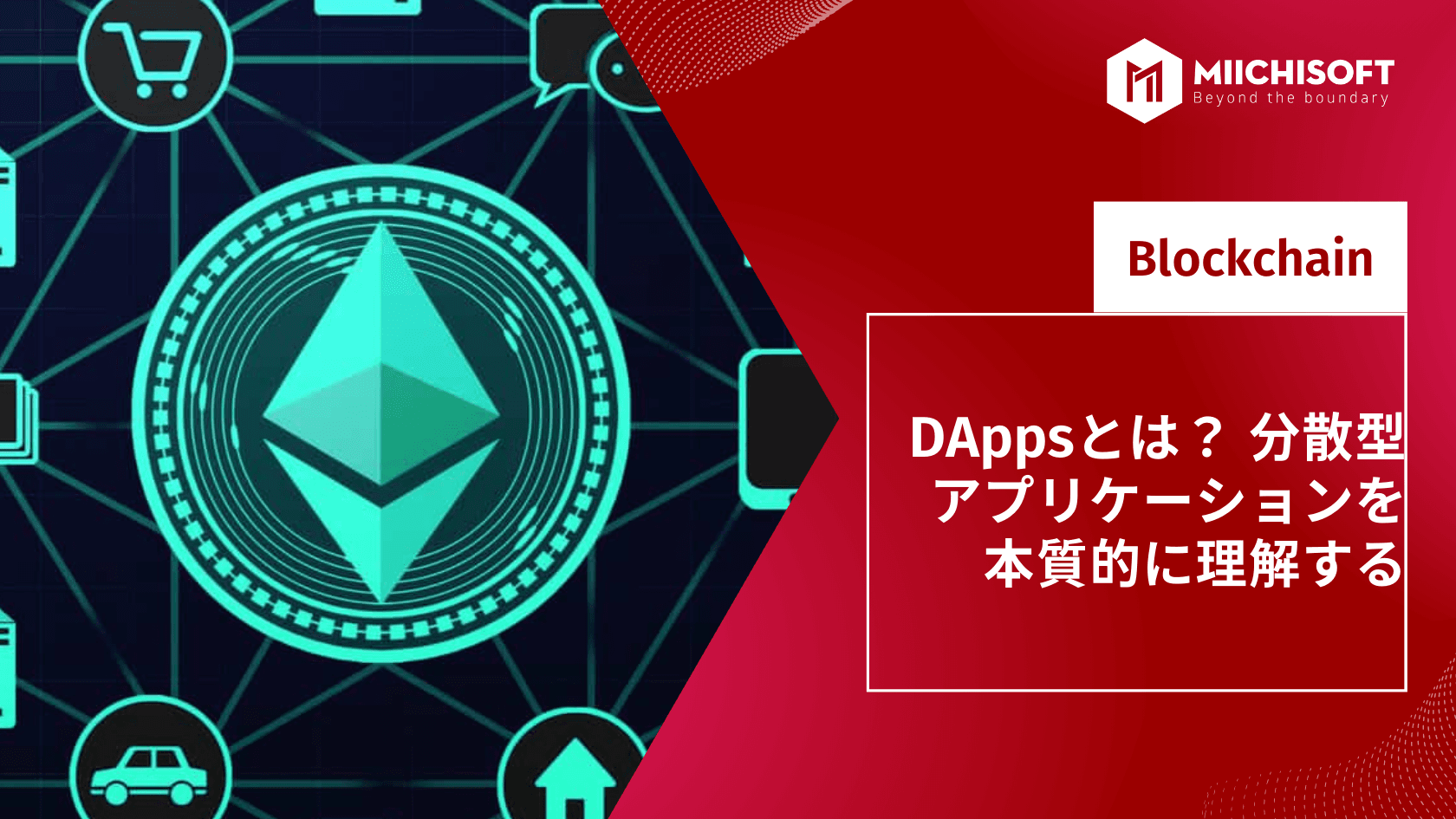
Instead of downloading an application, users pay the developer a certain amount in cryptocurrency and download the smart contract or source code. This means there's no single center for the "distribution" of data. DApps are most often created on the Ethereum platform.
Reference: What Is Web 3.0? The Next-Generation Network Based on Blockchain
Ethereum is a flexible platform for creating new DApps, giving developers the infrastructure they need to innovate on digital applications.
This makes it possible to quickly deploy a DApp in any industry you choose. Today that includes decentralized finance (DeFi) and banking, e-commerce, gaming, social networks — essentially every field that most often relies on centralized application services.
Where DApps Are Used and Examples
Speaking of practical uses for DApps, these include the following.
・DeFi (the 2021 crypto market was worth roughly $40 billion)
・Digital collectibles (NFT marketplaces)
・Gaming/gambling
・Communication
・Marketplaces
・Healthcare (blockchain as a logistics tool for pharmaceuticals)

Decentralized applications need to generate digital assets that serve as proof of value.
One example of a social network built as a DApp is Peepeth, whose communication principles are similar to Twitter's. The difference with Peepeth is that you can't delete a post if you change your mind. On the other hand, no one can delete it at someone else's request either.
For a gaming example, CryptoKitties comes to mind right away — a fun app that lets users buy and sell virtual, amusing cats.
DApps | What Is Cryptocurrency?
Here, DApps work on the same principles as in other fields. They're open source and free from any authority's interference.
Internally, DApps interact with their respective blockchain networks through wallets that bridge the blockchain ecosystem.
A wallet manages your address on the Ethereum blockchain and the cryptographic keys needed to identify and authenticate you. Instead of using the HTTP protocol to communicate with the blockchain, a DApp wallet runs smart contracts that interact with the blockchain to execute transactions.
Once a smart contract is deployed to a decentralized network, it can't be changed. DApps can be decentralized because they're controlled by smart contract logic rather than by an individual or company. This also means smart contracts must be carefully designed and thoroughly tested.

Pros and Cons of Decentralized Apps (DApps)
Decentralized apps undoubtedly offer benefits, depending on what your application needs.
First, since there's no single server, users don't lose access to the application even if a server goes down. Next, because there's no centralized storage, user data isn't put at risk even in the event of a data breach or hacking attempt.
Decentralized systems based on blockchain and other distributed ledger technologies avoid the single point of failure inherent in systems based on centralized servers. Blockchain also has robust consensus mechanisms that resist malicious attacks.

That said, DApps come with a few drawbacks.
Since cryptocurrency and blockchain still aren't mainstream technologies, the target user base is smaller. In addition, DApp transactions are often slower and more costly than centralized alternatives, so attracting users to a dApp in a short period of time can be difficult.
Finally, since there's no centralized deployment, fixing bugs or updating software on users' devices is far more difficult.
Because every DApp is inherently open source, developers can build on each other's work, combining and recombining various elements from different projects to create new types of applications and services.
This fosters innovation and allows the space to grow and evolve in exciting and often unexpected ways.
How Can a DApp Be Developed?
The easiest way to do this is to use the Ethereum protocol. This platform was created to bring innovative solutions based on it to life, so it adapts extremely well to developers' ideas.
Next, let's walk through some general recommendations on how to build a decentralized app.
・Create a smart contract (the foundation of every DApp)
・Take the front end seriously (even if users are familiar with blockchain technology, you need to invest in UI/UX to attract new users and retain existing ones)
・The back end needs to be centralized (that's right — if your application adds features beyond regular transactions, you'll need to return to a DApp's direct competitors)
・Testing (as mentioned, since code changes are nearly impossible once in production, testing such applications needs to be far more careful than with standard applications)
・Deployment and support (don't forget to upload the DApp to the usual App Store and Google Play, and update the user interface from time to time)
As you can see, alongside building the DApp itself, you also need to consider the external user interface that attracts users through ease of use, so this isn't something you can do without experts. At the same time, you'll be building an equivalent analytics and server system ecosystem.
Miichisoft is committed to working with clients to achieve long-term results, helping you choose the best solution for your needs.

Key Takeaways on DApps
So, what is a DApp? Decentralized applications have emerged with over 70 million users worldwide, but even more users are downloading centralized applications.
Still, as with any innovation, not everyone is ready to embrace DApps with open arms.
The real contest between DApps and centralized applications — and Web 2.0 technology as a whole — will unfold as the technology develops and new opportunities keep opening up.
Source: The App Solutions (What is a DApp? Understanding decentralized applications)
Related Articles
What Is a Decentralized Autonomous Organization (DAO)? Features, How It Works, and Examples
What Is an NFT? A Thorough Explanation of Examples, Characteristics, and Future Potential of Non-Fungible Tokens
What Is an ERC-20 Token? Pros, Cons, and How to Create One
A Deep Dive into Promising DeFi Services and the Development Flow
What Is DeFi? Understanding Decentralized Finance at Its Core