Home › Blog › Blockchain & Web3
What Is a Decentralized Autonomous Organization (DAO)? Features, How It Works, and Examples
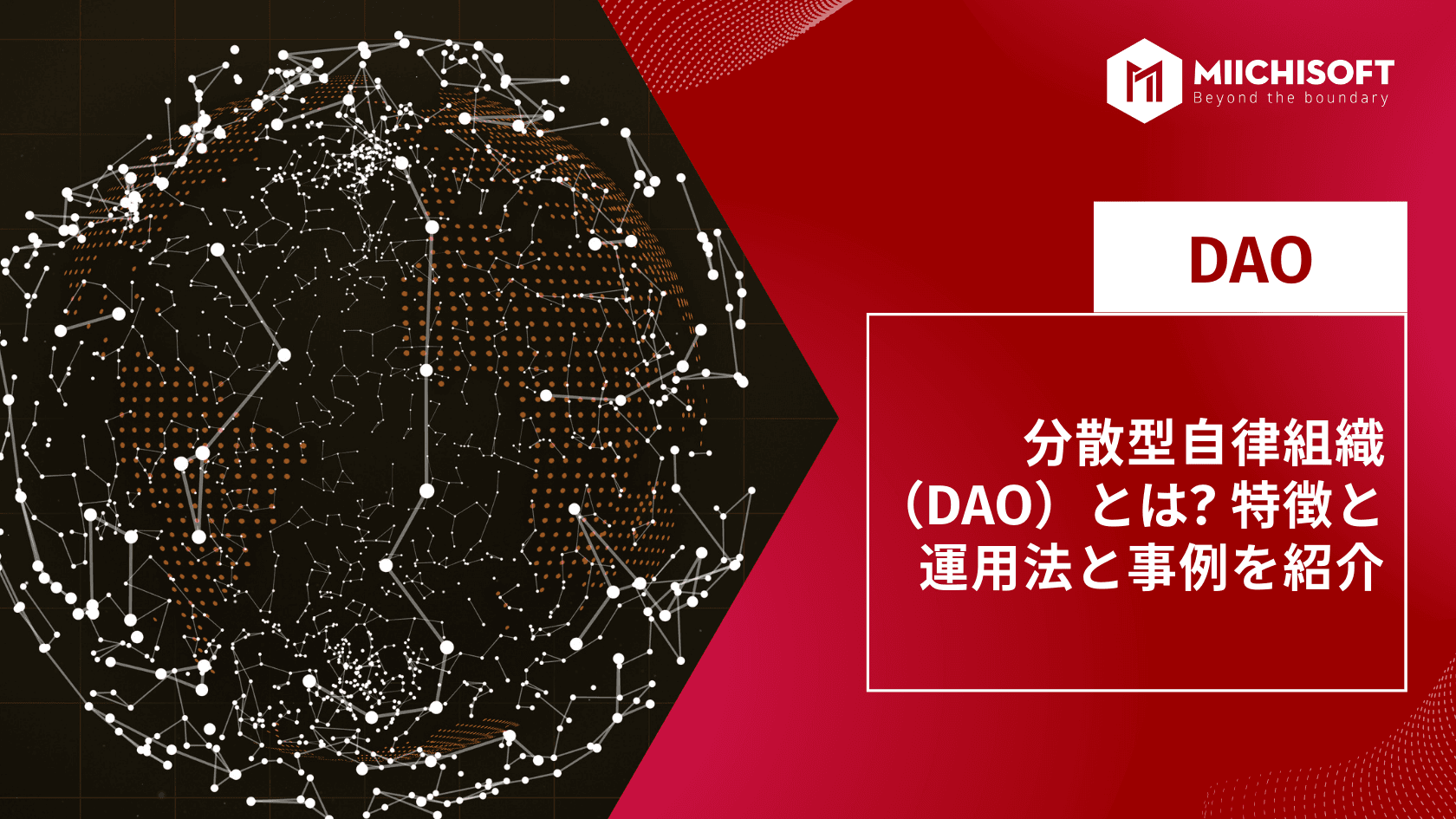
What exactly is a decentralized autonomous organization (DAO)? We'll explain its features, pros and cons, how it works, and real-world examples in plain language.
1. What Is a Decentralized Autonomous Organization (DAO)?
A decentralized autonomous organization (DAO) is an entity with no central leadership. Decision-making happens from the bottom up, governed by a community organized around a specific rule set applied through blockchain technology.
A DAO is an internet-native organization collectively owned and managed by its members. It has a built-in treasury that can only be accessed with the approval of its members. Decisions are made through proposals that the group votes on during a designated period.
DAOs operate without hierarchical management and can serve many purposes: freelancer networks pooling funds for software subscriptions, charities where members approve donations, group-owned venture capital firms, and more.
Before going further, it's important to distinguish DAO as an internet-native organization from "The DAO," one of the first of its kind. Launched in 2016, The DAO ultimately failed and led to a dramatic split in the Ethereum network.
2. (How It Works) How Does a DAO Function?
As mentioned above, a DAO makes decisions from the bottom up, and a collective of members owns the organization. There are various ways to join, but it's usually through token ownership.
DAOs operate using smart contracts. A smart contract is essentially a chunk of code that automatically executes when a set of criteria is met. Smart contracts are deployed on numerous blockchains today, but they were first used on Ethereum.
These smart contracts set the DAO's rules. Anyone who funds the DAO gains voting rights and can influence how it's run by deciding on or creating governance proposals.
Reference: Market Demand, Features, and Development Process of Smart Contracts Explained
This prevents the DAO from being spammed with proposals — a proposal only passes if a majority of stakeholders approve it, and how that majority is determined varies by DAO and is set in the smart contract.
A decentralized autonomous organization (DAO) is fully autonomous and transparent. Built on an open-source blockchain, its code is visible to anyone, and since the blockchain records every transaction, anyone can audit its treasury.

2.1. Launching a DAO Usually Involves 3 Main Steps
① Creating the smart contract: A developer or team first creates the smart contract behind the DAO. After launch, only the governance system can change its rules, so the contract must be tested extensively to avoid overlooking important details.
② Funding: Once the smart contract is created, the DAO needs to decide how it will receive funding and establish governance. Tokens are often sold to raise funds. These tokens grant holders voting rights.
③ Deployment: Once everything is set, the DAO is deployed on the blockchain. From here, stakeholders determine its future, and the creators who wrote the smart contract no longer hold more influence than any other stakeholder.

3. Why Do We Need DAOs in Web3.0?
Because a decentralized autonomous organization (DAO) is an internet-native organization, it offers several advantages over traditional organizations. One key benefit of DAOs is that there's no need for trust between two parties.
Traditional organizations require a great deal of trust in the people behind them, especially on investors' behalf, but with a DAO only the code needs to be trusted.
Because the code is public and tested extensively before launch, it's easier to trust. Every action a DAO takes after launch must be approved by the community and is fully transparent and verifiable.
These organizations have no hierarchy, yet while controlled by stakeholders through native tokens, they can still accomplish tasks and grow. This means any stakeholder can propose an innovative idea for the whole group to consider and improve.
Internal disputes are often resolved easily through a voting system, following rules pre-established in the smart contract. By pooling investors' funds, DAOs let them invest in early-stage startups and decentralized projects, sharing risk and reward.
Reference: What Is Web 3.0? The Next-Generation Network Based on Blockchain
Reference: The Features and Differences Between Web 1.0, Web 2.0, and Web 3.0 Explained
3.1. The Principal-Agent Dilemma
A key benefit of DAOs is that they solve the principal-agent dilemma — a conflict of priorities between an individual or group (the principal) and the people who act on their behalf (the agent).
Problems can arise, and a common one lies in the relationship between stakeholders and a CEO: an agent (the CEO) may act in ways that don't align with the principal's (the stakeholders') priorities and goals, instead pursuing self-interest.
Another typical example is an agent taking on excessive risk that the principal ends up bearing — say, a trader pursuing performance bonuses through extreme leverage, knowing the organization will cover any downside.
DAOs solve this dilemma through community governance. Stakeholders are never forced to join — they join only after understanding the rules that govern it, and instead of trusting an agent, they work as part of a group with aligned incentives.
Token holders' interests are aligned, since the nature of the DAO motivates them not to act in bad faith. Because they're invested in the network, they want it to succeed. Acting against it would go against their own self-interest.
4. The Origin of the DAO (Decentralized Autonomous Organization) and What Sparked It
"The DAO" was an early iteration of the modern decentralized autonomous organization. Launched in 2016, it was designed to function as an automated organization operating in the form of a venture capital fund.
Anyone holding DAO tokens could profit from the organization's investments through dividends or a rise in the token's price. Seen as an innovative project, The DAO raised $150 million worth of ether (ETH), one of the largest crowdfunding efforts at the time.
The DAO launched on April 30, 2016, after Ethereum protocol engineer Christoph Jentzsch released open-source code for an Ethereum-based investment organization, and investors bought DAO tokens by moving ether into the contract.
Days after the token sale, developers raised concerns that a bug in The DAO's smart contract could let an attacker drain its funds. A fix was proposed, but an attacker exploited the bug first, draining $60 million worth of ETH from The DAO's wallet.
At the time, about 14% of circulating ETH was invested in The DAO. The hack dealt a major blow to DAOs generally and to the year-old Ethereum network. As the community debated what to do, co-founder Vitalik Buterin first proposed a soft fork to blacklist the attacker's address and freeze the funds.
The attacker, or someone posing as them, responded by claiming to have obtained the funds "legitimately" under the smart contract's rules, and threatened legal action against anyone trying to seize them.
The hacker even threatened to bribe ETH miners with part of the stolen funds to block the soft fork. After further debate, a hard fork was chosen as the solution.
This hard fork rolled back Ethereum's history to before the hack, reallocating the stolen funds to a contract so investors could withdraw them. Those opposed rejected the hard fork and kept supporting the earlier chain, known as Ethereum Classic (ETC).
5. Drawbacks of Decentralized Autonomous Organizations (DAOs)
A decentralized autonomous organization isn't perfect. It's a very new technology that has drawn plenty of criticism, given lingering concerns over legality, security, and structure.
For example, MIT Technology Review has said it believes trusting the general public with major financial decisions is a bad idea — a view it shared back in 2016 and, at least publicly, hasn't changed since.
Flaws in smart contracts can be difficult to fix even after they're discovered, which is why DAO hacks have also raised security concerns.
Although a DAO can be distributed across multiple jurisdictions, it has no legal framework, so any legal issues that arise may force those involved into complex legal battles across numerous local laws.
For example, in July 2017 the U.S. Securities and Exchange Commission ruled that The DAO had sold unauthorized securities in the form of tokens on the Ethereum blockchain, violating parts of U.S. securities law.
6. Examples of DAOs
DAOs have gained momentum in recent years and are now fully embedded in many blockchain projects. In the decentralized finance (DeFi) space, for instance, DAOs can fully decentralize applications.
Reference: Promising DeFi Services and Development Process Explained
For some, the Bitcoin (BTC) network is the earliest example of a DAO. Most participants have never met each other, yet the network scales through community consensus, with no organized governance mechanism — instead relying on miners and nodes to signal support.
By today's standards, though, Bitcoin isn't considered a DAO. Since it has a governance mechanism letting stakeholders vote on how its treasury is used, Dash would be the first true DAO by current measures.
Other more advanced DAOs, including decentralized networks on the Ethereum blockchain, launch stablecoins backed by cryptocurrency. In some cases, the organizations that first launched these DAOs gradually let go of control until they have no connection to the project at all.
Token holders can actively vote on governance proposals to hire new contributors, add new tokens as collateral for a coin, or adjust other parameters.
In 2020, a DeFi lending protocol launched its own governance token and distributed it through liquidity mining — essentially, anyone using the protocol earned tokens as a reward. Other projects have since copied and adapted this model.
Today, the list of DAOs is vast, and over time it has become a well-defined concept attracting growing attention. Some projects are pursuing full decentralization through the DAO model, but it's worth noting that only a few years have passed and they haven't yet reached their ultimate goals.
As internet-native organizations, DAOs could completely transform corporate governance. As the concept matures and its legal gray areas become clearer, more organizations may adopt the DAO model to manage part of their operations.
7. Frequently Asked Questions About DAOs
Q1. Can anyone create a DAO?
As long as you have internet access, anyone can create a DAO on a blockchain. However, creating a DAO doesn't guarantee that many people will join it or that it will be able to raise funds.
Q2. What is the purpose of a DAO?
DAOs aim to improve on the traditional management structures used by many companies.Rather than relying on one individual or a small group of individuals to guide an entity's direction, a DAO is intended to give every member the chance to voice their opinion, vote, and propose initiatives. DAOs also strive for strict governance dictated by code on blockchain technology.
Q3. How does a DAO make money?
A DAO first raises funds by exchanging fiat currency for a native token. This native token represents each member's voting power and ownership share. As a DAO succeeds, the value of its native token increases.The DAO can then issue future tokens at a higher value to raise more capital. If members decide to approve such a move, a DAO can also invest in assets — for example, a DAO could acquire a company, an NFT, or another token. As the value of these assets rises, so does the value of the DAO.
Source: Cointelegraph ("What is a decentralized autonomous organization, and how does a DAO work?")
Related Articles
What Is an NFT? A Thorough Explanation of Examples, Characteristics, and Future Potential of Non-Fungible Tokens
What Is an ERC-20 Token? Pros, Cons, and How to Create One
A Deep Dive into Promising DeFi Services and the Development Flow
What Is DeFi? Understanding Decentralized Finance at Its Core
What Are DApps? Understanding Decentralized Applications at Their Core