Home › Blog › Blockchain & Web3
What Is an NFT? A Thorough Explanation of Examples, Characteristics, and Future Potential of Non-Fungible Tokens
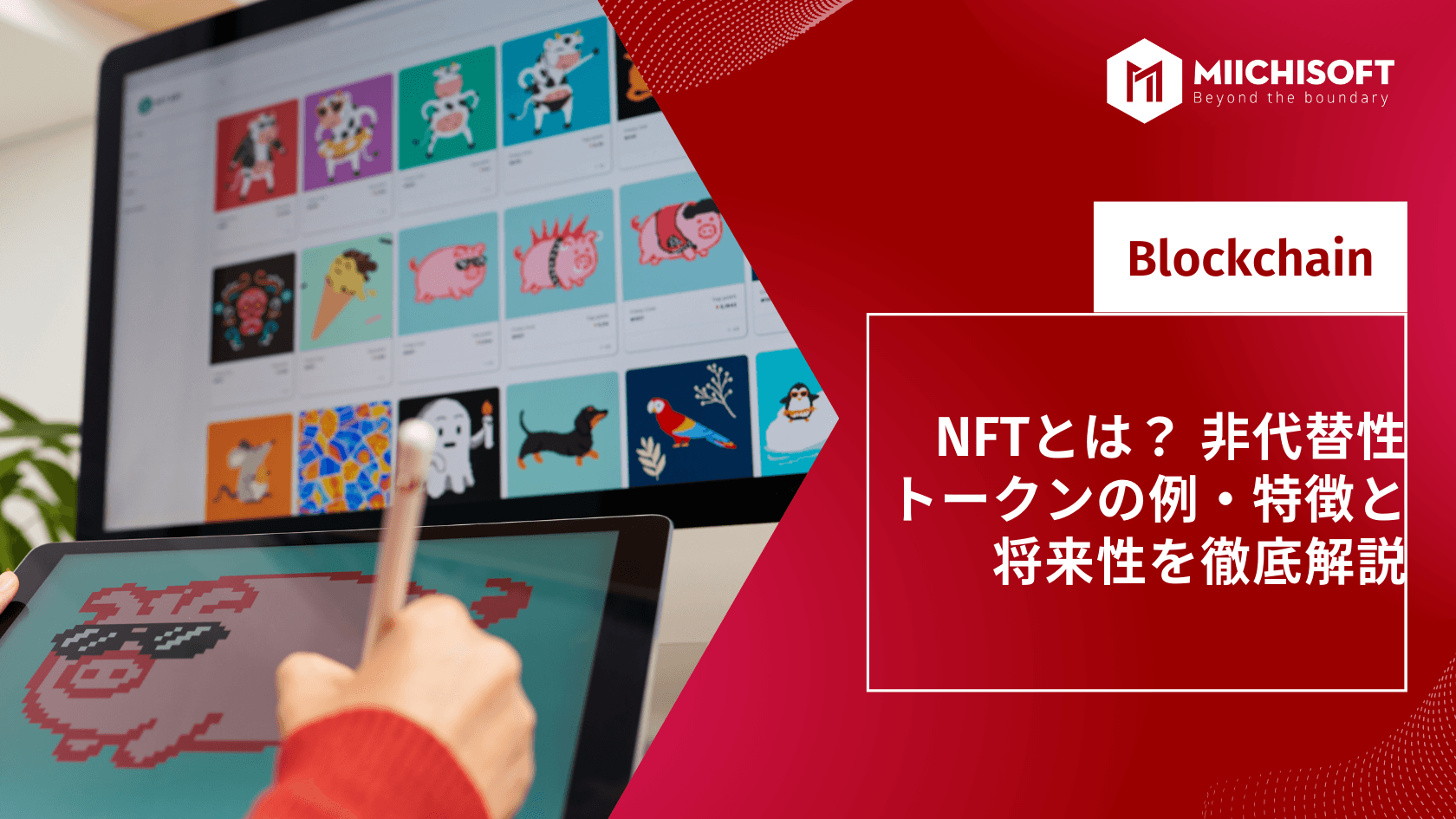
The world of Web 3.0 technology has many "blank spots," and it's not easy to explain to a newcomer determined to reach this new frontier. In fact, the detection mechanisms behind blockchain, crypto markets, and tokens are hard to explain in a single sentence. This is the big picture of the next generation of interaction on the internet.
Few technologies have been as well received in the Web 3.0 galaxy. Five years after the emergence of Bitcoin, the issuance and sale of NFTs began. The first NFT was created by Kevin McCoy in May 2014 and sold for just $4. Later, McCoy minted Quantum and earned $1.4 million.
Reference: What Is Web 3.0? The Next-Generation Network Built on Blockchain
In this article, we'll explain the definition, characteristics, pros and cons of NFTs, as well as how they differ from cryptocurrency and examples of NFTs.

What Is an NFT (Non-Fungible Token)?
NFT stands for "Non-Fungible Token." Now that we've decoded the acronym, it's not much clearer, is it?
When a token is non-fungible, it is not equivalent to any other (for example, if every Bitcoin is identical, any token can be exchanged for any other token). It's hard to argue that a da Vinci painting could be exchanged for a Van Gogh painting. Both artworks have high value, but they are different. The same is true for images in the art world.
That's why many people think of NFTs as just another kind of collectible (like stamps, coins, or beer coasters).
But in reality, it's more fun than that. If you buy a Thomas Cole painting as a personal collection, the closest thing other, less fortunate art lovers get is viewing a reproduction or photo online, which is nowhere near the original. But with an NFT, you can freely obtain ownership at any time of that part of the state belonging to a GIF or video that someone paid millions of dollars for.
Why would you want a virtual sneaker that's 100 times more expensive than buying the real thing at a shoe store? What does all this mean?
What Is a Real NFT?
First, NFTs are speculative, just like any other trend. That said, the goal can be nobler. For example, suppose you want to support your favorite artist (if you know something about digital art). Well, for all of that, you need legal rights.
This gives artists a chance for self-expression, without the "struggle" of exhibiting, distributing, and selling digital artwork through art galleries or auction houses. In addition, artists can program royalties to receive a percentage of each sale of the artwork. This doesn't work with tangible assets, so it's a great incentive for creators.
With physical artwork, you can only profit once. NFT creators can also add NFT details during a transaction, such as the creator's ID and a secure file link.
In 2021, the NFT market was valued at $41 billion, approaching the total value of the entire global art market. According to CNBC, the market grew 704% from the second to the third quarter of 2021 (and grew 21,000% from 2020 to 2021).

At the same time, in May 2022, The Wall Street Journal reported that "the NFT market is collapsing." Daily sales of NFT tokens fell 92% compared to September 2021, and the number of active wallets in the NFT market fell 88% compared to November 2021 (2021/11). Rising interest rates affected risky bets across financial markets as a whole, but NFTs were the most speculative. This is the conclusion reached by the respected newspaper.
According to DappRadar data, NFT trading volume on OpenSea (the largest NFT marketplace) reached $300 million per day, with more than 9.5 million transactions taking place so far in 2021.
These figures are significant, but the hype has already cooled. The average daily trading volume in December (2021/12) fell to $71 million, while the number of active users and transactions declined only slightly.

Next, non-fungible tokens (NFTs) are unique digital assets built on blockchain technology. Each NFT is a registered token stored on a network and connected to the Ethereum platform. Note that the specific token standards differ.
The Ethereum network was the first network to support NFTs with the ERC-721 standard, and it remains the most widely used today. Many other standards, such as ERC-1155, have also added or expanded NFT support.
NFTs are digital assets representing real-world objects such as art, music, in-game items, and videos. They are bought and sold on the internet, and the exact mechanism usually encodes them similarly to many cryptocurrencies.
Like cryptocurrency, NFTs are issued on the blockchain, distinguished from one another by a unique identifier code and metadata. In addition, each NFT has a digital signature that lets the owner verify ownership and authenticity. Non-fungible tokens are created when the blockchain combines a record containing a cryptographic hash (a set of characters identifying a piece of data) with a previous record, creating a chain of identifiable data blocks.

NFTs can represent real-world items such as art and real estate. Tokenizing these real, tangible assets makes buying, selling, and trading more efficient while reducing the potential for fraud.
Technically, anything digital can be sold as an NFT. The Nyan Cat GIF ($590,000) and the Doge meme ($4 million), a clip from a Limp Bizkit video, a screenshot of a tweet, animated stickers, digitized Pokémon cards, and more.
NFTs can eliminate intermediaries, simplify transactions, and create new markets. However, this digital analog art has its drawbacks. Over time, some of the formats a given NFT was created in become outdated and lose relevance. Moving to a different structure means the original token is "lost." Today, digital art creators convert JPG, PNG, and MP4 files into NFTs for sale.
It's also worth noting that an NFT's creator can, at their own discretion, create their own sample and release multiple copies of the same collection. Furthermore, one NFT can be combined with another to "generate" a third, unique non-fungible token.
How Is an NFT Different from Cryptocurrency?
Five years after the emergence of Bitcoin, the issuance and sale of NFTs began. Kevin McCoy created the first NFT in May 2014. McCoy minted Quantum, which sold for $1.4 million at a Sotheby's auction in November 2021 (2021/11).
As mentioned, Bitcoin (and other cryptocurrencies such as Dogecoin, Ethereum, and Litecoin) is a completely fungible asset. Every "coin" has the same value and is as alike as twins.
NFTs, however, are always unique, with nothing equivalent to them. The underlying technical principle of creation is the same, but that's where the similarity ends. Because each has a digital signature, NFTs cannot be exchanged one for another. NFTs are typically stored on the Ethereum blockchain, but other blockchains are also supported.
Pros and Cons of NFTs
Feature | Description |
Uniqueness | Just as there are no two originals of the Mona Lisa, there are no twin NFTs. |
Ownership | If needed, metadata serves as a digital document of ownership, making copyright easy to verify, so creators can receive a fixed percentage from every new sale of the asset. |
Simplicity | An NFT can even be based on something as simple as a tweet, showing how easy and time-saving creation can be. |
Marketing | NFTs can be used as a way to boost brand awareness and consumer engagement. |
Investment | If you happen to be one of the few people well versed in both Web3 technology and digital art, you can make a lot of money from this. |
Pros of NFTs
Feature | Description |
Awareness | Physical assets like paintings and photographs remain dominant among collectors due to their long history and proven investment potential. |
Volatility | Investing in NFTs can be highly profitable, but the risk of loss is also very high. |
Legal | NFT copyright is easy to verify, but the legal side of the issue is virtually unregulated, and the process is chaotic and inconsistent. |
Financial | High transaction fees |
Ecological | Mining and NFT transactions are tied to intensive computational processes that require enormous amounts of energy, increasing carbon emissions. |
Cons of NFTs
What Are Some Examples of Non-Fungible Tokens (NFTs)?
NFTs are created from digital objects that represent both tangible and intangible items. Here are some examples.
・Graphic art
・Body art
・GIFs
・Video/photos
・Music
・Games/virtual avatars
・Merchandise
・Designer items
・Legal documents
・Signatures
・Domain names
・Tickets/coupons
・Memes, and more
These can be created quickly as non-fungible tokens or in another form, after which the asset can be minted as needed.
Speaking of NFT examples, we can't fail to mention the artwork Everydays: The First 5000 Days. Digital artist Beeple sold his work for $69 million.
By the way, another benefit of NFTs is that you don't need to die to become famous (it's common for an artist's painting to fetch hundreds of millions of dollars only after they've passed away).

A less famous but even more highly valued piece of digital art was Pak's The Merge. In December 2021 (2021/12), 30,000 collectors purchased the NFT artwork for $91.8 million. With digital art, a single work can have multiple owners, each holding a part of the chain.

Rare Bored Ape Yacht Club is an NFT illustration of a monkey in costume that, at first glance, looks like a fun picture from a book. But it's something more. It's a kind of digital philosophy, a community of like-minded apes, and a set of 10,000 unique avatars generated by an algorithm. At a Sotheby's auction, $24.4 million was paid for this image.

An example of an NFT as a new branded product might be Coca-Cola. This sparkling water brand, which has had success in marketing, decided to auction off a loot box of NFTs including a branded jacket wearable in Decentraland. In addition, every purchase came with a fully stocked Coca-Cola fridge. The auction raised over $575,000, which was donated to charity.

NFT's most famous use case is CryptoKitties. Launched in November 2017 (2017/11), these are digital images of cats with unique identifiers on the Ethereum blockchain technology. Each kitten is individual and has a price in Ethereum.
They breed among themselves, producing new offspring with different traits and ratings from their parents. Within just a few weeks of launch, CryptoKitties gathered a fan base that spent $20 million in ETH buying, raising, and breeding them. Some enthusiasts have spent more than $100,000.

However, it would be a mistake to think of NFTs as a ticket to wealth. More than 75% of NFTs sell for $15 or less, since more than half of registered sales don't even reach $200. And that's even before exchange fees, which sometimes wipe out all the earnings, making it pointless given that the average cost to create a digital file is currently $70.
The average check for a "lucky one" on an NFT marketplace is $500–$900. And only 1% of such tokens sell for more than $1,500. Since the NFT boom, it's become much harder to compile sales statistics, so this data shouldn't be relied on completely. On the other hand, it can't be ignored either, so as not to be disappointed.
Reference: What Is a DApp? Understanding Distributed Applications at Their Core
Like other art, digital artwork is about marketing, performance, and chance — not about the non-fungible token itself. In addition, the same NFT artwork can be priced differently depending on the timing. Even so, according to CNET, about 250,000 people trade actively every month on just one of the OpenSea NFT marketplaces.
Why Do People Buy NFTs?
People buy NFTs for various purposes: for their own collection, for charity, or as a digital asset for resale. As a result, several marketplaces have emerged centered around NFTs, allowing people to buy and sell them.
Popular NFT marketplaces include OpenSea, SuperRare, Foundation, Rarible, Mintable, Axie Infinity Market, and Nifty Gateway, among many others. Each exchange has its own specialty. In the end, though, they all focus on digital art.
Currently, the most exotic options for using NFTs are being discussed. For example, using valuable assets such as cars or real estate represented on Ethereum, NFTs can be used as collateral for decentralized loans. This is especially useful if you don't have much cash or crypto but do own physical assets. In this case, NFTs are already intersecting with DeFi , another pillar of the web3 world.
Experts warn that although NFTs have existed for about 10 years, despite their appeal and relative success, that isn't enough to say anything definitive about their investment outlook.
An NFT's value is based entirely on how much someone else is willing to pay. So it's demand that determines price, rather than the fundamental, technical, or economic indicators that usually influence stock prices and at least generally form the basis of investor demand.
Reference: What Is DeFi? Understanding Decentralized Finance at Its Core
In other words, unlike the legendary NFT Rare Bored Ape Yacht Club, which sold for $3.4 million in 2021, there's no guarantee that anyone would want a monkey drawing if it were created today.
It's also worth noting that secondary sales of NFTs exceeded $15 billion in 2021.

Also remember that, like other art, NFTs are not immune to plagiarism, theft, or counterfeiting. Exchanges are trying to track this unpleasant trend, but unfortunately, this phenomenon can't be avoided entirely.
For example, a process called "sleepminting" allows scammers to create an NFT in an artist's wallet and then transfer it back to their own account without the artist noticing. Also, since legal procedures are unregulated, defrauded buyers have nowhere to turn for the truth.
In summary, approach NFTs the same way you would any other investment.
・Do your due diligence and research thoroughly.
・Understand the risks, including the possibility of losing every dollar you invest if you decide to take the plunge.
・Proceed with sufficient caution.
How to Buy an NFT
Depending on the creator's preference, you can buy an NFT with either physical money or cryptocurrency. However, if the price tag is set in dollars, yen, and so on, keep in mind that payment is first made in cryptocurrency and only later converted to cash.
If you want to build an NFT collection, there are a few essential items you'll need to get.
First, get a digital wallet that can store NFTs and cryptocurrency. A digital wallet is a crypto wallet that supports the blockchain protocol the NFT is built on.
Next, depending on the currency the NFT provider accepts, you'll need to buy a cryptocurrency such as Ether. You can buy cryptocurrency with a credit card and move it from the exchange to your wallet.
In Closing
How far will NFTs take us into digitalization? Perhaps in the near future, we'll be opening houses using an Ethereum wallet as cryptographic proof of ownership. But perhaps these funny pictures will soon lose relevance too, like spinners or simple fidget toys.
Either way, digital assets have become too visible to ignore. So the decision of whether to invest in non-fungible tokens (NFTs) should be made with a high level of awareness, so as not to miss out on future opportunities.
Source: The App Solutions (What is an NFT? Non-fungible tokens explained)
Related Articles
What Is a Decentralized Autonomous Organization (DAO)? Features, How It Works, and Examples
What Is an ERC-20 Token? Pros, Cons, and How to Create One
A Deep Dive into Promising DeFi Services and the Development Flow
What Is DeFi? Understanding Decentralized Finance at Its Core
What Are DApps? Understanding Decentralized Applications at Their Core