Home › Blog › Blockchain & Web3
What Is an ERC-20 Token? Pros, Cons, and How to Create One
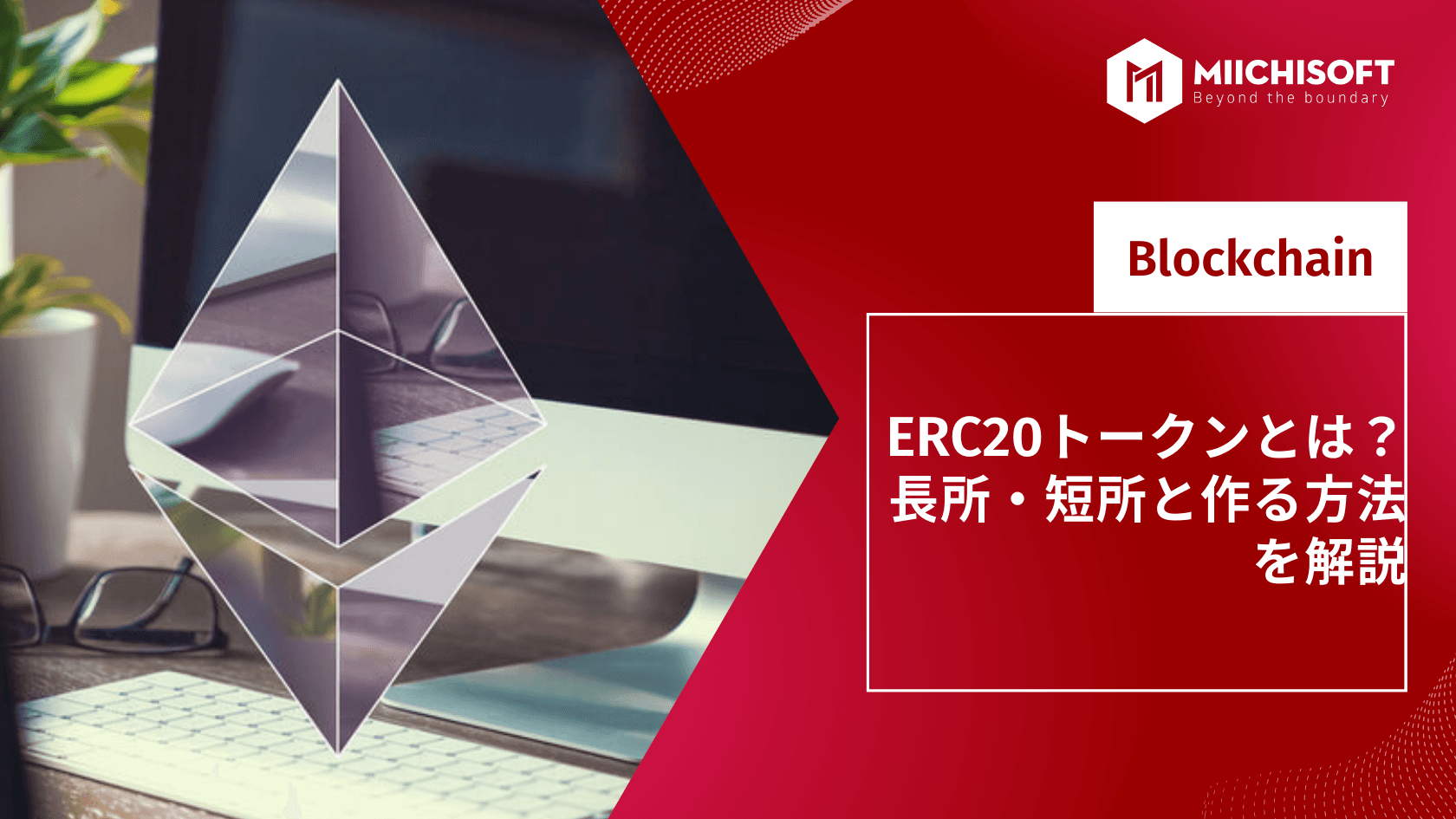
The universal Ethereum platform has dramatically simplified developers' lives, letting them create new tokens quickly and easily.
But at some point, there were already so many that it was easy to get lost — a huge inconvenience, like having to learn a new language every time just to apply a technology to a platform.
None of these "languages" resembled one another, either. There were already hundreds of them, with more appearing daily — a result of having no common guidelines, so everyone did things their own way.
In 2015, Ethereum introduced a token standardization system to prevent further chaos and give tokens a more consistent shape, which helped the platform spread widely. It's now the most popular platform for creating tokens, since you don't have to build everything from scratch. Metaphorically, Ethereum provides the backbone you build the muscle on.
What is ERC-20?

ERC, short for "Ethereum request for comment," is a standard used to create and issue smart contracts on the Ethereum blockchain. The 20 is simply an identification number for the proposal — there are others, but number 20 is by far the most popular.
This is how key technical notes and requirements are communicated to development and user groups. The Ethereum platform has helped developers enormously — they no longer need to learn hundreds of "foreign languages" just to get to work.
This simplifies developers' tasks: they can keep working, knowing they won't have to redo a project from scratch every time a new token is issued.
Reference: What Is DeFi? Understanding Decentralized Finance at Its Core
What is ERC-20 used for?
Historically, ERC-20 has become the technical standard for creating smart contracts on the Ethereum network, used for implementing tokens. It includes a set of rules for creating tokens on the Ethereum platform.
As of August 2021, roughly 442,647 ERC-20-compatible tokens exist on Ethereum's main network. That's about half of the entire ETH blockchain.
Pros and cons of ERC-20 tokens
Standardization always leads to order, and order is always a good thing. If everyone created their own token with its own unique features, it would be a compatibility nightmare.
On top of that, storing these tokens in wallets and listing them on exchanges would be a hassle. Transfers could break contracts and leave them vulnerable to hackers.
Beyond convenience, scalability across the board is one of the key benefits. When projects on Ethereum are active and interact with one another, this consistently drives growth in the number of projects and users. That said, some experts are currently raising concerns about scalability issues.
However, this system does have some drawbacks. For example, while creating a token in the ERC-20 format is clearly convenient, other tokens and wallets don't support our format.
So, to carry out a transaction, you need to use the transfer() function (more on this later) — and in some cases, that simply won't work flawlessly.
If a user mistakenly picks the wrong function, the tokens get stuck inside the contract (the contract won't recognize the transaction), and there's no way to retrieve them. So even in such an established system, human error can still lead to losses in the millions.
Reference: A Thorough Guide to DeFi Services and the Development Process

How to create your own Ethereum token
The internet is literally full of hype articles competing over how many ERC-20 tokens a creator can make.
It might take one person an hour; others promise it can be done in just a few minutes. The result is often junk tokens that serve no purpose other than feeding the creator's ego — or worse, fraudulent tokens.
So is it really that easy to create one? After all, a token isn't just a digital certificate — it's also the entire marketing strategy behind its development.
You can start from the following:
・Token name
・Token symbol (it's generally recommended to use 4 characters or fewer)
・Number of decimal places for the token
・Number of tokens in circulation
Most tokens have 18 decimal places, allowing values as small as 0.00000000000000000001 of a token. When creating your Ethereum token, you need to know how many decimal places you need and how they fit into the bigger picture of your project — though other divisions can also be used.
Giving your token a memorable name is extremely important. That's why the ERC-20 Shiba Inu token, created as a parody of the already-legendary Doge, has not only a funny name but also a powerful marketing strategy.
For example, instead of a plain white paper, there's a weft paper. An original token symbol (logo) alone can draw attention instantly, as can an original name. But behind the title, you also need solid, far-reaching reasoning.
For instance, EOS remains a popular ERC-20-based token that raised more than $185 million during a 5-day ICO launch.
Solidity — the smart contract programming language
Ethereum smart contracts are written in Solidity. Alternative languages exist, but few people use them for this purpose.
That said, since Solidity resembles JavaScript, if you know JavaScript — or Java or another C-like language — you'll have no trouble understanding what Solidity code does, even before you're able to actually write it yourself.
ERC-20 token challenges and alternatives
ERC-20 enjoys broad support in the form of new tokens that comply with the standard, but much of the developer community feels ERC-20 is limited or falls short for one reason or another.
ERC-20 tokens are important to the growth of the crypto ecosystem, but they may be falling behind. People are already experimenting with new standards.
For this reason, several alternative token standards have also been proposed since ERC-20 was developed. These include ERC-20.5 and ERC-223, which aim to address issues around approving and sending elements.
ERC-621 is another alternative that offers the same basic functionality as ERC-20 but adds the ability to increase or decrease the total token supply. Meanwhile, ERC-827 lets owners authorize third parties to use their tokens. Each of these new protocol proposals is, to some extent, built on top of ERC-20.
Change is always slow, and it seems we'll need to wait a bit before moving to other standards. That said, let's not make the mistake of "vilifying" the ERC-20 standard — the profound impact it has had on the crypto space certainly deserves respect.
Is creating an ERC-20 token free?
Even if you create your own token by following someone else's template instead of relying on a developer's services, you still can't avoid the ever-changing network fees — which average a few hundred dollars.
So even if your ERC-20 token has no non-standard features, you still have to pay for the "luxury" of creating and supporting it.

How much does it cost to create an ERC-20 token?
The first answer you'll hear to "how much does it cost to create an ERC-20 token?" is "it depends" — it depends on your goal. Do you want to build a full-fledged product, or something more like a toy that gets abandoned as boring after a few months?
The cost of creating an ERC-20 token plays a key role in developing a crypto token on the Ethereum blockchain. Several important factors determine the development cost of an ERC-20 token, such as:
・Industry
・Token features
・Token design
・Number of ERC-20 tokens to develop
・Token complexity
・Size and location of the ERC-20 token development team
・Development and testing of the ERC-20 token
・Distribution
・Maintenance
These factors determine the development cost of an ERC-20 token. As a result, the range is too wide to give a specific figure.
So if you have a specific, clear idea of how you want to use your token, please reach out to us (Miichisoft) — our sales manager will calculate the cost of your project.
Source: The App Solutions (WHAT IS ERC20 TOKEN)
Related Articles
What Is a Decentralized Autonomous Organization (DAO)? Features, How It Works, and Examples
What Is an NFT? A Thorough Explanation of Examples, Characteristics, and Future Potential of Non-Fungible Tokens
A Deep Dive into Promising DeFi Services and the Development Flow
What Is DeFi? Understanding Decentralized Finance at Its Core
What Are DApps? Understanding Decentralized Applications at Their Core