Home › Blog › Blockchain & Web3
A Deep Dive into Promising DeFi Services and the Development Flow
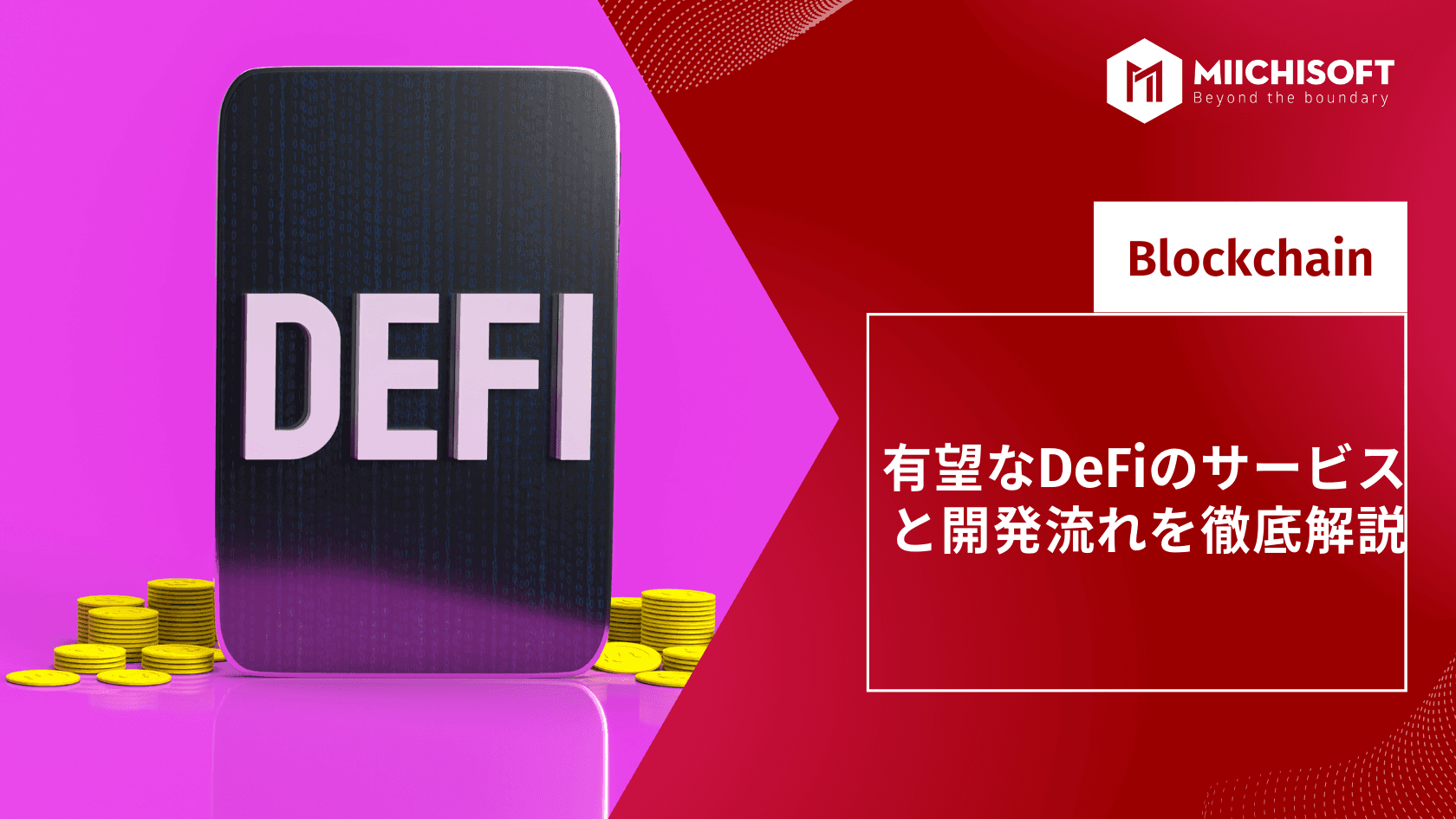
Decentralized finance, or DeFi for short, is a technology-based blockchain network that delivers banking services straight into your own pocket without a governing authority—making you your own banking institution.
The appeal of DeFi lies in the security of personal data, the transparency of processes made possible by having all the code open to the public, high interest rates, and the absence of intermediaries. Investors have also found the idea extremely attractive—as of January 2022, roughly $92.3B was circulating in decentralized finance.
Despite that sum, the market is far from oversaturated—it's only just beginning. So if you're planning DeFi development, you're not jumping onto the last step of this locomotive—there's still a long way to go!
That's why navigating the DeFi development services market and finding a trustworthy company matters so much.
The DeFi Development Flow

DeFi development is a complex process; given the specifics of Web3, it differs from traditional development, with more branches, features, and complexity. So it's simply not possible to be an expert at everything.
Each team needs to hone its skills on a specific set of solutions to achieve the ideal result. So it makes little sense to hire a huge staff, train them, and give them time to gel. It's better to outsource to experts with successful projects behind them.
Reference: What Is DeFi? Understanding Decentralized Finance at Its Core
A typical DeFi development process looks like this.

DeFi Development Flow, Step 1: Strategy
As with any software, you first need to decide what to build. Who's the target audience? What are their needs? Then you need to correctly prioritize features based on your ROI expectations.
DeFi Development Flow, Step 2: Design
When developing DeFi scalability, you need to factor in design. The user interface should stay flexible enough to support additional features that get added to the application in the future.
In general, not every application in Web3 looks appealing. Right now, this step is a weak link that needs to be eliminated.
DeFi Development Flow, Step 3: Development and Testing
Since so much happens every month in crypto and blockchain projects in particular, flexibility is crucial, so it's best to work in an agile way at this stage.
DeFi Development Flow, Step 4: Maintenance
Maintenance means releasing updates that include new features and fixing bugs. But if the front end can be updated easily without issues, how do you update the back end of a blockchain system?
To do that, you need to keep working with the team involved in development.

Introducing Promising Decentralized Finance (DeFi) Services
Let's take a closer look at the services that are most promising to develop right now.
DeFi Smart Contract Development
Smart contracts in the DeFi space are a critical technology that needs to be developed with great care. Literal programming solves many issues, including precision, speed, scalability, reliability, security, transparency, and easy exchange and access.
Reference: What Is a DApp? Understanding Decentralized Applications at Their Core
DeFi DApp Development
Decentralized applications are increasingly taking over more and more fields, from NFT marketplaces to gaming and from communication to healthcare. But so far, most DApps exist within the decentralized finance space.
As of 2021, investment in this market reached $40M. Of course, that popularity ties to high privacy and hacking complexity. But as practice shows, "craftsmen" are still out there—so limits aren't perfect, and whoever builds a nearly flawless app from a security standpoint will quickly gain popularity.
Also, since relatively few users currently use DApps, UI/UX design isn't yet top-tier compared to the apps we're used to—room for improvement here too.
Decentralized Exchange Development (DEX)
A decentralized exchange (DEX) is a promising project precisely because there's no intermediary involved. With a DEX, the blockchain itself—a decentralized ledger—acts as the third party.
The underlying cryptocurrency technology eliminates single points of failure by moving critical transactions onto the blockchain, letting consumers retain ownership of their assets and enabling safer, more transparent transactions.
A DEX uses smart contracts to execute market transactions by distributing transactions across off-chain code. That said, order-processing methods with varying degrees of decentralization are available.
So working on a project like this is extremely promising. That said, remember a crypto exchange is a complex system that can't be built without the right expertise—so comprehensive research is essential.
DeFi Lending/Borrowing Platform Development
Building a DeFi lending site and then building a native mobile app once you have real traction is a smart strategy, as long as the site scales properly across web and mobile platforms.
Keep in mind the power of the agile methodology—flexibility, transparency, speed—which is essential to a project's success.
DeFi Wallet Development
A DeFi wallet is unusual in its technical characteristics: it's not a centralized financial institution but a smart contract that's responsible for the safety of funds. Building a safe, functional smart contract also requires ample experience with blockchain.
In principle, a DeFi wallet should include the following options.
・2FA
・Face/Touch ID
・Multi-signature
・Session logout

DeFi Staking Platform Development
DeFi staking means keeping funds in a cryptocurrency wallet to help guarantee support for every transaction on the blockchain. The more favorable the reward terms offered, the more likely users are to deposit their assets into the platform's liquidity pool.
So, the more liquidity a platform provides, the more trustworthy it appears in users' eyes. Furthermore, by offering staking opportunities, more transactions take place, letting the platform earn more profit from transaction fees.
With the emergence of new staking models and improved staking platforms, this kind of passive income from crypto assets can attract more and more investors. It's no surprise that development of DeFi staking platforms is booming.
DeFi Crypto Banking Development
An attractive idea is creating your own crypto bank running on smart contracts. That way, handling crypto assets becomes safer and more confidential, with no one checking your credit history—which will always attract crypto holders.
Developing this kind of decentralized financial institution can also bring substantial revenue relatively quickly. The key is not to skimp on investment, since that determines whether the result turns out high quality.
Reference: Web 2.0 vs. Web 3.0: Characteristics and Differences Explained
DeFi Development Services
This isn't a complete list of every service tied to blockchain in some way. As more opportunities open up in Web3, DeFi development services broaden further, already permeating every area of our lives.
Where to Find DeFi Developers?
Since the DeFi and Web3 niche is really just at the start of its journey, finding the right company to implement your project isn't all that easy.
Of course, hundreds if not thousands of outsourcing companies worldwide now offer DeFi development services in decentralized fintech, but that's still small compared to developers working on traditional Web2 software. Service quality can also be questionable at times.
That said, hiring many developers with specific knowledge and skills can also be costly. So the best solution is generally to hire an outsourcing company that can meet all your needs and offer the best alternatives when necessary.
We at Miichisoft would be happy to become your DeFi development company as a technology partner. Please feel free to reach out to us anytime.
Source: The APP Solutions (DeFi Development Services)
Related Articles
What Is a Decentralized Autonomous Organization (DAO)? Features, How It Works, and Examples
What Is an NFT? A Thorough Explanation of Examples, Characteristics, and Future Potential of Non-Fungible Tokens
What Is an ERC-20 Token? Pros, Cons, and How to Create One
What Is DeFi? Understanding Decentralized Finance at Its Core
What Are DApps? Understanding Decentralized Applications at Their Core