Home › Blog › Emerging Tech & IT Trends
HoloLens 2: The Future of Remote Support
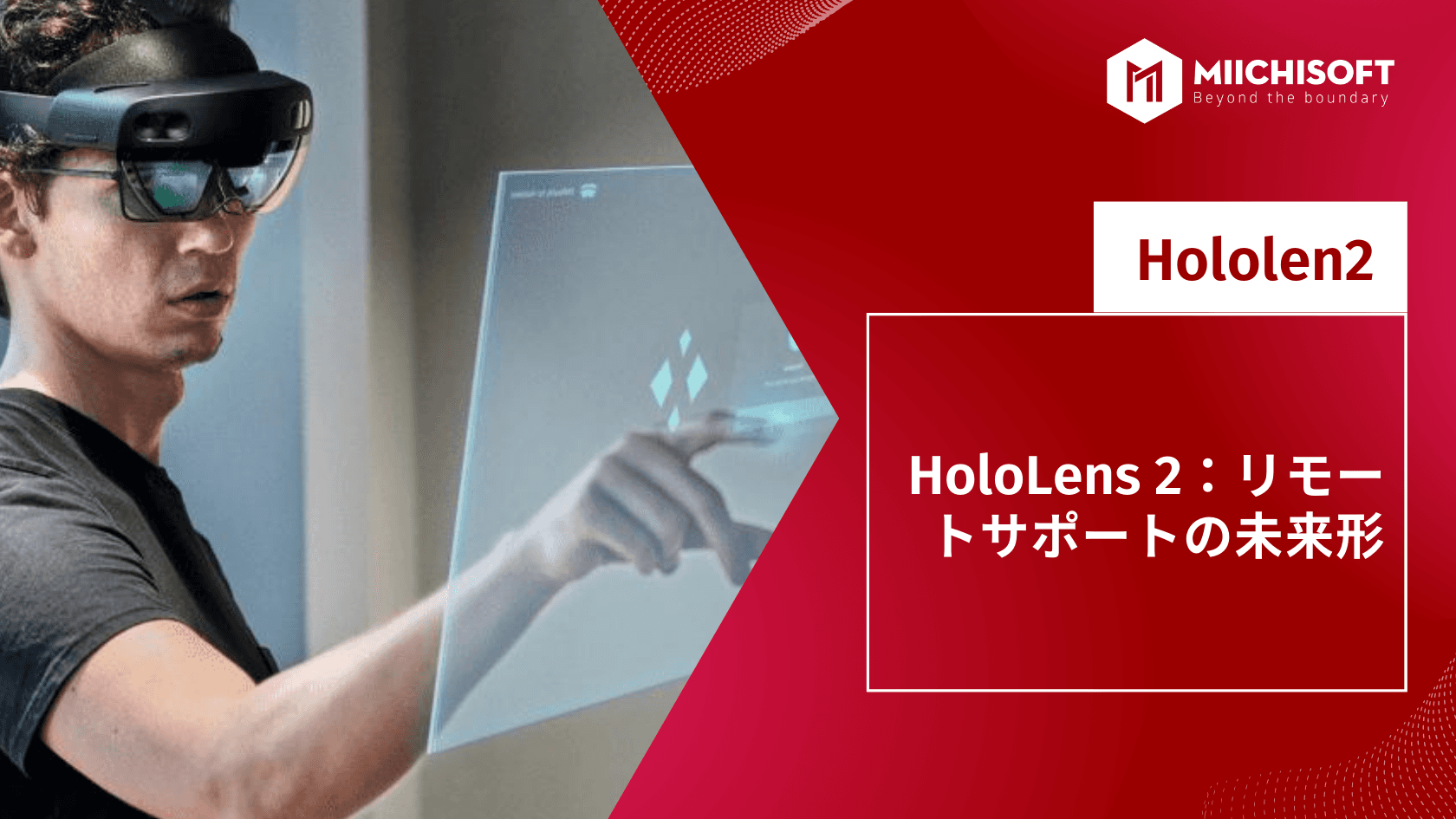
XMReality now supports HoloLens 2, Microsoft's latest smart glasses, increasing independence between hardware and software.
This lets XMReality work with whatever device the user chooses, and its use cases keep expanding - from onboarding new employees to giving step-by-step assembly instructions for complex machinery.
HoloLens 2's hands-free use makes remote guidance possible, improving both safety and efficiency.
1. The Rise of Smart Glasses
When Microsoft first started with XMReality, smart glasses were seen as a niche product. Since then, their use has changed dramatically, and today they're increasingly seen as everyday equipment in manufacturing and packaging.
One trend Microsoft has observed is a shift away from a one-to-one relationship between smart-glasses hardware and its accompanying software.
In other words, smart glasses used to be bought for a single purpose and shipped with a single application.
Treating smart glasses as a general-purpose device that supports many use cases - running many applications on them - is driving greater adoption and leading to more flexible products and use cases.
Microsoft's aim is for XMReality's software to work across a wide range of smart glasses - from simple glasses suited to hands-free operation on the shop floor to advanced glasses like HoloLens 2.
In short, bringing XMReality support to HoloLens 2 smart glasses is about bringing out the best in both.
2. Why XMReality and HoloLens 2 Are a Perfect Match
2.1 A Frictionless Experience
In remote guidance, it's important to remove as many barriers as possible for the simplest possible user experience - and creating a frictionless experience is a core principle for Microsoft.
XMReality works seamlessly and intuitively on HoloLens 2, removing obstacles both before and during a call.
Other remote support solutions require the recipient to have an account on the same platform as the caller, but XMReality on HoloLens 2 isn't limited to HoloLens-to-HoloLens calls - anyone, even users outside the organization, can join.
You simply send a link by text message (SMS) from the headset to anyone with a connected device. The recipient doesn't need to download any software or sign up for a service.
2.2 Fully Hands-Free Use
Being hands-free is one of the most effective ways to deliver remote guidance, improving both safety and efficiency. In situations that once required manually consulting a manual, workers can now bring someone into a call hands-free, resolving issues faster.
Every pair of smart glasses aims to free the user's hands, but not all take full advantage of this. With HoloLens 2, all interaction happens through your hands in the space right in front of you.
These smart glasses feature fully articulated hand tracking for touching, grabbing, and moving objects naturally.
2.3 A Personalized Experience for Multiple Users
On factory floors, it's not uncommon for workers to share just one or two pairs of smart glasses. If the glasses don't support individual profiles, every user logs in with the same username, so the recipient can't tell exactly who they're talking to.
XMReality solved this by making account switching very easy on smart glasses, and HoloLens 2 natively supports personal profiles.
With individual accounts, dozens of users can log into the same HoloLens glasses with a quick biometric eye scan, each getting a fully personalized experience from the same pair of smart glasses.
2.4 True Two-Way Support
Support and troubleshooting clearly call for person-to-person dialogue - instructions from someone remote, whether a central expert or another field technician sharing knowledge.
The same applies to inspections and audits - the wearer typically wants to share what they see with a remote participant and get feedback or instructions.
But beyond support, inspection, and audits, remote guidance becomes a two-way street - a way to both receive and give instructions.
For example, someone can stand in front of a machine and demonstrate a complex solution in real time to remote trainees.
2.5 Looking Ahead
Smart glasses are now being used for an ever-growing range of purposes in manufacturing, production, packaging, and other industries.
New use cases range widely, from onboarding new hires into unfamiliar tasks, to real-time interactive factory tours, to complex machine assembly work.
The number of smart glasses on the market keeps growing, and this trend is expected to continue. XMReality has supported smart glasses since its founding, so adding HoloLens 2 support is a natural step, giving customers freedom to choose their device.
Conclusion
In conclusion, HoloLens 2 is an innovative AR device delivering a wide range of content and applications across business and entertainment - from improving efficiency and communication to enhancing entertainment experiences.
▼ If you'd like to learn more about "AR and VR," please also see this article.
A Thorough Comparison of Augmented Reality (AR) and Virtual Reality (VR)
Related Articles
AI News Flash | Google Integrates Gemini into Chrome
Top 3 Workflow Automation Platforms: Is n8n, Dify AI, or Make the Right Fit for Your Business?
AI News Flash | xAI Officially Unveils Its Most Powerful Multimodal Model, "Grok 4.0"
AI News Flash | Gemini AI's Android Integration Expands, Turned On by Default Regardless of User Settings
AI News Flash | ChatGPT Is Evolving From a "Q&A AI" Into a "Multifunctional Work Partner"