Home › Blog › Emerging Tech & IT Trends
Can Smart Glasses Improve the Remote Assistance Experience?
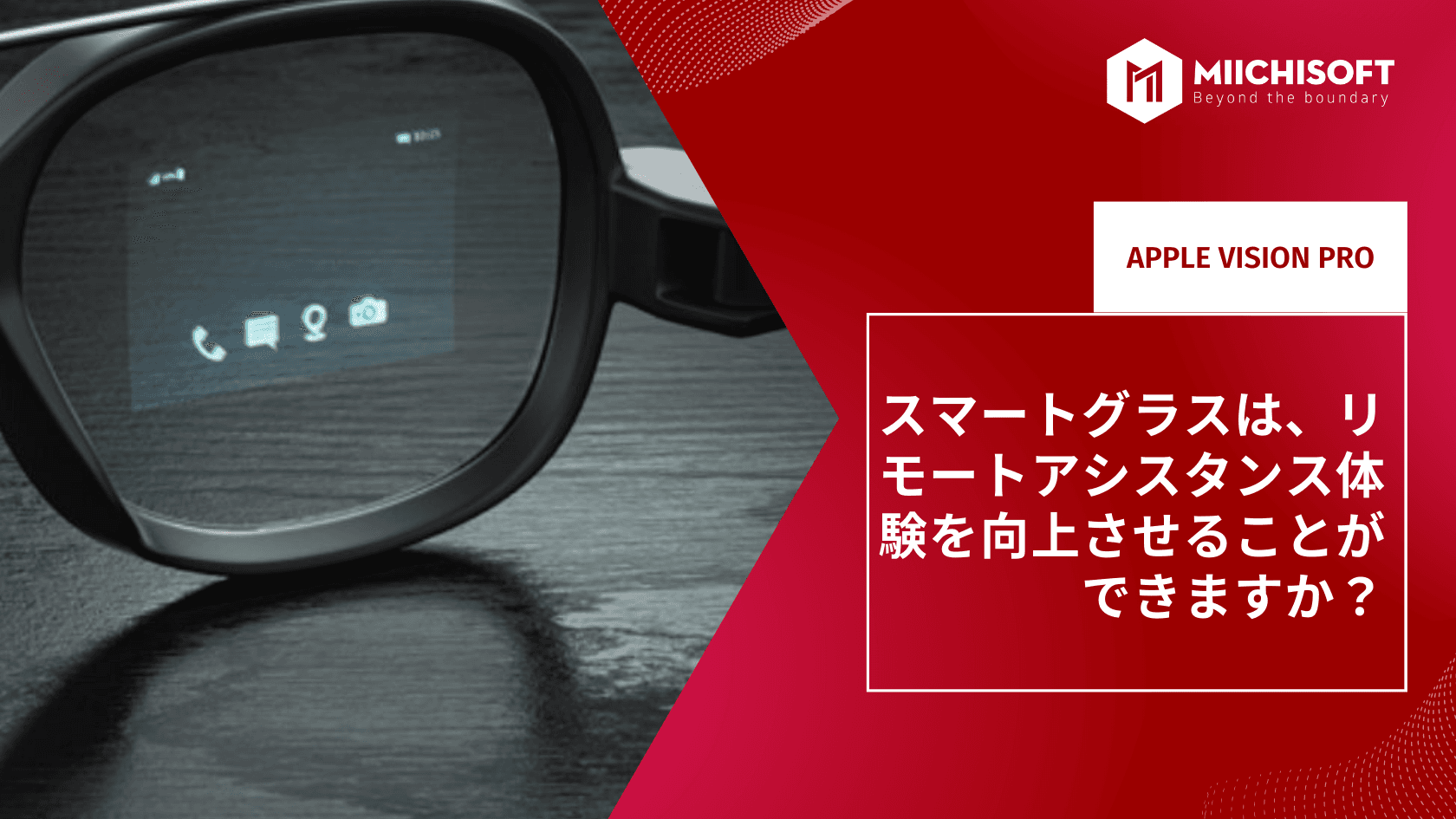
Depending on context, smart glasses can act like a wearable computer — overlaying information on what you see, responding to voice commands, or even working like a phone for calls and messages.
Recent smart glasses focus on meeting customer needs, such as better durability, ease of use, and designs tailored to specific use cases.
But will smart glasses become essential to the remote assistance toolkit, or are they just hype adding little value to remote support?
1. Remote Assistance Using Smart Glasses
As the range of applications for smart glasses keeps expanding, XMReality continues optimizing how Microsoft's products work with the most popular smart glasses on the market. If you already know XMReality, you'll know what Microsoft's technology looks like.
XMReality is an advanced cloud-based video tool with augmented reality (AR) capabilities. It creates value for typical industrial applications by resolving hardware issues quickly and cost-effectively, minimizing production line downtime, and improving overall efficiency. You can send a call link to anyone and start a shared video stream.
There, the recipient gets a wide range of powerful remote-support tools, including pointing, pausing, drawing, and screen sharing to help explain and resolve issues.
2. Improved Safety
Smart glasses also offer real safety benefits. In high-risk industries, being 100% hands-free during communication can significantly improve safety.
In industries where employees use smart glasses, motor-skill-related accidents can be reduced, and time-critical issues — such as repairing hazardous equipment — can be resolved faster.
RealWear and Iristick strictly comply with the safety regulations required for safety-eyewear classification. This shows in their designs too, with foldable screens that let users see clearly ahead without obstruction.
Some smart glasses are also independently certified against industry standards for resistance to impact, fire, and corrosion, and are designed to meet both industry and customer needs.
3. Who Should Use Smart Glasses for Remote Assistance?
Smart glasses are most useful in industries where holding a phone in one hand while following instructions with the other is inefficient — where detailed issues need both hands to resolve, plus someone guiding you through the exact steps. They also help when support sessions run long and holding a phone for hours becomes tiring.
They can also show new employees how experienced staff approach troubleshooting and problem-solving, and they're valuable when ongoing support or coaching sessions run long and holding a phone for hours becomes tiring.
Smart glasses are an add-on for people with specific needs, not something everyone must have.
4. Who Shouldn't Use Smart Glasses for Remote Support?

If you try XMReality Remote Guidance and don't feel the need for hands-free communication, smart glasses probably aren't necessary for you — just keep doing what you're doing with XMReality Remote Guidance.
If there's an urgent issue and the person on-site doesn't have smart glasses, there's little to no time to set one up or send one over. In that case, it's much faster to connect using a Remote Guidance call link instead.
If you haven't tried our remote support solution yet, start with XMReality's free trial. The difference: instead of smart glasses, you point your smartphone's camera at the problem.
5. How Does Smart Eyewear Connect With the Industrial World?
Several factors are accelerating innovation in industrial smart eyewear, expanding the areas where smart glasses add value.
5.1. The Industrial Market Is Starting to Embrace Technology
The huge popularity of the AR game "Pokémon GO" in 2016 coincided with Microsoft's "HoloLens" launch, signaling that the technology had matured for widespread use. The Fourth Industrial Revolution, in which more and more industries become automated and technology-dependent, has been underway for nearly 10 years, but it was the pandemic that suddenly accelerated it.
5.2. Hardware Quality Is Improving Rapidly
Building consumer smart glasses is different from building them for industrial use. Different contexts must be considered, such as sites where chemicals, dust, or temperature swings affect usability, raising concerns around charging speed, battery life, comfort, ease of use, ruggedness, and water resistance. Fortunately, hardware makers have kept improving their products for industrial environments, and design must evolve to fit as well. Some still use binocular designs like Google Glass or Microsoft HoloLens, while others prefer a monocular design mounted on a hard hat.
5.3. Covid-19 Increased the Need for Remote Assistance
Using AR solutions for remote assistance always had several benefits, but Covid-19 turned AR from a "nice to have" into a "must have." The pandemic hit most industrial companies hard, driving up sick leave, mandatory social distancing, and travel restrictions.
Travel restrictions in particular increased the need for remote assistance, forcing issues that once required an expert on-site to be resolved remotely instead.
In industry, AR solutions are gaining attention as a way to maintain and enhance normal work processes remotely. Is there a limit to what smart eyewear can offer in the coming years? Even smart glasses can't see into the future, so it's hard to say — at least, not yet.
Summary

Investing in remote assistance is an excellent choice if you want to cut costs and travel time. Using XMReality in any form will reliably improve the remote support experience — workers need both hands free for certain specialized tasks.
Using only a phone or tablet works well for most customers, but some need smart glasses to enhance remote support in a way that fits their specific needs.
Related Articles
AI News Flash | Google Integrates Gemini into Chrome
Top 3 Workflow Automation Platforms: Is n8n, Dify AI, or Make the Right Fit for Your Business?
AI News Flash | xAI Officially Unveils Its Most Powerful Multimodal Model, "Grok 4.0"
AI News Flash | Gemini AI's Android Integration Expands, Turned On by Default Regardless of User Settings
AI News Flash | ChatGPT Is Evolving From a "Q&A AI" Into a "Multifunctional Work Partner"