Home › Blog › Emerging Tech & IT Trends
Manufacturing AR Technology: Implementation Methods and Use Cases Explained!
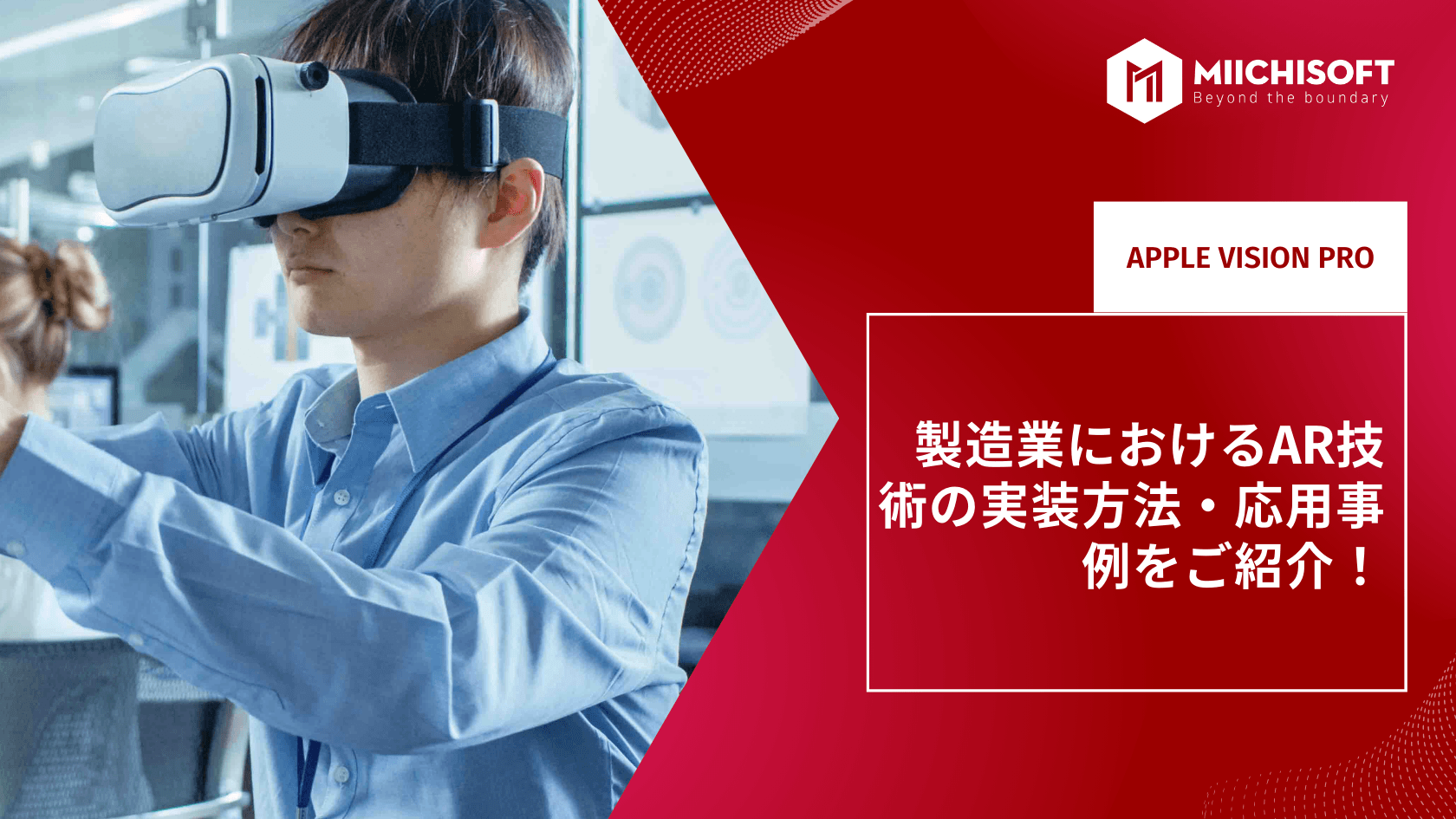
Augmented reality (AR) is widely used in manufacturing as an innovative technology, overlaying computer-generated information and virtual objects onto the real environment to improve work efficiency and quality. This article explains AR's benefits, implementation methods, and use cases in manufacturing.
1. Benefits of Augmented Reality in Manufacturing
1.1 Improving Work Efficiency
Augmented reality (AR) contributes greatly to improving work efficiency in manufacturing. Below are its key benefits.
Displaying work guides and procedures: Using AR devices, workers can view work procedures and guidelines in real time. This lets workers follow procedures without mistakes, improving work efficiency.
- Displaying and sharing digital information: Real-time AR displays let workers intuitively check needed information, such as design drawings or part specifications shown on an AR device alongside the real item. It also makes communication among workers and managers easier.
- Real-time data collection and analysis: AR devices, equipped with sensors and cameras, can automatically collect and analyze data on product dimensions and quality in real time, enabling better quality control and early problem detection.
1.2 Improving Quality Control
Augmented reality is effective for improving quality control in manufacturing. Below are its key benefits.
- Automating quality checks: AR devices can check product dimensions and appearance in real time against quality standards, automating and speeding up quality checks.
- Early detection and troubleshooting: AR devices help catch and resolve assembly or process problems early, showing issues directly so workers can address them immediately.
- Tracking and recording quality data: AR-based quality checks and product information can track and record data in real time, reliably capturing quality data to improve traceability and enable data analysis.
1.3 Effective Support for Training and Education
Augmented reality is also effective for supporting training and education in manufacturing. Below are its key benefits.
- Hands-on training: AR devices let workers train in conditions close to the real work environment, recreating it virtually so they can practice procedures hands-on. Even novices can quickly acquire skills this way.
- Real-time feedback and guidance: AR devices give workers real-time feedback, offering instructions and advice as they work. Workers can correct mistakes immediately, promoting skill improvement.
- Knowledge sharing and remote support: AR devices make it easier for workers to share knowledge and collaborate with each other or with remote experts, sharing information and receiving real-time support.
As shown above, augmented reality contributes to improved work efficiency, better quality control, and effective support for training and education in manufacturing. Using this technology is expected to boost manufacturers' competitiveness and productivity.
2. How to Implement Augmented Reality in Manufacturing
2.1 AR Using a Head-Mounted Display (HMD)
A head-mounted display (HMD), worn on the head with a built-in display and sensors, is one way to achieve AR. Implementing AR with an HMD in manufacturing offers the following benefits.
- Hands-free operation: Since the HMD is worn on the head, both of the worker's hands stay free to focus on the task, improving efficiency.
- Real-time information display: The HMD's built-in display shows AR content directly in the worker's field of view, including procedures, guidelines, and part specifications, enabling efficient work.
- Blending with the environment: The HMD integrates the surrounding environment with AR content, letting workers view the real workplace and AR information together for greater accuracy and fewer mistakes.
2.2 AR Using Smart Glasses

Cre: fi.edu
Smart glasses, eyewear-style devices with a display and sensors, are another way to achieve AR. Using them in manufacturing offers the following benefits.
- Portability: Lightweight and compact, smart glasses let workers move freely while viewing needed information right in front of them.
- Hands-free operation: Smart glasses may support voice or gesture input, letting workers control AR content and keep both hands free.
- Supporting communication: Smart glasses make it easier to communicate with coworkers or remote experts, sharing information and receiving real-time support.
2.3 AR Using Smartphones and Tablets

Cre: Samsung
Using smartphones and tablets is a relatively easy way to bring AR to manufacturing: install an AR app and use the camera to display AR content in the real world. Its benefits are as follows.
- Low cost: Smartphones and tablets are relatively inexpensive, and using existing devices means no extra hardware purchase is required.
- Convenience: Easy to carry, smartphones and tablets make it simple to use AR on-site, letting workers access needed information on devices they already carry.
- Flexibility: Familiar to most people, smartphones and tablets let workers operate AR content using interfaces they already know.
2.4 AR Markers and Tracking Technology

Cre: Postindustria
AR markers and tracking technology are key elements of AR implementation. Markers are placed in the real world and recognized by cameras or sensors, while tracking technology adjusts AR content's position and orientation in real time.
- Using AR markers: Placed on the shop floor or products and recognized by AR devices, markers make it possible to display detailed product information and operating procedures.
- Importance of tracking technology: By accurately tracking markers' position and orientation, tracking technology enables real-time AR content display, letting workers get accurate information even while moving.
As described above, ways to implement AR in manufacturing include HMDs, smart glasses, smartphones and tablets, and AR markers with tracking technology. These methods all help improve work efficiency, quality control, and training. Choose the method best suited to your operation to make the most of AR's benefits.
3. Specific Use Cases of Augmented Reality in Manufacturing

Cre: VIRTUAL COMMISSIONING
3.1 Product Design and Prototype Development
Augmented reality (AR) plays an important role in product design and prototyping. Below are specific use cases.
- Visualizing 3D models: AR lets designers project 3D models into real space for realistic visual feedback, quickly evaluating a product's appearance and shape and making revisions.
- Sharing designs and collaboration: With AR, multiple stakeholders — designers, engineers, and customers — can view the same 3D model and exchange opinions via AR devices, improving communication and building design consensus.
- Verifying and improving prototypes: AR lets teams place prototypes in real space to evaluate real behavior and functionality, operating them via AR devices to identify and fix issues more effectively.
3.2 Streamlining Manufacturing Lines
Augmented reality is also used to streamline manufacturing lines. Below are specific use cases.
- Guiding and supporting line work: AR devices give workers real-time guides for procedures and processes, letting them follow the displayed information for efficient work.
- Recognizing and tracking parts: AR devices and cameras recognize and track parts, letting workers know exact locations and handling methods for a smoother production process.
- Displaying and analyzing real-time data: AR devices display real-time line data and productivity metrics, helping workers and managers understand line status and identify effective improvements.
3.3 Supporting Maintenance and Repair
Augmented reality also helps support the maintenance and repair of manufacturing machinery and equipment. Below are specific use cases.
- Displaying and guiding maintenance procedures: AR devices display maintenance steps in real time, letting staff follow the guidance shown to improve efficiency and reduce mistakes.
- Fault diagnosis and troubleshooting: AR devices' sensors and cameras help identify faults, letting staff observe machinery and perform diagnosis and troubleshooting.
- Remote support and expert collaboration: AR devices let remote experts support maintenance work in real time, communicating with on-site staff for effective repair and maintenance.
Summary
Augmented reality is drawing attention as an innovative manufacturing technology. Understanding its benefits and use cases helps manufacturers build efficient production processes, improve quality control, and strengthen worker training.
However, adopting AR requires careful planning: choosing the right hardware and software, protecting data security and privacy, and providing worker training and support.
More sophisticated AR technology and new applications are expected ahead. By keeping pace with these advances and adopting innovative solutions, manufacturers can strengthen competitiveness and achieve sustainable growth.
▼ If you'd like to learn more about “the difference between augmented reality (AR) and virtual reality (VR),” please also see the article below.
A Thorough Comparison of Augmented Reality (AR) and Virtual Reality (VR)
Related Articles

AI News Flash | Google Integrates Gemini into Chrome

Top 3 Workflow Automation Platforms: Is n8n, Dify AI, or Make the Right Fit for Your Business?

AI News Flash | xAI Officially Unveils Its Most Powerful Multimodal Model, "Grok 4.0"

AI News Flash | Gemini AI's Android Integration Expands, Turned On by Default Regardless of User Settings

AI News Flash | ChatGPT Is Evolving From a "Q&A AI" Into a "Multifunctional Work Partner"