Home › Blog › Emerging Tech & IT Trends
Introducing the Importance of Augmented Reality for Food and Beverage, With Application Examples!
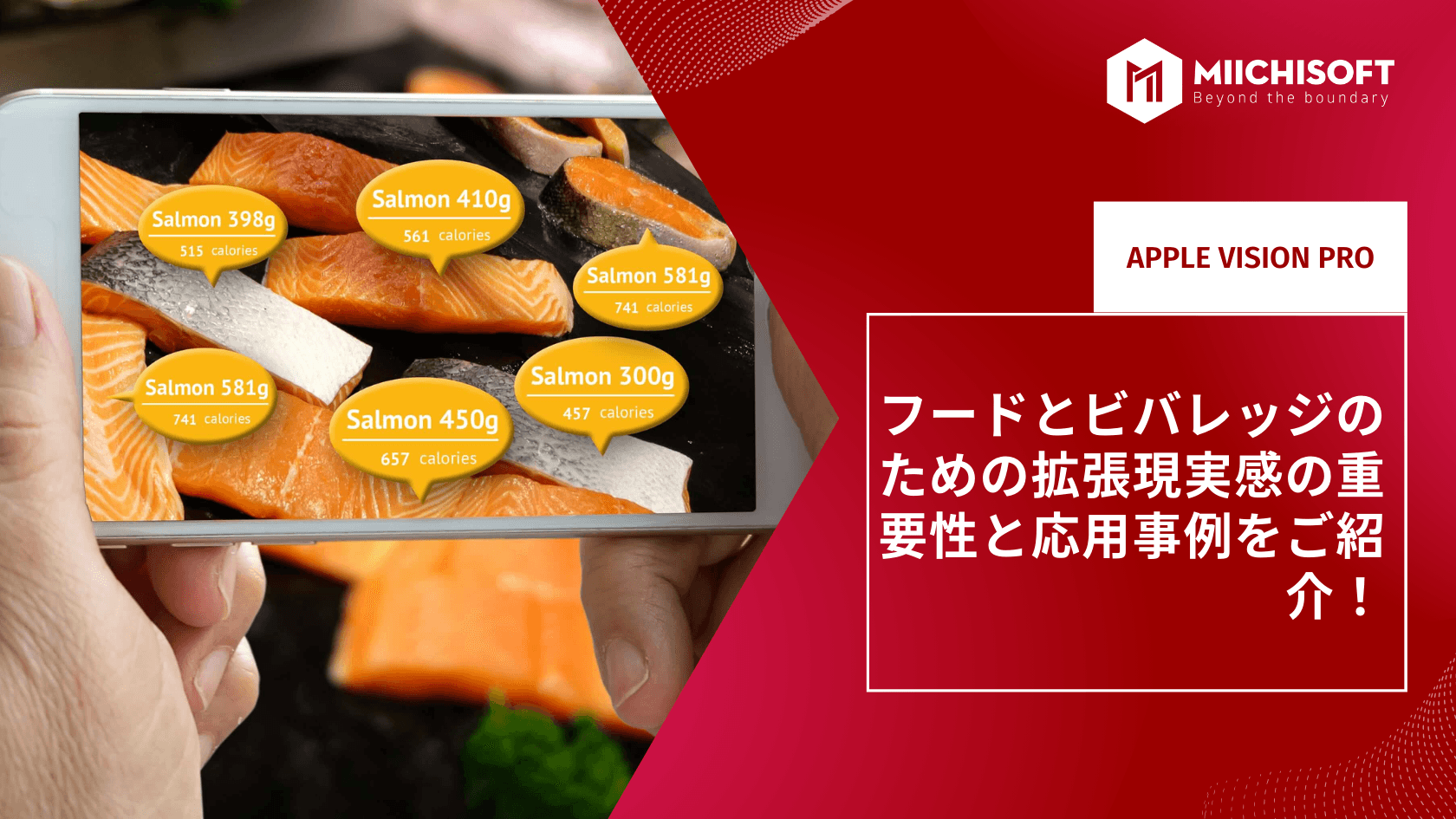
Augmented Reality (AR) overlays computer-generated information and digital elements onto the real world. Using devices like smartphones, tablets, and headsets, AR enhances the user's experience by adding virtual elements to real-world visuals.
This article explains in detail the importance of AR in the food and beverage industry, along with application examples and future prospects.
1. Introduction to AR in the Food and Beverage Industry
1.1 Definition of Augmented Reality (AR)
For example, AR can overlay 3D objects, text, video, and audio onto real-world footage seen through a camera — enabling experiences like detailed product info and pricing, reviews, map navigation, and interaction with virtual characters.
▼ If you'd like to learn more about “the difference between Augmented Reality (AR) and Virtual Reality (VR),” please also see the article below.
A Thorough Comparison of Augmented Reality (AR) and Virtual Reality (VR)
1.2 Overview of AR Technology and Its Applications
AR technology is used across a variety of devices and platforms. Below is an overview of AR technology and some examples of its applications.
- Mobile AR
AR can be experienced on mobile devices such as smartphones and tablets. Users download a dedicated AR app and overlay virtual elements by capturing the real world through the camera. Examples include enhanced product info displays, virtual furniture placement, and games and entertainment.
- Head-Mounted Display (HMD) AR
AR can be experienced using headsets or glasses-type devices. HMD AR offers a more immersive experience, fusing the real and virtual worlds. Key applications include interacting with virtual objects and characters, integration with Virtual Reality (VR), and training simulations.
- Wearable Devices With AR Capabilities
(e.g., smart glasses) can be used to realize AR.
Wearable AR offers a more natural visual experience, enabling real-time information display and hands-free operation. Applications include guiding through work procedures, supporting technicians and medical professionals, and real-time data display.
2. The Importance of AR in Packaging

The importance of AR in the food and beverage industry can be understood as follows.
2.1. Improving Consumer Engagement
AR increases engagement with consumers. Interactive AR experiences and information capture customers' interest and boost their interest in products and brands. For example, AR-enhanced menus and virtual food-tasting experiences offer a richer experience and stimulate purchase intent.
2.2. Expanding and Visualizing Product Information
AR is extremely useful for providing product information. By embedding AR elements into food and beverage packaging and labels, brands can offer more detailed information and storytelling. Visually displaying ingredient origins and nutrition via AR also helps consumers make informed choices.
2.3. Marketing Innovation and Brand Differentiation
AR is sometimes used as a creative marketing technique. AR-based digital campaigns and experiences give consumers a new sense of excitement and deepen their impression of the brand. AR-powered virtual tours and process visualization also enhance a brand's transparency and credibility.
2.4. Use as an Education and Training Tool
AR is also used for education and training. It can be used to visually learn how to prepare dishes or cocktails, and to raise awareness of food science and sustainability.
These points show that AR plays an important role in building consumer relationships and enhancing brand value in the food and beverage industry. Adopting AR improves customer experience and strengthens competitiveness.
3. Application Examples of AR in Packaging
3.1 Examples of AR in the Food and Beverage Industry
- Menu enhancement: Restaurants and cafés use AR to add extra information to menus. Customers scan the menu with a smartphone or tablet to view dish photos, nutrition facts, and allergy information.
- AR beer experiences: Beer brands use AR to convey brewing processes and flavor characteristics through virtual elements overlaid on bottles or cans. Customers scan the product with a smartphone to see the brewing process and recommended ways to enjoy it.
3.2 Success Stories of AR Adoption at Restaurants and Food Brands
Pizza chain AR campaigns: Some pizza chains run AR-based campaigns. Customers scan pizza boxes or menus with their smartphone, triggering virtual characters or special discounts and coupons. This gives customers an enjoyable experience while strengthening their bond with the brand.
3.3 Notable AR Applications and Campaigns in the Industry
- AR coffee experiences: Some coffee brands run campaigns letting customers experience coffee bean origins and the roasting process via AR. Customers scan the packaging with a smartphone to view a virtual coffee farm and roasting process.
- AR wine label experiences: Wine brands embed AR into wine labels. Customers scan the bottle label with a smartphone to view the winery's and wine's story, plus food-pairing recommendations.
These are just a few examples, but they show AR applications spreading across the food and beverage industry. AR contributes to customer engagement and brand differentiation, bringing new experiences and interaction opportunities.
Read more
Introducing the Benefits and Future Potential of AR in Packaging!
Introducing How to Implement AR Technology in the Energy Sector, With Application Examples!
Introducing How to Implement AR Technology in Facility Management, With Application Examples!
Introducing How to Implement AR Technology in Manufacturing, With Application Examples!
4. Summary of Key Benefits and Opportunities
Adopting AR technology offers the following key benefits and opportunities.
- Improved consumer engagement: AR increases engagement with consumers and draws interest toward products and brands.
- Expanded and visualized product information: AR expands and visually displays product information, giving consumers more detail.
- Marketing innovation and brand differentiation: Creative AR marketing deepens brand impressions and strengthens competitiveness.
- Use as an education and training tool: AR is also used in education and training, offering new learning experiences.
5. Considerations When Adopting AR Technology
Consider the following when adopting AR technology.
- Purpose and strategy: You need to clarify how AR will be used and what goals it is meant to achieve, and ensure alignment with the overall business strategy.
- Technology and resources: Adopting AR technology requires the right technology and resources. Development and operating costs, as well as securing the necessary skill sets, need to be taken into account.
- User experience: AR-based experiences must be engaging and seamless for customers. Design and development that prioritize user needs and ease of use are essential.
- Legal and ethical considerations: The use of AR technology may be subject to legal and ethical regulations. Appropriate measures must be taken regarding personal data protection and intellectual property rights.
6. Future Outlook for AR in the Food and Beverage Industry
The future outlook for AR in the food and beverage industry includes the following.
- Richer engagement: As AR technology evolves, even richer, more immersive engagement will be realized. More interactive experiences are expected, such as AR-based virtual tastings and real-time cooking demonstrations.
- Customization and personalization: AR-based customization and personalization are expected to advance further. Consumers will be able to use AR tools to customize food and beverages according to their own preferences and needs.
- Leveraging data and insights: AR technology makes it possible to collect data and insights on consumer behavior and preferences. This will enable more precise targeting in marketing strategy and product development.
These factors highlight the importance and future outlook of AR in the food and beverage industry. Leveraging AR is expected to improve customer experience and strengthen competitiveness.
Summary
That covers our introduction to Augmented Reality (AR) in the food and beverage industry. AR enables a more engaging, interactive dining experience — from better customer experience and appealing menus to virtual food tastings, visual cooking guidance, and wine or cocktail pairing guides. Adopting AR is expected to boost engagement and strengthen competitiveness for restaurants and beverage companies.
Related Articles

AI News Flash | Google Integrates Gemini into Chrome

Top 3 Workflow Automation Platforms: Is n8n, Dify AI, or Make the Right Fit for Your Business?

AI News Flash | xAI Officially Unveils Its Most Powerful Multimodal Model, "Grok 4.0"

AI News Flash | Gemini AI's Android Integration Expands, Turned On by Default Regardless of User Settings

AI News Flash | ChatGPT Is Evolving From a "Q&A AI" Into a "Multifunctional Work Partner"