Home › Blog › Emerging Tech & IT Trends
Apple Vision Pro vs. Meta Quest 3 Compared
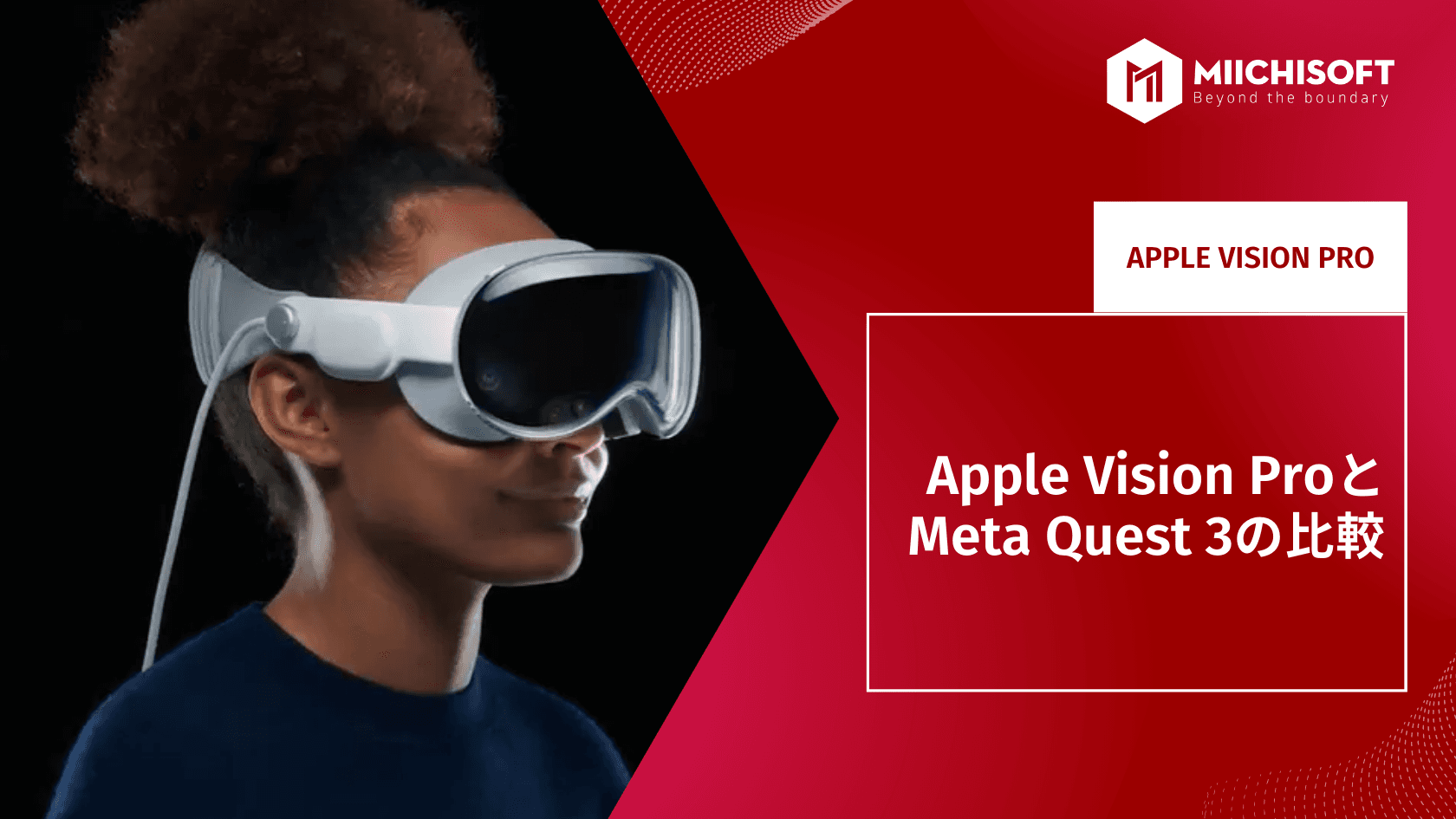
Apple Vision Pro costs 7 times as much - but is it really that much better a headset? Here's what we know so far.
It's official: Apple Vision Pro is an augmented reality (AR) device that can also deliver virtual reality (VR) experiences - in other words, a mixed reality headset - and Apple has finally built the long-rumored headset. This puts Apple in direct competition with Meta, the owner of Facebook, which currently dominates the consumer VR/AR headset space.
Last week, Meta announced its plans for a new Quest 3 headset later this year, revealing that it would blend AR and VR smarts in a similar way while, as we learned today, coming in at a far lower price. But the differences between the two don't stop there.
Here's everything we already know about Apple Vision Pro and Meta Quest 3.
1. Price and Availability
Apple Vision Pro is priced at $3,499, well above the rumored target of $2,000-$3,000. That's a price point only tech-savvy early adopters are likely to jump on right away, but that's hardly an unusual approach for Apple.
Meta, on the other hand, is sticking to a consumer-focused approach for its main Quest lineup. Quest 3 starts at $500, one-seventh the price of Vision Pro. Quest 2 currently sells for just $300. The more powerful Quest Pro, probably the closest analog to Vision Pro, now sells for $1,000, down from its launch price of $1,500 last fall.
Apple plans to hold off on rolling out Vision Pro until early next year, while Meta says Quest 3 will debut later this year.
2. Design and Hardware

Vision Pro fits right in with Apple's existing design language, looking something like a curved iPhone strapped to your face while borrowing elements from the Apple Watch. It's an appealing look, and given the price, it naturally looks expensive too.
Apple's device is packed with cameras and sensors that not only enable augmented reality passthrough but go a step further, with an external screen that displays the wearer's eyes and expressions from inside the device - something no previous VR or AR headset has offered.
At today's showcase, Vision Pro didn't come with any controllers or motion wands. However, Apple Arcade games can be played with a Bluetooth controller, and the headset supports the Magic Keyboard and Magic Trackpad for productivity.
Quest 3, meanwhile, is said to be 40% slimmer than Quest 2, but next to the smooth metal-and-glass Apple Vision Pro, it still looks like a chunk of plastic. It has external cameras and depth sensors, enabling full-color AR passthrough, but it has no external screen to show the wearer's face. Quest 2 couldn't do mixed reality because it lacked full-color passthrough - Quest 3 can.
The Quest platform also supports finger and hand gestures, but Quest 3 ships with upgraded motion controllers built for games and immersive apps. As discussed below, this could turn out to be an important differentiator when it comes to content.
3. Display
Apple Vision Pro's twin displays deliver more-than-4K resolution images to each eye, and the result is incredibly sharp. We don't have official specs yet, but Apple says the screens pack more than 23 million pixels in total, beamed directly into your eyes.
We don't yet know exactly how sharp Quest 3's screen is, but Meta says it's sharper than Quest 2's 1,832 x 1,920 image. Quest 2 falls short of 4K resolution per eye, and Bloomberg's hands-on noted that Quest 3 didn't look dramatically sharper than Quest 2 in practice. Still, we won't know for sure until we can compare them side by side.
4. Power and Battery
The gap between Apple Vision Pro and Meta Quest 3 more or less comes down to the difference between a powerful computer and a powerful smartphone. That gap will likely affect how rich and immersive the apps and games on each device can be.
Apple powers Vision Pro with the same class-leading M2 processor found in recent Macs, alongside a new R1 chip that processes data coming in from the cameras and sensors. Meta Quest 3, on the other hand, is said to use a Qualcomm Snapdragon XR2 chip designed for this kind of device but derived from smartphone chips. Meta claims double the graphics performance of Quest 2, but that's probably still well short of Vision Pro.
https://youtu.be/TX9qSaGXFyg
Vision Pro has no onboard battery. Instead, it comes with a plug-in battery pack that Apple claims is good for about two hours of use. The pack can be kept in your pocket or set beside you while seated, and plugging into a wall outlet lets you use it indefinitely.
We don't yet know Quest 3's battery life, but Quest 2 offers about 3 hours on a full charge, and a dedicated Elite Strap with an extra battery pack can double that runtime. Meta hasn't yet said how Quest 3 will compare.
5. Software and Content
Software is another area where a big difference shows up. Apple positions Vision Pro as a spatial computer for boosting productivity and as an entertainment device - but not as a gaming device.
It runs existing Apple Arcade games on floating flat screens, and new VR or AR games are likely down the road, but Apple hasn't shown anything like that so far.
https://www.youtube.com/watch?v=5AKl_cEB26c
The Meta Quest platform, by contrast, already has a large library of immersive VR games, including great titles like Beat Saber, Resident Evil 4, Pistol Whip, and Superhot VR. These games should run even better on Quest 3, and Meta has also shown plans to develop AR games for the new headset.
Meta has also announced plans to develop AR games for the new headset. Both devices can be used as productivity tools for accessing apps and websites, and for watching movies and TV shows in a virtual environment. But while Apple Vision Pro connects to the vast world of iOS apps and can link to a Mac to access its content, Meta's platform doesn't have as powerful a library of capabilities.
Apple offers access to popular apps like FaceTime and Zoom, and its 3D camera can create a "Persona" - a digital recreation of the wearer that reacts in real time to their movements. It's a big step toward greater immersion, seamlessly bridging the physical and digital self. The 3D camera can reportedly also capture photos and videos with depth, which is a pretty impressive feature.
6. Conclusion
We haven't tried either headset yet, many spec and feature details remain unclear, and we don't know which apps and games will be available when each device launches - so it's too early to draw firm conclusions.
Still, it's already clear that these are two very different products built around the same basic concept. Vision Pro is cutting-edge technology, packing in all kinds of flashy technical features along with greater power, a higher-resolution screen, and access to Apple's vast software ecosystem. But at $3,499, it's a tough ask for most consumers.
Quest 3, at one-seventh the price, appears to offer a meaningful upgrade over the already capable Quest 2, enabling AR games and adding more power and a higher-resolution screen. But it's still focused more on consuming content than creating it, and there's no question it leans more toward being a gaming device than Apple's headset does.
For many users, price alone may decide the choice, but for everyone else, a clearer picture of how these two headsets compare should emerge over the coming months. We'll share more details as they become available.
Related Articles

AI News Flash | Google Integrates Gemini into Chrome

Top 3 Workflow Automation Platforms: Is n8n, Dify AI, or Make the Right Fit for Your Business?

AI News Flash | xAI Officially Unveils Its Most Powerful Multimodal Model, "Grok 4.0"
AI News Flash | Gemini AI's Android Integration Expands, Turned On by Default Regardless of User Settings

AI News Flash | ChatGPT Is Evolving From a "Q&A AI" Into a "Multifunctional Work Partner"