Home › Blog › Emerging Tech & IT Trends
Apple Vision Pro: The Good and the Bad of the Revolutionary VR/AR Headset
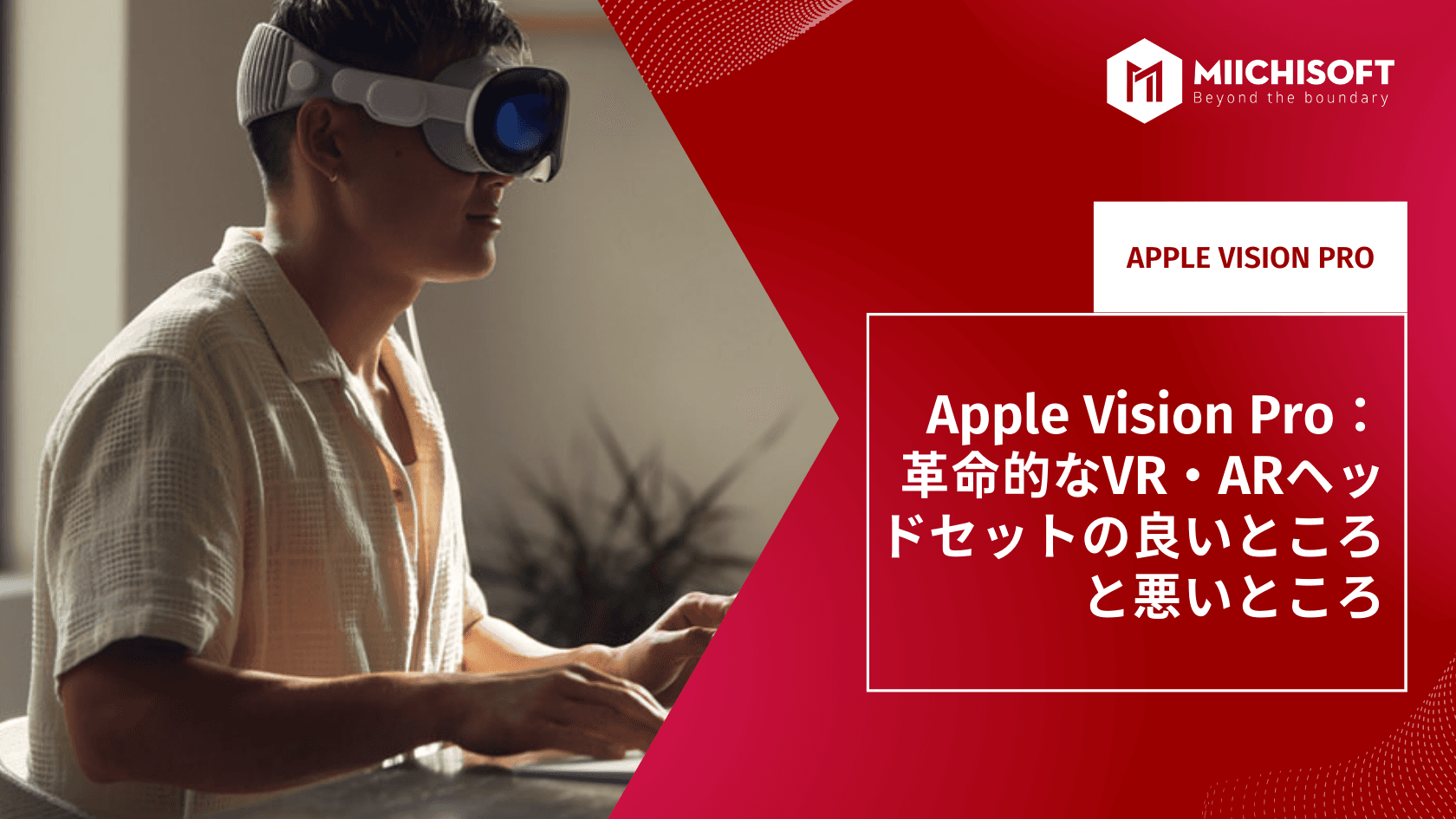
Apple's Vision Pro is a highly capable headset combining virtual and augmented reality. Its features impress, but the high price and concerns over digital isolation loom over its potential impact.
Most journalists tend to be skeptical, so it was unusual to see so many voices praising Apple's next big thing, the pricey Vision Pro, after actually trying it. The headset merges augmented reality, overlaying digital images on the real world, with fully immersive virtual reality.
But after putting on the Vision Pro during Apple's carefully staged 30-minute demo, I joined the ranks of those overwhelmed by the remarkable technology packed into this goggle-like headset. Yet that excitement was tinged with an unsettling feeling, as if I'd passed through a gateway leading society further down the path of digital isolation.
1. Positive Aspects Expected from Vision Pro

But first, the good news: the Vision Pro is highly sophisticated, yet setup is remarkably simple and intuitive. Setup uses an iPhone to automatically run an eye and ear assessment. If you wear prescription glasses (I wear contacts), extra calibration is needed, but Apple promises it isn't complicated.
Once that's done, putting on the Vision Pro is just as easy. A side knob makes it simple to get a comfortable fit. Unlike other headsets, the goggles resemble something you'd see on a ski slope, a fighter jet, or a race car — not exactly chic, but far from the clunky, nerdy look of typical headsets.
Operating the Vision Pro is surprisingly simple. Pressing a button above the right goggle brings up familiar apps on a virtual screen — photos, messages, phone, video streaming, web browsing, and more. To open an app, just look directly at it and pinch thumb and finger together. The same pinch closes it, or holding two fingers together and gesturing moves it sideways.
Unsurprisingly, Apple's carefully crafted demo showed the Vision Pro in its best light. This headset seems well suited to business use — boosting productivity, collaboration, and video conferencing — especially in today's era of increased remote work.
Vision Pro delivers stunning visuals and immersive 3D displays of far-off places, without the disorienting illusions common to other headsets. You can also step into past memories captured by the headset's 12 cameras (the demo included heartwarming scenes like a child's birthday party and a campfire). You can watch a 3D movie like the latest 'Avatar' from your couch and feel like you're sitting in an IMAX theater. I even marveled as a butterfly, first shown on a virtual screen depicting prehistoric times, flew around the room and landed on my outstretched hand.
The demo also offered a glimpse of sports events viewed through the goggles, making it clear that leaders in pro and college football, basketball, baseball, and hockey will find ways to bring this technology into subscription services that make viewers feel like they're sitting in the front row.
To Apple's credit, the Vision Pro is designed so users can still see people around them if they choose to.
2. Potential Drawbacks

My mixed feelings about Apple's first foray into mixed reality stem, ironically, from just how well-designed the Vision Pro is — from a company that has repeatedly driven game-changing technology over the past 40 years, from the Macintosh to the iPhone.
It feels like another example of Apple achieving something that eluded other tech companies: over roughly the past 10 years, cracking the code to make VR and AR more compelling and less disorienting than the many mundane headsets before it.
The one reason the Vision Pro may not spark an immediate sensation is its cost. Launching in the US early next year, it's expected to sell for $3,500 — likely making it a luxury item beyond the reach of the average household at first.
The most likely scenario: Vision Pro becomes, in a sense, Apple's testbed for mixed reality, driving specialized apps that use the technology. As a ripple effect, similarly compelling products will likely arrive at lower prices, drawing more people — including children — into a space that risks deepening screen addiction and undermining real human interaction.
Related Articles
AI News Flash | Google Integrates Gemini into Chrome

Top 3 Workflow Automation Platforms: Is n8n, Dify AI, or Make the Right Fit for Your Business?

AI News Flash | xAI Officially Unveils Its Most Powerful Multimodal Model, "Grok 4.0"
AI News Flash | Gemini AI's Android Integration Expands, Turned On by Default Regardless of User Settings
AI News Flash | ChatGPT Is Evolving From a "Q&A AI" Into a "Multifunctional Work Partner"