
Home › Blog › Culture & CSR
Why Is Process Improvement Necessary? | Miichisoft,.Jsc and Process Improvement
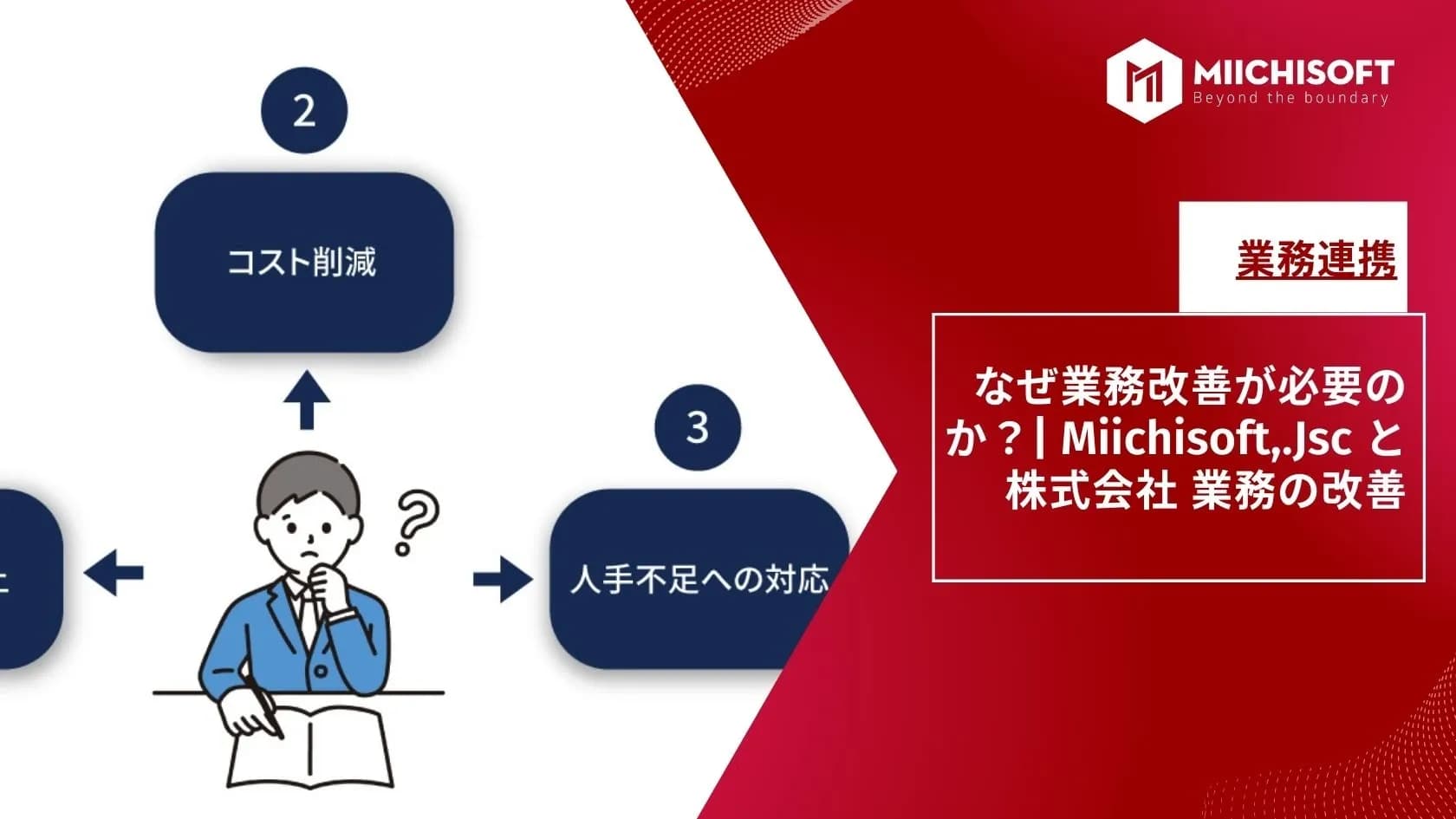
How much do you feel the need for process improvement? Some feel it's vaguely necessary but not urgent, others feel they've already done enough, and some are trying but not succeeding. Today we'll discuss why process improvement is necessary and what purpose it serves.
1. Looking back at history reveals the risks

Process improvement is a means of creating the people and time needed to build an organization that can withstand an ever-changing world. Before discussing why it's needed, let's briefly look back at how the world has changed.
During Japan's period of rapid economic growth (19 years, 1955-1973), anything made could be sold. Even through the subsequent stable growth period (1973-1984) and bubble economy (1986-1991), Japan's economy stayed strong, with new products and services proving profitable — hits like Sony's "Walkman" and Nintendo's "Famicom" emerged. But once the bubble burst, Japan entered its "Lost 30 Years", during which most Japanese firms that once dominated the top of global market-cap rankings disappeared.
Since 2000, lifestyles and mindsets have changed completely: viewers shifted from TV to on-demand platforms like YouTube, Amazon Prime, and Netflix, and the iPhone turned feature phones into smartphones. Communication also shifted from calls to text-based chat with the rise of LINE.
Then COVID-19 dramatically changed society. As people stayed home, internet usage surged and stay-at-home demand became evident: Netflix gained over 10 million subscribers in just three months, April-June 2020.
As commuting decreased, demand for home work setups rose and delivery use grew rapidly. Restaurant visits plummeted, forcing closures on stores that missed the takeout/delivery wave. Tourism and airlines, which had invested ahead of the Tokyo Olympics' inbound demand, took a severe hit: per the Ministry of Land, Infrastructure, Transport and Tourism, FY2020 international air passengers fell to 1.9 million, about 1/50th of the prior year's 94.93 million.
Entering 2022, things grew even more chaotic: COVID-19 restrictions eased worldwide, Netflix's stock crashed, the democratic-authoritarian divide widened, and Russia invaded Ukraine. Just as everyone needed to cooperate on the SDGs and climate change, a world seemingly splitting in two arrived alongside soaring energy prices — plus a weak yen, rising prices, and stagnant wages.
Looking back this way, the pace of change has clearly been accelerating year by year. Customer demand has diversified too, making personas and needs hard to pin down. The term VUCA (Volatility, Uncertainty, Complexity, Ambiguity — a chaotic era) captures this complexity. In such an era, organizations urgently need to transform to survive, and that requires people and time for strategy and tactics. As mentioned, process improvement frees up that people and time. Creating them is the very first step toward a sustainable organization.
2. Three abilities needed to build an organization that survives

The author believes an organization needs three abilities to survive: "the ability to envision the future", "the ability to adapt to change", and "the will to overcome a crisis".
"The ability to envision the future" imagines, from current trends, what world we're heading toward — an "offensive strength" for generating new business ideas and transforming the organization ahead of likely events. It requires constantly monitoring trends and quickly noticing historical, emotional, and value shifts, plus a perspective that reframes seemingly unrelated things in terms of your own business.
"The ability to adapt to change" is quickly grasping a situation and shifting thinking when something unexpected, like COVID-19, occurs. For example, telework usage jumped after the first state-of-emergency declaration (April 7, 2020), from 17.6% to 56.4% (source: FY2021 White Paper on Information and Communications). Many companies rode this wave, shifting operations to telework-centric models and downsizing offices — the news app Gunosy, for instance, switched to a shared office from June 2021, cutting costs while combining the benefits of telework and office work. How quickly a company executes such moves is what this ability demands, making it one that people close to management should hold.
The third ability, "the will to overcome a crisis", is organizational solidarity. It's often said that when a company hits a management crisis, its most capable employees sense it first and leave. In a survey by En Japan, which runs the "Middle no Tenshoku" job site for professionals in their 30s and 40s (2,350 users aged 35+), the top reason for job-hopping was "anxiety about the company's future". A true crisis is exactly when employees must unite to overcome it, but that becomes impossible once capable people leave. Increasing the number who choose the fulfillment of overcoming a crisis over that anxiety is also a leadership skill.
3. Process improvement is the means to transform into a sustainable organization

To develop these three abilities, you first need to create time through process improvement (mainly efficiency gains) and remove the physical and mental burden on the people doing the work. When people are chased by work and time, no ideas for improving the company can emerge, and the organization falls into a negative spiral of just repeating business as usual. Creating breathing room is the only way to break that spiral.
Then, use that secured time to build these three abilities: spend it on gathering information, input, and honing experience and intuition for "envisioning the future" and "adapting to change", and on team building and communication for "the will to overcome a crisis". The compass guiding all of this is the transformation "vision", and pointing the way with it is a leader's responsibility.
4. Summary
In summary, transforming into a sustainable organization requires three abilities aimed at a "vision for transformation": envisioning the future, adapting to change, and the will to overcome a crisis — and "process improvement" is the means of securing the people and time needed.
If you've never thought about "transformation", can't see your company's future, feel out of step with the world, or sense your team lacks shared purpose — if even one rings true, consider embracing process improvement.
Related Articles
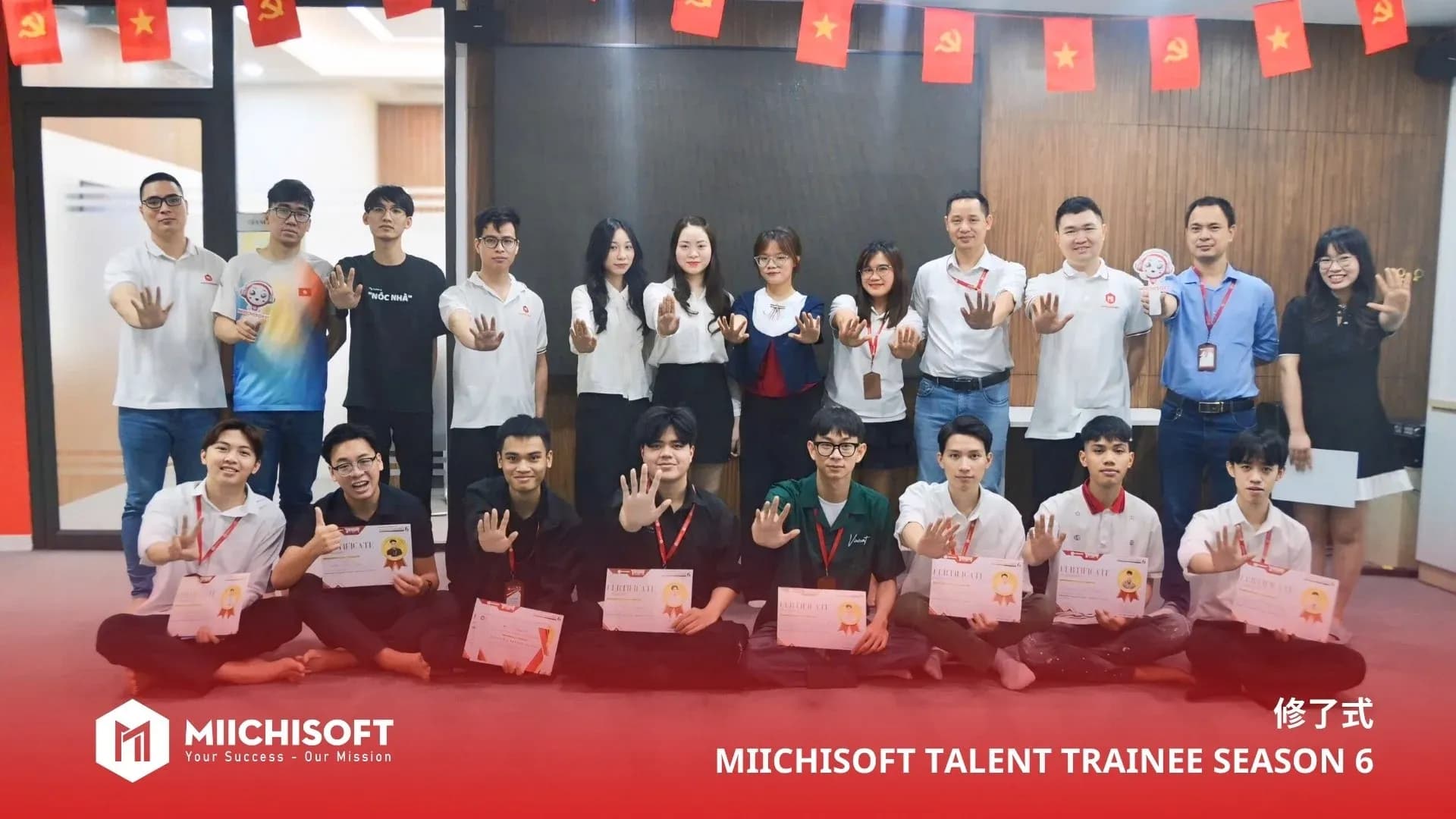
Closing Ceremony of Miichisoft Talent Trainee Season 6: A Memorable 2-Month Journey Comes to an End

How to Advance Business Process Improvement for Organizational Transformation | Miichisoft,.Jsc and Business Improvement Co., Ltd.

Lessons in Process Improvement from JAL's Turnaround | Business Improvement with Miichisoft, JSC

Miichisoft Has Signed a Training Agreement with GrowMind

MIICHISOFT - Deltawin Consulting Has Become an Alliance of Miichisoft
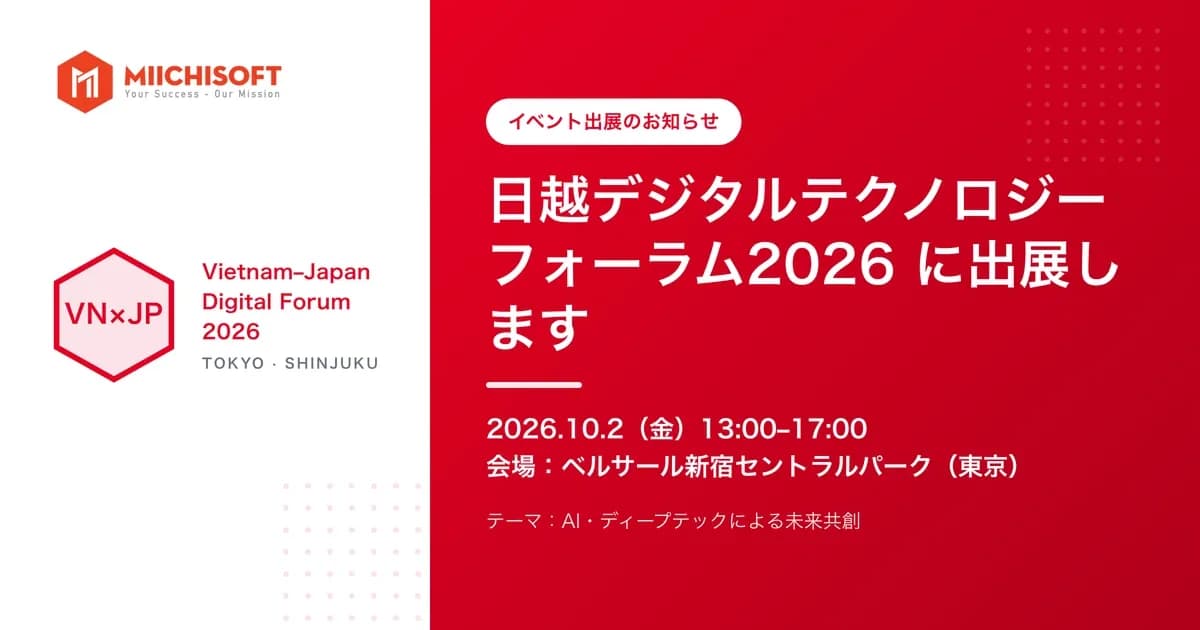
Miichisoft to Exhibit at the Vietnam–Japan Digital Forum 2026 (Oct 2, Shinjuku, Tokyo)
Miichisoft will exhibit at the Vietnam–Japan Digital Forum 2026, held on Friday, October 2, 2026 at Bellesalle Shinjuku Central Park in Tokyo. Through our booth and one-on-one Business Matching, we offer consultations on AI-Native development, DX, and offshore development.