
Home › Blog › Development Solutions
What Is PoC? 5 Steps to Successful Software Development
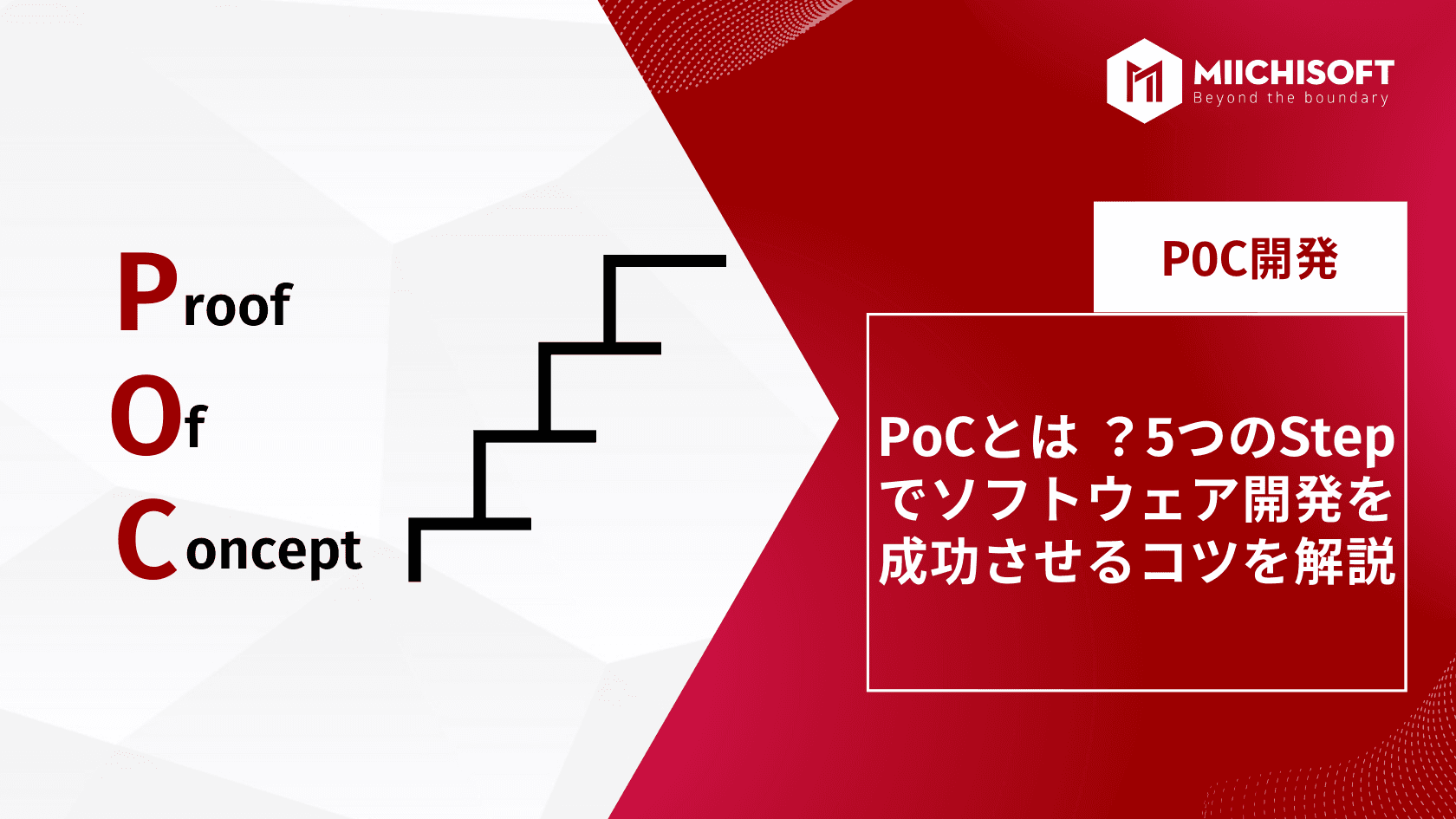
According to Harvard Business Review, more than 66% of startups fail to deliver value to investors. What's behind this high failure rate?
Companies and entrepreneurs often jump straight into product development to launch quickly. That's a risky move that can end in failure.
The road to successfully releasing a new software product starts with PoC (Proof of Concept): a software development testing methodology that helps companies make sound decisions about a new software product's configuration and define its future. This first check improves the odds of building a useful solution people genuinely want to use.
A software tool's success goes beyond the original idea. If testing is inadequate and fails to address market needs, it can prove useless, and you may end up pouring time and money into a product that simply doesn't sell.
Proof of Concept (PoC) development not only provides evidence that an idea is feasible, but also explains how it works and why it deserves funding.
1. What Is Proof of Concept (PoC) in Software Development?
Proof of Concept (PoC) in software development is a validation method used in the early stage of the product development lifecycle. The purpose of a PoC is to test whether a software idea is valid — proving a proposed system, application, or product actually works before development begins.
It's rare for the initial idea to meet the demands of today's fast-evolving market. A product must be technically feasible and also solve a real problem for its intended users. Otherwise, it fails.
That's why software development companies should carefully plan and test new ideas before building, pacing the development process accordingly.
PoC development is essential for defining the final product's vision and direction, so every stakeholder in the development process needs to be involved. They come together to discuss constraints, opportunities, and risks, and agree on the project's direction — a critical step for a solid foundation for a smooth development process, testing, changes, and release.
Reference: 11 Pitfalls to Avoid in a Product Roadmap
Proof of Concept (PoC) can take the form of a document, presentation, or demo — no coding or design required. That said, a PoC does require complete documentation of requirements and technical specifications. For outsourcing, this is usually done in-house or within a limited group of stakeholders.
A PoC is often confused with a Minimum Viable Product (MVP). Unlike a PoC, though, an MVP is a functioning product with basic features.
Reference: What Is MVP Development? A Thorough Explanation of the Difference from PoC and Development Methods
2. Benefits of Developing a PoC in Software Development
Millions of companies have new product ideas, but most fail. What stands in the way? Here are the top two reasons startups fail, per CBInsights.
- Running out of funding (or being unable to raise capital)
- Lack of market need
Both problems can be solved by starting software development with Proof of Concept (PoC) development.
Let's look at all the benefits a business can gain from a PoC.
2.1. Assessing Technical Feasibility
The purpose of a PoC is to confirm whether a software idea is technically feasible. A PoC project needs a development team that assesses what's possible and determines the right technical direction for the product.
2.2. Early Validation of Market Need
Developing a PoC requires identifying the specific problem and pain points the tool is meant to solve, so the product stays grounded in reality and delivers real value to end users. The testing phase, part of this iterative process, shows whether you're on the right track.
2.3. Understanding the Product's Features and Limitations
Developing a PoC helps the owner understand the limitations, advantages, and drawbacks of the product idea. During the process, you can discover various options and choose the best development direction.
2.4. Making Sound Budget Decisions
Making the most of investor funding is essential to launching a new product. A PoC lets a company understand its budget needs and how the money will be spent, avoiding the horror story of raising capital only to pour it into a full-scale solution the target market has no use for.
2.5. Having Reasons and Evidence to Believe
Convincing investors your concept is valid and worth funding takes more than enthusiasm. A PoC explains why and how the idea works — evidence that can win over even skeptical investors and help you negotiate terms with other stakeholders.
2.6. Accelerating Release
Creating a PoC establishes an action plan for building your solution, helping you confirm whether you've chosen the right workflow and adjust as needed. Choosing the right path from the start avoids unexpected surprises later, and helps you learn about risks and prepare to mitigate them.
3. Key Steps to Developing a PoC for Successful Software Development
Developing a PoC produces detailed documentation describing the project's requirements, objectives, and the processes and roles assigned to every stakeholder — a document describing the creative process from initial version to deployment.
There are 5 steps to developing an effective PoC.
3.1. Step 1: Define the Need
When a product idea is born, it may rest on assumptions. This step means finding evidence to validate those assumptions by identifying the real-world problem the software should solve.
Skipping this step can leave you with a working tool that's ultimately useless. Talk with your target audience to gather feedback and identify the needs and pain points you're solving for.
We recommend answering and documenting the following questions.
・What are we trying to achieve? What's the added value?
・What criteria define success for the software product?
・What's the timeframe?
・What resources do we have?
・What should the workflow look like?
・Are there any equivalent solutions?
3.2. Step 2: Come Up With the Right Solution
Brainstorm potential solutions with your development team. There are likely various ways to solve these problems — map them out while factoring in budget, timeframe, and other constraints. Also consider what competitors already offer and whether you can build on it.
During this ideation process, you may hear surprising things — and be just as surprised by what you don't hear. Some assumptions will become clearer here. This discussion needs technical experts who can determine what's possible.
3.3. Step 3: Build a Prototype
Once you've established the right problem-solving scenario, develop a prototype. Depending on the nature of the product, this could be a mockup, a wireframe, or a simple sketch. It should show the proposed workflow, expected features, and basic UI/UX.
Reference: PoC vs. Prototype Development: When Do You Need Which?

3.4. Step 4: Test the Prototype and Gather User Feedback
The purpose of developing a prototype is to show it to your target users and collect feedback. While the previous stage was mostly internal, this stage shows it to potential users and stakeholders to understand whether it can succeed in the market.
Throughout the process, you can discover the tool's true benefits and see just how intuitive it is. The testing process can also reveal features you had overlooked. Use this valuable feedback to revise the tool accordingly. You can repeat this process until you reach a satisfactory version of the software product.
3.5. Step 5: Build a Roadmap
In the final step, gather all the information collected throughout the process and build a roadmap. It should outline the step-by-step process for developing the solution and clearly lay out the goals and objectives. It includes all the learnings and recommendations for improving software development. This becomes a negotiating card for potential investors and a manual for building the product.
4. Examples of Proof of Concept (PoC)
One of the biggest examples of PoC is Walmart's application of blockchain technology to improve product traceability in the food supply chain. Working with technology partner IBM, the company ran two separate PoC projects: one focused on tracking mangoes in US stores, and the other on tracking pork in China.
The proposed blockchain-powered solution worked, and Walmart was able to speed up the tracking process. When an issue arose, Walmart could quickly pinpoint the cause in just seconds.
While the idea was technically feasible, skeptics criticized it for relying on human data entry, leaving room for error or fraud. The idea behind implementing this solution was to enable a fast response to outbreaks of foodborne illness.

Naontek, a German startup, came up with a brilliant idea: creating digital contacts across the country's entire healthcare community.
They set out to bridge the industry's technology gap by introducing an educational platform for medical professionals that leverages software expertise, and by rolling out easily accessible digital products and services. To confirm the product was feasible to build and that the market genuinely needed it, they decided to run a robust Proof of Concept.
"Once we started building out the technology grooming method in more detail and figuring out how to build the PoC, we started delivering the product in the form we wanted," said Florian Eber, VP of Product Development at Naontek.
This process focused on understanding the project's target audience, business needs, and technical aspects. As a result, the company was able to quickly grasp the needs and challenges of product development.
In its first 12 months of operation, Univiva proved to be a particularly successful launch, with the platform registering around 20,000 users and adding around 6,000 courses.
5. Developing a PoC for a New Software Product
PoC development in software development means validating the idea behind a product at the very first stage, before raising funding and building it. This initial check is essential for confirming that the tool can be built from a technical standpoint, and for identifying the expectations and potential risks that may arise in the software development lifecycle that the development team will need to address.
This is the first step for a company to create a useful software product that succeeds. Software development services can help validate a business idea and provide experienced developers and product managers to guide the product toward success.
If you have a project idea and want to run a PoC (Proof of Concept), feel free to contact us for a free consultation and a detailed quote. We look forward to working with you.
Related Articles
[Case Study Dify] AI ERP Query Bot Using Natural Language - Retrieve data in seconds
Dify Chatbot Pricing: Complete Guide to Deployment & Operating Costs
[2025] 12 PWA App Case Studies, Explained in Detail
What Comes After Proof of Concept (PoC)? [2025 Edition]

Top 10 IT Outsourcing Companies in Vietnam Experienced in Working with Japanese Enterprises