
Home › Blog › AI & Generative AI
The Importance of Prompt Engineering — And Why It's Trending?

Prompt engineering is a field of generative AI that has been drawing a lot of attention lately. It's the discipline of designing AI instructions — including for natural language tools like ChatGPT — so businesses can get the most out of them. This article explains the role, importance, and trends of prompt engineering, with real-world examples of how it's applied.
1. What is prompt engineering
1.1. The rapid rise of AI language models
In the world of artificial intelligence, AI language models like ChatGPT are among the most prominent applications, growing at a remarkable pace. These models have revolutionized how we work and access data, acting as a "secret weapon" for solving even the most complex problems. With the ability to process and analyze vast amounts of information at record speed, they let us focus on what we do best while handling individual tasks on our behalf — which is exactly why they've become so popular, so quickly.
Alongside the rise of AI language models, an intriguing concept has emerged: AI prompt engineering.
So what exactly is AI prompt engineering?
1.2. What is prompt engineering
Prompt engineering is the discipline of developing and optimizing prompts — instructions given to a language model — to make efficient use of large language models (LLMs), which power AI's natural language processing in particular.
An LLM is a language model trained on massive datasets of text and code. LLMs typically transform tasks based on prompt-driven datasets, training the model through a method known as prompt learning. This training enables capabilities such as generating text, translating languages, creating content, and answering questions.
That said, it isn't perfect — desired results aren't guaranteed every time. How a prompt is phrased can make a big difference in output quality, which is why a well-crafted prompt is essential for guiding AI accurately. Giving AI the right questions or instructions draws out more favorable results. In short, prompt engineering is the skill of designing and optimizing instructions to get the output you want from AI.
2. Why prompt engineering matters at its core
2.1. Improving human-AI interaction
Anyone who has used ChatGPT knows that ordinary questions rarely need much thought. But instructing AI to deliver exactly the information you want isn't as easy as it sounds. That's why prompt
engineering plays such a critical role in conveying human intent accurately and obtaining the desired output.
A "prompt" refers to a piece of text that tells a program what to do. It's used in command-line interfaces (CLI) to indicate the command entered by the user. In ChatGPT, for example, the input field is where you enter your prompt.
2.2. Refining AI's responses
Crafting the questions and instructions in a prompt, and guiding them toward the right answer, is exactly what prompt engineering is about. Put simply, it means writing well-designed questions or instructions that tell AI what to do. The better the question, the better the AI's response.
Crafting the questions and instructions in a prompt, and guiding them toward the right answer, is exactly what prompt engineering is about.
Just as when talking with a friend, how you phrase a question or frame a request has a big impact on the quality of the response you get from an AI bot. Prompt engineering means understanding an AI model's capabilities and limits and using that knowledge to get the best possible outcome. So whether you're writing a novel, solving a complex math problem, or generating a realistic image, the secret to unlocking AI's true power lies in prompt engineering — like giving clear instructions to an AI partner so it can do the job perfectly.
2.3. Boosting efficiency and productivity
Prompt engineering enables optimized output with minimal extra effort. Because AI-generated content aligns better with your goals and standards, the need for extensive review and correction is reduced — boosting both efficiency and productivity.
2.4. Cost efficiency and optimized resources
By crafting precise prompts, prompt engineers ensure AI-generated output meets the required standard, removing the need for extra resources to revise or enhance content. This achieves cost efficiency and optimized resource use, minimizing time and effort spent on post-processing.
2.5. Better outcomes and satisfaction
A well-crafted prompt guides an AI model toward more relevant, accurate, tailored responses — improving outcomes and satisfaction, and enabling effective, long-term interaction with AI.
3. Why prompt engineering matters across industries
Prompt engineering for AI language models matters across many sectors that rely on these technologies for text generation, answering questions, and summarizing documents. A well-crafted prompt must ensure the AI's output is appropriate, reliable, and safe in the real world.
Why prompt engineering matters across industries
3.1. Healthcare
In healthcare, AI prompt engineering can help analyze medical text and patient records to support clinicians. Prompts must be designed to keep accuracy high while avoiding trivial or hazardous responses.
3.2. Financial services
In financial services, AI supports functions like portfolio management, risk assessment, and customer service. Prompts are designed with a focus on fidelity, transparency, and regulatory compliance.
3.3. Media
For media companies using AI-generated content, prompt engineering services help reduce bias in news articles, product descriptions, and social posts, with care taken to avoid inaccurate or unethical output.
3.4. Customer support
In customer support, AI chatbots and virtual assistants need prompts that avoid ambiguity and repetition, fine-tuned to maximize customer satisfaction scores.
Various approaches are being researched to keep AI systems safe — combining prompts vetted by multiple experts, blacklisting risky phrases, and building in techniques for handling edge cases — so that AI prompt engineering protects the safety and transparency of AI systems.
Prompt engineering plays a major role in overcoming data privacy concerns and ensuring ethical AI interactions. Data privacy concerns arise whenever AI handles personal information; proper prompt design curbs the misuse or leakage of that data. Ensuring ethical AI interactions likewise requires careful adjustment and monitoring of prompts. Prompt engineers continuously refine and evaluate prompts so AI's responses stay ethically appropriate and aligned with social values.
As language models become more widespread, prompt engineers' role as guardrails for responsible AI will only grow in importance. Beyond the four fields above, prompt engineering is certain to spread across countless industries, and demand for prompt engineers will rise fast as well.
4. The future of prompt engineering and how to get started
4.1. The future role of prompt engineering
As AI tools evolve and grow more sophisticated, the role of prompt engineers will evolve too. The future of prompt engineers lies in further optimizing how we interact with AI systems.
This includes adding context, fine-tuning phrasing, and experimenting with the factors that influence a model's output.
Prompt engineers will keep blending a nuanced understanding of language with technical expertise, making it an increasingly essential skill for working with AI systems. This process spans defining goals, drafting initial prompts, testing and analyzing responses, refining prompts through iteration, and real-world implementation.
Going forward, prompt engineers will draw on their understanding of AI and language models to craft even more effective prompts. As AI evolves, they'll generate targeted results across many scenarios — from generating content and drawing out the information customers need, to designing prompts for better customer-service support, to running specific analyses in scientific research.
4.2. How to get started with prompt engineering
Here's a step-by-step guide for anyone starting out as a prompt engineer with no prior experience.
4.2.1. How to generate prompts
Start by actually generating prompts. First, get hands-on with AI tools and prompt-creation tools like ChatGPT and try writing prompts yourself — you can't move forward as a prompt engineer without this step. As you create prompts, note their characteristics and how the AI responds to different questions. To sharpen your prompt engineering skills further, we recommend reading the article below.
https://miichisoft.com/prompt-engineering-for-beginners-where-to-learn-in-2024/
Prompt engineering for beginners: where to learn in 2024
4.2.2. How to build programming knowledge
Building programming knowledge matters too. Becoming a prompt engineer can involve implementing natural language processing, so a solid foundation in languages such as Python, Java, and C++ helps. Knowledge of statistics and algorithms is useful as well.
For beginners, options include attending a coding bootcamp or taking on competitive programming challenges. Bootcamps often let you learn at your own pace online, focused on languages like Python, Java, and C++.
Competitive programming means tackling specific problems while competing against other participants, letting you gauge and sharpen your skill level.
4.2.3. How to earn certifications related to AI engineering
Earning AI-engineering-related certifications helps too. There's currently no official certification specifically for prompt engineers, but credentials such as the Python 3 Engineer Certification (Basic), data analysis exams, and the G Test are useful for deepening your programming and AI knowledge. These exams cover Python, data analysis, and deep learning models, requiring a broad range of knowledge and practical skill.
5. FAQ
Q1. What is prompt engineering?
Prompt engineering refers to guiding a generative AI solution to produce a specific output. Generative AI tries to mimic human behavior, but it needs detailed guidance to produce high-quality, relevant output. Prompt engineering means choosing the right format, wording, and symbols so AI can hold more meaningful dialogue with users. Prompt engineers use creativity and trial and error to develop input text that gets generative AI to function as intended.
Q2. What does a prompt engineer actually do?
A prompt engineer develops or refines prompts — the instructions that guide AI, such as ChatGPT, toward the best possible response. Their role is to fine-tune AI so it can auto-generate text suited to many situations, from product descriptions to chatbot conversations.
Q3. What are the elements of prompt engineering?
The elements of prompt engineering are four: instructions, context, input, and output format.
Q4. Why does prompt engineering matter?
Prompt engineering is a technical and academic discipline focused on giving AI the right questions and instructions (prompts). As AI adoption in business grows, it's indispensable for making AI truly useful. Going forward, it is expected to become an essential skill for business professionals, driving up demand for people who can master AI.
6. Conclusion
Prompt engineering is the key to getting the most out of AI in both business and everyday life. Applications span customer support, content creation, streamlining routine tasks, and product-development ideas. With well-designed prompts, AI can accurately grasp user intent and deliver the expected answers and actions. Understanding and applying it well can strengthen a business's competitiveness.
Miichisoft is a Vietnamese technology company with a strong track record in cross-platform development for Japan. Through more than 150 successful projects, we've built real experience leading IT projects and take pride in our clients' success.
Miichisoft has also recently completed and released dxGAI Business | Enterprise, a comprehensive, future-ready AI solution built on ChatGPT. As a company ourselves, we understand the challenges of adopting AI, and whether you want to start using prompt engineering in your business or use it effectively without worrying about safety, we're here to help.
If you're interested in prompt engineering or other AI technologies, please get in touch — let's explore collaboration opportunities together.
Related Articles
Dify Implementation Consulting | A Comprehensive Guide and Detailed Cost Breakdown

[Dify Case Study] Dify AI Contract Review Chatbot in 2 Minutes - Standardized to Internal Compliance Requirements

What Causes Dify Implementation Projects to Fail Midway? A Management Guide to Succeeding with Your Dify Implementation Vendor
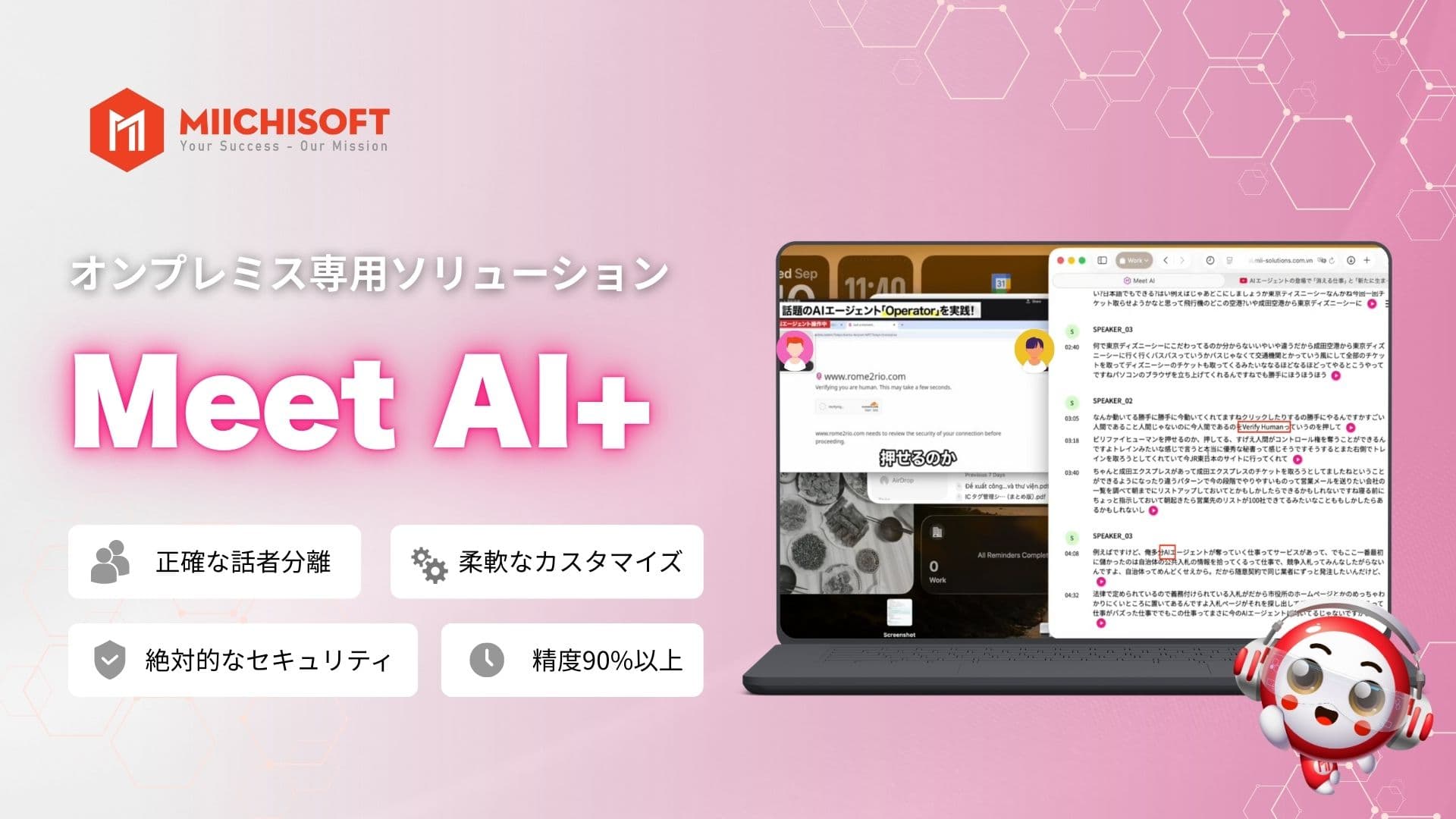
Miichisoft Launched Meet AI+ - AI Meeting Assistant Optimized For On-site Meetings, Reducing Meeting Minutes Creation Time By Up To 90%
6 Criteria for Dify Implementation Vendor Selection you must know! [Free RFP Template]