Home › Blog › Development Solutions
SaaS vs ASP: Comparing the Differences
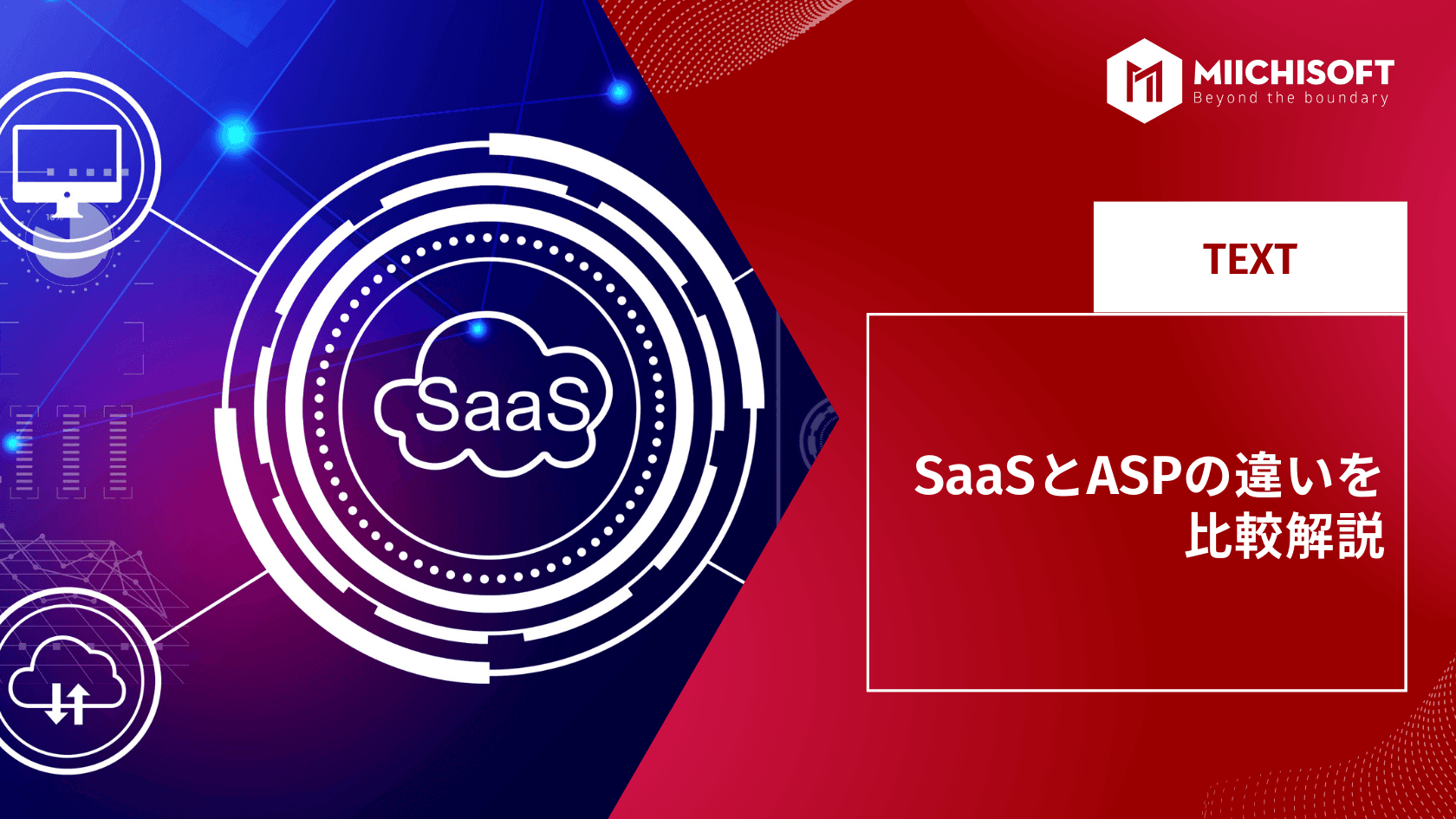
These days, many different business models exist. Users encounter many of them while searching the internet or using applications. Among the most popular are SaaS, PaaS, IaaS, and ASP.
The difference between SaaS and ASP is not always clear to users. Let's take a closer look at this topic.
1. What Is SaaS?
SaaS stands for Software as a Service. This model is often confused with ASP, and it may seem quite complex to understand at first glance. So here, we'll explain SaaS in an easy-to-understand way.
SaaS is a business model where you don't need to purchase hardware for the application, and no license is required either. You pay a provider and access the software over the internet. The provider is responsible for maintaining and upgrading your software.
Learn more about SaaS: SaaS Development: How to Develop a SaaS Application
2. Why SaaS?
Cloud technology is already on the rise today, and Oracle published its "Top Ten Cloud Predictions 2019" report on what the IT world would look like by 2025. According to that report, 80% of enterprise workloads would move to the cloud within six years. That's exactly where effective SaaS management becomes essential.
Based on this prediction, the days when there was time to casually gain insight into SaaS are long gone. Our goal is to make full use of this model and keep up with the new trend.
3. What Is ASP?

An Application Service Provider (ASP) is a service provider used to access applications. An ASP is located away from the consumer's server, connected via the internet or a private network. The application is usually hosted by a third party.
In many cases, they are not affiliated with the software vendor itself. The people deploying the software may not have enough experience in the software field, which can lead to lower efficiency and slower responses to problems, along with extra costs for support and upgrades.
Today, ASPs can be divided into several types.
- Enterprise ASPs work with large companies and enterprises. Enterprise ASPs provide complex, high-tech solutions to large companies and enterprises. Services generally include custom configuration and full maintenance of the selected application. ASPs may also take on training a company's employees to use the leased application.
- Local/regional providers. Regional ASPs specialize in working with small businesses in a small geographic area. As a rule, they can rent out a set of the most common, simple office applications.
- Providers offering specialized solutions (specialist ASPs). These companies provide access to applications that solve specific problems, such as issues within a narrow professional activity or business area — for example, collecting user feedback, automating HR management, or renting web servers.
- Providers of combined solutions (volume business ASPs). They rent out pre-packaged sets of services and applications, used to solve a key set of tasks in a specific market. Their main field of activity is combined services for small businesses.
- Providers that operate and maintain business processes (business process outsourcers, or BPO). They specialize in performing specific functions within a business process, such as customer service or product delivery.
- Commerce network providers. Businesses that provide a commercial network for exchanging electronic data between companies.
The applications they offer can be classified as follows.
- Personal applications. This includes application packages such as Microsoft Office, games, and educational software products.
- Communication and interaction tools — email, meeting applications, and so on.
- E-commerce applications. Used when working with a company's buyers and suppliers, such as online stores.
- CRM and ERP applications.
- Applications specialized for a particular industry.
- Analytical applications — financial analysis, customer demand analysis, risk, and so on.
4. Why ASP?
ASP can work to the advantage of small and mid-sized businesses, because outsourcing key IT needs lets them get access to specialized software. ASPs don't require software distribution, yet they can consistently provide technical support, security, and up-to-date services. In addition, ASPs promote flexible use of software.
What Is the Difference Between ASP.NET and PHP? Meaning and Usage Explained!
5. SaaS vs ASP: Comparing the Differences

The decisive difference between SaaS and ASP is access rights. In the SaaS model, customers purchase access to certain business functions, without accessing the application itself at all.
What about the ASP model framework? In this case, the customer receives a dedicated installation of the software. It is placed at a remote site and does not have multiple owners.
The SaaS model has various multi-tenant benefits. Multi-tenancy here means providing the same version of the software to every customer using it. As a guaranteed benefit of the subscription service, every customer can use the same upgrades and features at no extra cost.
The SaaS model is scalable and can remove the main pain points in the customization process. For vendors, SaaS multi-tenancy minimizes the total cost of operations and the sales cycle, while making effective use of resources. The SaaS model also makes it possible to improve customer service and strategy.
ASP does not offer multi-tenancy. However, some vendors who want a simpler business model and don't want to spend time rebuilding their product still choose the ASP model. Another difference is that the term ASP can refer not only to business applications but also to services and infrastructure software.
ASP | SaaS |
|---|---|
Single-tenant approach | Multi-tenant approach — provides the same features and scope of functionality to all users |
Users have power over the vendor-hosted solution and can request the type of service they need | The provider manages, maintains, and supports the solution. Users cannot request specific changes |
User data can be hosted in any jurisdiction requested by the user | User data is hosted in a jurisdiction chosen by the provider |
Cost is determined based on the user's requirements | Lower cost compared to ASP |
Users have the ability to purchase software from a third-party retailer and host it elsewhere | Users cannot purchase software from a third-party retailer and are always limited to the SaaS vendor |
Customization can take time | Ready to use right after signing up |
It's sometimes said that SaaS is really the same as ASP, just given a different name for marketing reasons. However, as you can see, the differences between these two models are actually quite significant, which is why this view isn't easy to accept. So, do you now have a clearer understanding of the difference between ASP and SaaS?
Related Articles
[Case Study Dify] AI ERP Query Bot Using Natural Language - Retrieve data in seconds
Dify Chatbot Pricing: Complete Guide to Deployment & Operating Costs
[2025] 12 PWA App Case Studies, Explained in Detail

What Comes After Proof of Concept (PoC)? [2025 Edition]

Top 10 IT Outsourcing Companies in Vietnam Experienced in Working with Japanese Enterprises