
Home › Blog › Development Solutions
How to Build an Auction System Like Yahoo! Auctions (With Steps)

Auctions have a long history and are deeply rooted in the trading culture of many markets and countries around the world. Originally, the word "auction" referred to the public sale of goods, securities, artworks, and other items by competitive bidding under a set of formal rules.
The principle common to every auction is competition among potential buyers. As buyers compete for the right to purchase an item, the winner of the auction emerges. The winner is whoever places the highest bid according to the auction's rules, and that person then acquires the item.
Auction sites are online platforms that automate the real-world auction process, allowing users to buy and sell items.
The most famous auction site in Japan is Yahoo! Auctions (Yahuoku!). Yahoo! Auctions launched in 1999 and, as an online auction platform run by Yahoo! JAPAN, is one of the longest-running services of its kind in the country. It has since gained widespread popularity across Japan and continues to be used by a large number of people today.

Source: Z Holdings
Amazon, the e-commerce site launched by American entrepreneur Jeff Bezos in 1994, has also become a popular online auction site.
Why an Auction Model Like Yahoo! Auctions Works

(1) No geographical barriers – Sellers and buyers can bid on Yahoo! Auctions from anywhere in Japan. All that's needed is internet access. This increases both the number of sellers and lots listed and the number of buyers placing bids.
(2) No time limit – You can bid on Yahoo! Auctions listings 24 hours a day, 365 days a year. Lots typically stay listed for around 5 to 7 days on average, which is plenty of time to search, get to know an item, and make a purchase.
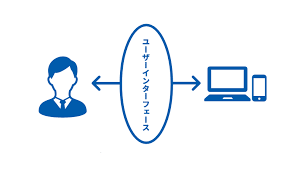
(3) Easy-to-use interface – The ease of use of Yahoo! Auctions is also appealing to sellers. On top of that, any member can become a seller.

(4) A wide range of features – Listing items, credit card payments, shipping, and other options are core features that need to be considered during the build.

(5) A huge number of buyers – Millions of buyers are drawn in by a wide selection of products at relatively low prices. Bidding periods are relatively long, and bids can even be automated.
How to Build an Auction System
Developing an auction website is a complex process that involves several important stages. Below is a detailed, step-by-step guide to successfully building an auction website.

Step 1. Purchase a Domain Name
You need to come up with ideas for your website's domain name. Every website needs a domain name so users can access it over the internet. It's usually made up of the site's name so that users can find it easily online.
Ideally, a domain name should be short and catchy, making it easy for users to associate it with something memorable. auctions.yahoo.co.jp is a great example of a perfectly chosen domain name.
Many online services and web hosting providers let you find, select, and purchase an available domain name, making it possible for users to discover your online auction software on the internet. Google Domains is one of the most popular services for this.
Here are a few tips to keep in mind so you don't go wrong when purchasing a domain name.
・Choose a top-level domain (TLD) such as .com, .co.jp, .org, or .net.
・Check the domain's rating using an SEO tool such as Ahrefs' website "authority" checker.
・Check the domain's history using the Wayback Machine, the largest internet archive.
If you already own a domain, you don't need to buy a new server, since you can easily connect that domain to a new server. Just remember to renew it so you don't lose your domain reservation.
Step 2. Prepare for Website Development
To develop your online auction software smoothly and avoid bottlenecks, we recommend preparing thoroughly in advance. If you're not sure how to build a bidding website, we recommend having the following ready.
■ Product vision
You need a clear understanding of what you want to achieve and a prepared product vision. This is a document that outlines the main objective of your online marketplace development. It should also imply a list of the short-term and long-term business goals you want to accomplish. A clear product vision helps you build a detailed roadmap for creating your auction website.
■ User roles
An online auction marketplace can have many different types of users. Depending on their purpose, each user type will need access to different features. You need to define user roles and the features required for each one.
The main user roles on an auction website are as follows.
・Buyers – People who use the site to find new items and place bids. Buyers need to be able to create an account, place bids, track the bidding process, communicate with sellers, search for items, and share reviews.
・Sellers – People who use the online auction software to sell items. Sellers need to be able to create an account, add new products, edit product descriptions, monitor bids, and receive payments.
・Administrators – Administrators may hold different permissions set by the primary administrator user. They must be able to manage auctions, delete user profiles, update content, and check statistics.
■ Feature list
Create a list of features your software engineers need to develop. This helps you choose the right tech stack and roughly estimate the scope of work.
The set of features can vary depending on the specific needs and details of the business. For instance, this type of platform is popular and has been successfully applied to selling cars, motorcycles, collectibles, and antiques. Take a closer look at the core features to learn more about how to build an auction website that anticipates opportunities for online bidding.
# | Feature | Description | Difficulty (1-5) |
1 | Registration and login | Users can create an account and log in to take part in auctions. | 2 |
2 | Auction item listing | Users can browse the list of items up for auction and check detailed information about each one. | 3 |
3 | Bidding and pricing | Users can bid on items they're interested in and set a price. | 4 |
4 | Product registration and management | Users can register and manage their own listed items, and set the item's information and images. | 4 |
5 | Online bidding | Users can take part in the online bidding process and compete against other bidders. | 4 |
6 | Notifications and updates | The website provides notifications and updates on bidding results, sharing information such as price changes and completed bids. | 3 |
7 | Payment and shipping | Buyers can make payments, and sellers can arrange shipping or direct handover. | 4 |
8 | Ratings and feedback | After a transaction, there's a system for users to give each other ratings and feedback, improving transparency and trust. | 3 |
Table of the main features of an online auction, ordered by priority
Note: The difficulty rating (on a scale of 1 to 5) indicates the relative difficulty of each feature. 1 is the easiest and 5 is the most complex. This rating may vary depending on the individual and their experience.
■ Website development approach
The two most widely used approaches for building an auction website are as follows.
・Ready-made solutions – A pre-built website with basic features. The owner just needs to install it and add content. Ready-made solutions usually come with a content management system (CMS) such as WordPress.
・Custom-built websites – A unique website developed from scratch. With the help of custom website development, you can get a site that's 100% customizable and meets every one of your requirements.
To learn more about how to build an online auction website, let's compare the two most popular site development approaches.
Item | Ready-made solution | Custom-built website |
Deployment speed | Fast | Takes time |
Customizability | Limited | Fully customizable |
Cost | Low | High |
Uniqueness | Limited | High |
Scalability | Limited | Easy to expand |
Support and maintenance | Provided | Additional responsibility |
Technical skill required | Limited | High |
■ Monetization model
Before starting development, it's important to think about how your auction website will generate revenue. The most common monetization models applied when building an auction website are as follows.
・Seller fees – Sellers pay a share of the money they earn from a transaction.
・Listing fees – Sellers pay a fee to add a new item to the website.
・Buyer fees – Bidders pay a fee on every transaction they make.
・Advertising – No fees are charged. The website owner earns revenue by showing ads to customers.
Choose the best monetization model to let your software engineers build an auction website with all the features you need. In some cases, you can combine several monetization models.
■ Integration list
Most auction websites integrate with third-party services. The main ones to consider are as follows.
・Shipping – Calculate shipping prices in real time and dispatch items quickly. For example, FedEx and UPS, the largest shipping companies in the US, offer API solutions that let developers integrate their services into an auction site.
・Social – Integration with social media makes the sign-up process easier. It can also be used to build chat and comment features.
・Payment processing – Use a third-party service to receive and process payments without hassle.
■ Technical requirements
Precise technical requirements help developers choose the right technology for building an auction website. Here's a checklist of key technical requirements to draw up.
・Load – The estimated number of users who will use the website. This helps developers build the right solution and choose a server.
・Website structure – The structure of pages and their hierarchy, to understand how users will use the site.
・Wireframes – A rough layout of the elements on a web page.
・Browser and device support – The website needs to support a list of browsers and devices such as smartphones, tablets, and laptops.
・Page load speed – The maximum and desired page load speed. This affects customer satisfaction and rankings.
・Legal compliance – The legal requirements that must be met. For example, any site operating in the European Union must comply with the General Data Protection Regulation (GDPR).
After sharing all the details with the developer, the developer will estimate the project and present the approximate cost and timeline for building the auction website.
Step 3. Create the UI/UX Design

Developing the website design is a key stage you need to carry out when building an auction website. Once the wireframes are ready, designers need to create mockups of the site. They need to design a logo, choose a color scheme, and create UI elements arranged in a specific order.
Developing a good user experience design requires experts to thoroughly analyze the business requirements. This helps produce a well-thought-out UX design that supports achieving your business goals.
Step 4. Choose a Tech Stack

Share all the documentation and technical requirements you've gathered with the developer so they can propose a tech stack. Software engineers who know how to build an auction website will research and offer the best technology for achieving every goal.
A variety of technologies can be used to build an auction website. Today, developing the front end takes more than just writing HTML for the online auction along with CSS and JavaScript. It's also worth considering a few newer technologies, such as Bootstrap, and in particular the many JavaScript frameworks such as Vue.js, React.js, and Angular.js.
You'll also need to choose a backend programming language and define a database. You can use Java, C#, PHP, Python, or even JavaScript (the MEAN stack). Before deciding on any of these languages, review your requirements analysis document and consider which language will best meet your requirements.
Step 5. Bring in the Development Team
Whether you have an in-house team or hire a dedicated team of developers, you need to onboard your software engineers. Here are the main activities that help get developers ready to start working on the project.
・Share the product vision and requirements – Developers need a clear understanding of the business goals and technical requirements.
・Choose a development method – There are many methods that can help you effectively manage a team of software engineers. Waterfall, Agile, Rapid Application Development, and Spiral are among the most popular.
・Set up task management tools – Project management software helps developers organize their work and effectively tackle every task. It also lets you monitor performance. Jira is one of the most popular tools for assigning tasks and tracking their completion.
・Build a task backlog – Create a list of tasks that software engineers need to work on when building the auction website. If you're applying Agile methodology, this is used to form the sprint backlog. Breaking large tasks into smaller ones also helps clarify how to build the online auction website.
・Set up communication tools – To stay in touch with every team member, you need to build a communication environment using tools such as Slack.
・Set code quality standards – To avoid compromising on development quality, we recommend setting code quality standards that every team member must follow.
Step 6. Develop the MVP

The development process for the auction website begins with building every feature defined during the preparation stage. We recommend developing a minimum viable product (MVP) first. This lets you launch the website faster and focus on developing the essential features.
Development today involves many elements, including security installation and client-side scripts. This can take a significant amount of time, since you need to identify network and script issues and find ways to solve them.
You can hire a professional development outsourcing team to customize the website and add all the features you need. This option is more affordable and gives you more freedom in building the website.
When building online auction software, you also need to do the following.
・Consider security
→ You need an SSL certificate to build trust with your target audience and improve your site's ranking. Websites that process payments must also have an SSL certificate installed.
→ To keep user data safe, you need to build a feature that regularly backs up the site and stores the backups in a secure location.
・Add content
→ Incorporate web content into the website. This usually includes photos, videos, and text on the site. Follow these tips when uploading content.
→ The font size of your text needs to be large enough to keep it easy to read. Your chosen font should also be legible.
→ Always use high-resolution images on your website. For an auction site, image quality is extremely important.
Step 7. Test the Auction Website
To make sure every feature works correctly, software engineers need to carry out coding and unit tests after building the auction website. QA engineers also need to perform manual or automated testing. This also helps highlight any critical bugs or security issues.
Acceptance testing is the final step of this stage, confirming that every feature works correctly before releasing the MVP.
Step 8. Release the MVP
Once the first version of the auction website is ready, you need to set up a server and publish the site. Depending on the technical requirements you've shared, the developer may help you choose the best option for launching the site.
If you want only selected users to be able to access the website, enable "under construction" mode. All other users will be redirected to a page notifying them that the site isn't finished yet and will open soon. This way, developers can access the auction website and test it on the live server.
We also recommend taking one additional step when releasing the MVP.
■ Create website design documentation
When developing an auction website, we recommend creating documentation about the website's design. Well-prepared documentation makes work easier for software engineers. It helps structure all the technical information about the product. It also covers the user manual and a description of the system.
Step 9. Develop New Features
Don't stop the development process after releasing and testing the MVP. Feel free to analyze customer needs and develop new features to enhance the site's functionality. We also recommend collecting feedback from website users to understand what features are missing to make the auction website more enjoyable to use.
Maintain the website and continuously develop new features to strengthen it and grow your business.
Summary
According to the data, building an auction website is a highly profitable business. The success stories of market leaders prove this. If you're not sure how to build an auction website, follow Miichisoft's 9-step guide.
If you want to build a feature-rich online auction website, finding a strong technology partner is essential. Miichisoft has extensive expertise in building auction websites. Feel free to contact us and share your ideas. We'll help you create a website that matches every one of your needs.
Related Articles

[Case Study Dify] AI ERP Query Bot Using Natural Language - Retrieve data in seconds

Dify Chatbot Pricing: Complete Guide to Deployment & Operating Costs

[2025] 12 PWA App Case Studies, Explained in Detail
What Comes After Proof of Concept (PoC)? [2025 Edition]

Top 10 IT Outsourcing Companies in Vietnam Experienced in Working with Japanese Enterprises