Home › Blog › AI & Generative AI
8 Ways Generative AI Can Improve Business Performance

AI is being widely adopted across industries and business functions, reshaping how companies operate. From marketing to HR, organizations are using AI to automate tasks, improve data analysis, and make smarter decisions faster.
Top emerging AI trends include natural language processing (NLP) tools such as generative AI, ChatGPT, machine learning, and deep learning. Per Accenture research, up to 40% of all working hours could be affected by large language models such as ChatGPT.
Rather than replacing workers, AI reduces repetitive work, boosts efficiency, and maximizes human potential — helping employees and companies work more strategically.
1. How Is AI Being Used in Business?
AI offers numerous use cases and benefits across industries. According to McKinsey research, roughly 50% to 60% of companies have adopted some form of AI tool or resource — a sign AI is becoming indispensable. Below is an overview of how AI is used in business.
1.1. Generative AI Automation
Every role involves at least a few repetitive manual tasks — checking email, entering data, generating reports — that eat up time better spent on higher-impact work. UiPath research found 67% of respondents said they repeat the same tasks daily, wasting an average of four and a half hours a week on tasks that could be automated.
AI helps automate routine tasks, saving time, maximizing productivity, and reducing the risk of human error. This frees up team members to spend more time on meaningful work, which boosts engagement.
Depending on which tasks you want to automate, a wide range of tools is available across business functions — chatbots for customer service, applicant tracking systems for recruiting, payroll platforms for accounting. These tools streamline operations and improve team productivity.
1.2. Enhanced Data Analysis
AI and machine learning tools can process massive volumes of data at a speed and scale far beyond human capability, identifying patterns, behaviors, and trends human analysts might miss and helping predict future outcomes from historical data.
Enhanced data analysis has many use cases. In churn prediction, AI identifies customers likely to leave based on purchase history and behavior, allowing companies to act. In turnover analysis, AI examines employee performance data and other factors to flag employees at high risk of leaving.
1.3. Improved Decision-Making
AI can also support better decision-making based on insight drawn from enhanced data analysis.
AI can improve decision-making by identifying new business opportunities, flagging operational obstacles, determining effective ways to personalize service and support based on customer data, and preparing for potential challenges.
One frequently cited example is how airlines use predictive AI analytics to set prices — analyzing demand patterns, consumer behavior, competition, and other factors in real time to make more informed pricing decisions.
The capabilities above are just a fraction of how AI is used in business. While AI delivers major benefits, human expertise is still essential for accurate, reliable business processes. With that in mind, let's look at how AI is used across different business functions.
2. 8 Ways to Improve Business Performance
2.1. Content Generation
Content creators are increasingly turning to generative AI to save time and improve their workflow. Tools such as ChatGPT, Google Bard, and Jasper let users enter text prompts to quickly generate written content — outlines, emails, blog posts — while tools such as Midjourney, Stable Diffusion, and DALL-E generate images from text prompts, helping creators work faster while boosting creativity.
The benefits of using AI for content creation include:
- Generating content with AI tools requires less time and fewer resources than developing content from scratch, boosting productivity and scalability.
- Brainstorming with AI before developing content can spark creative inspiration and new ideas.
- AI-powered analytics can track content metrics such as page views, social media shares, and engagement rates, helping optimize content generation strategy.
AI can make content generation more efficient, but AI-generated content isn't ready to publish as-is — treat it as inspiration or a first draft, not a final product. Content from a generative AI tool needs to be proofread, fact-checked, and edited by a team member to ensure it matches the brand's voice, style, and guidelines.
Miichisoft has developed the dxGAI solution to support our departments and operations, with powerful capabilities that help boost productivity for every employee, such as generating prompts for each department. By leveraging dxGAI, Miichisoft aims to improve cross-department communication and efficiency, boosting performance across the organization.
For more information about the dxGAI solution:
https://mii-solutions.com.vn/jp_dxgai_gpt_environment/
2.2. Analysis and Insight
Generative AI is revolutionizing analysis and insight generation across industries — its ability to analyze massive datasets creates unprecedented opportunities in anomaly detection, predictive analytics, and optimization. By synthesizing data, it can create realistic simulations even when real data is scarce or sensitive, supporting better decisions.
Generative AI applications span a wide range of fields, from healthcare to finance — cybersecurity anomaly detection, predictive modeling for business strategy, personalized e-commerce recommendations, risk management, customer segmentation, and even diagnosis and treatment planning in healthcare analytics.
Generative AI embodies a transformative force that uncovers hidden patterns, strengthens decision-making, and drives innovation across industries. For AI analysis, check out the AI solutions Miichisoft is showcasing at the 33rd Japan IT Week [Spring].
2.3. Customer Service
AI helps transform how companies engage with customers, uncover relevant insight, and improve the customer experience — faster response times, 24/7 availability and support, and solutions customized to each customer's specific needs.
Common applications of AI in customer service include:
- AI-powered chatbots: Chatbots use natural language processing and machine learning to communicate with customers in real time. Many consumer and B2B websites and apps now include AI-powered chatbots that quickly answer questions, offer personalized recommendations, and provide support.
- Self-service and knowledge base systems: Like chatbots, these systems help customers find answers or solutions to common problems on their own, with advanced search and resources such as FAQs, tutorials, troubleshooting guides, and interactive tools.
- Enhanced analytics and customer insight: AI-powered data analysis draws on customer interaction data — chatbot logs, emails, social posts, reviews, surveys — to deliver detailed insight into sentiment and satisfaction, helping companies identify preferences, pain points, and opportunities to enhance and personalize the customer experience.

To make inquiry handling more efficient, we've been developing a dxGAI Chatbot for our website, built on Miichisoft's RAG Core technology.
For more information about the dxGAI Chatbot for websites:
https://mii-solutions.com.vn/dxgai_chatbot_for_website/
2.4. Finance
According to a PwC report, 53% of CFOs surveyed are considering accelerating digital transformation through data analytics, AI, automation, and cloud solutions to drive standardization and automate manual processes.
Adopting AI in finance helps teams analyze patterns in large datasets, streamline processes, improve decisions, prevent fraud, and maintain compliance.
Specific ways AI is used in finance include:
- Real-time data analysis: Finance teams manage vast amounts of data, making it hard to track the most important insights. AI tools automatically process data and identify patterns and trends, saving time and surfacing insight other tools might miss — helping finance professionals make better, data-driven decisions on credit management, risk calculation, borrower vetting, and investments.
- Fraud detection and anti-money laundering (AML): Much of fraud detection and AML is done manually — time-consuming and prone to human error. AI-powered analysis evaluates financial transactions in real time, identifying normal, abnormal, or suspicious behavior, and alerting human analysts for further review when needed.
- Compliance: AI helps automate compliance checks and maintain real-time records of all financial transactions and activity, reducing the overall risk of regulatory violations and penalties.
- Forecasting and budgeting: AI tools analyze financial data to generate forecasts, processing historical performance data — market trends, economic indicators, company-specific metrics — to predict future trends and outcomes. This helps improve budgeting and resource allocation while minimizing financial risk.
2.5. HR Management
Using AI across the entire employee lifecycle — sourcing, recruiting, onboarding, record management, developing existing team members — helps HR teams boost efficiency and maintain talent engagement.
Many use cases for AI in HR include:
- Recruiting content creation: Recruiting teams can use generative AI tools such as ChatGPT and Google Bard to draft job descriptions, interview questions, outreach emails, and offer letters. Given a prompt with relevant job and content details, the tool generates suggested copy. Finalizing materials may require edits, but AI tools still save time compared to writing from scratch.
- Automating candidate screening: Many applicant tracking systems (ATS) incorporate AI that automatically screens candidates against specific criteria, filtering out those who don't fit and often auto-emailing candidates who haven't advanced — freeing recruiting teams to focus on the most qualified candidates.
- Boosting candidate engagement: Like customer service chatbots, some employers use chatbots to boost candidate engagement, embedding AI chatbots or virtual assistants on their careers pages to surface jobs matching a candidate's skills and experience, guide the application process, and answer common questions.
- Simplifying workforce planning: Technologies such as talent management systems and human resource information systems (HRIS) centralize employee data, making it easier to manage and automate HR processes — payroll, benefits, attendance, learning and development, and more.
2.6. Accounting
Accounting teams often spend a great deal of time on manual, repetitive tasks — data entry, payroll management, expense approvals. Introducing AI can automate many of these tasks, saving time and resources.
Using AI tools in accounting offers benefits such as:
- Automated tasks: AI can automate many manual accounting tasks — data collection, entry, categorization, reconciliation, invoicing — freeing accountants for more strategic work and client engagement.
- Streamlined payroll management: The American Payroll Association estimates manual payroll processing results in up to 8% human error. AI and machine learning automate payroll, saving time, eliminating errors, and ensuring accuracy.
- Tax audit support: AI-powered tools help auditors and accountants efficiently prepare accurate, up-to-date financial statements and records. AI also simplifies document management, making it easier to identify and access relevant data, reducing time and resources spent on audits.
2.7. Sales
Predictive analytics and AI-powered algorithms give sales teams a deeper understanding of customer behavior and preferences, helping automate and improve sales operations.
Sales teams can use AI to support the following aspects of the sales process and strategy:
- Automating manual tasks: A Salesforce survey of 7,700 sales reps found that reps spend less than 30% of their week, on average, actually selling. Much of their time goes to manual tasks such as data entry and sharing updates on deals in the pipeline. AI tools help automate these time-consuming tasks, freeing up sales reps to spend more time selling.
- Demand forecasting: AI analyzes past performance and current economic indicators to help sales teams forecast future demand. Analyzing customer data, interactions, and past sales patterns helps identify and prioritize prospects, determine next steps, and optimize the sales process.
- Lead scoring: AI-powered lead scoring tools use machine learning to give sales teams real-time updates on prospects and leads, keeping scores accurate and up to date. Every time a lead clicks an email link, downloads a resource, or takes another action, the algorithm automatically updates that lead's score.
- Creating and personalizing outbound email campaigns: As with content generation, generative AI tools such as ChatGPT can draft outbound emails to customers and leads. Tapping into lead scoring data, sales teams can personalize outreach and share product recommendations based on an individual's score, preferences, and behavior.
2.8. Marketing
Marketing teams use AI and machine learning to analyze data, identify customer trends and patterns, optimize campaigns and strategy, and improve the customer experience.
Beyond improving marketing outcomes, AI can also save team members time by automating manual tasks.
Here are a few examples of how AI is used in marketing:
- Enhanced market research and competitor analysis: Marketing teams spend a great deal of time researching the market and competitors. AI tools search, organize, and analyze market data and competitive differentiators, saving time on manual research and surfacing insight teams might otherwise miss.
- Improved audience segmentation and personalization: AI simplifies how marketers track, understand, and predict customer behavior. AI tools let companies build customer profiles by segmenting customers based on behavior, preferences, and demographics — then personalize messaging to highlight the products, services, and promotions most relevant to each segment.
- Predictive marketing analytics: Marketers use predictive analytics to identify patterns and trends in customer data, helping teams predict which strategies and campaigns will be most effective going forward, anticipate customer needs, optimize targeting, and identify upsell and cross-sell opportunities.
3. Conclusion
Integrating AI across the business helps organizations save time, cut costs, improve decision-making with advanced data, and free up team members to focus on strategic priorities.
The most successful AI initiatives are strengthened by human expertise. If you're looking for expert support to maximize the business benefits of AI, check out the AI solutions Miichisoft is showcasing at the 33rd Japan IT Week [Spring]. Stop by the Miichisoft booth at the 33rd Japan IT Week [Spring] to see our latest AI solutions — we look forward to welcoming you.
Related Articles
Dify Implementation Consulting | A Comprehensive Guide and Detailed Cost Breakdown

[Dify Case Study] Dify AI Contract Review Chatbot in 2 Minutes - Standardized to Internal Compliance Requirements

What Causes Dify Implementation Projects to Fail Midway? A Management Guide to Succeeding with Your Dify Implementation Vendor
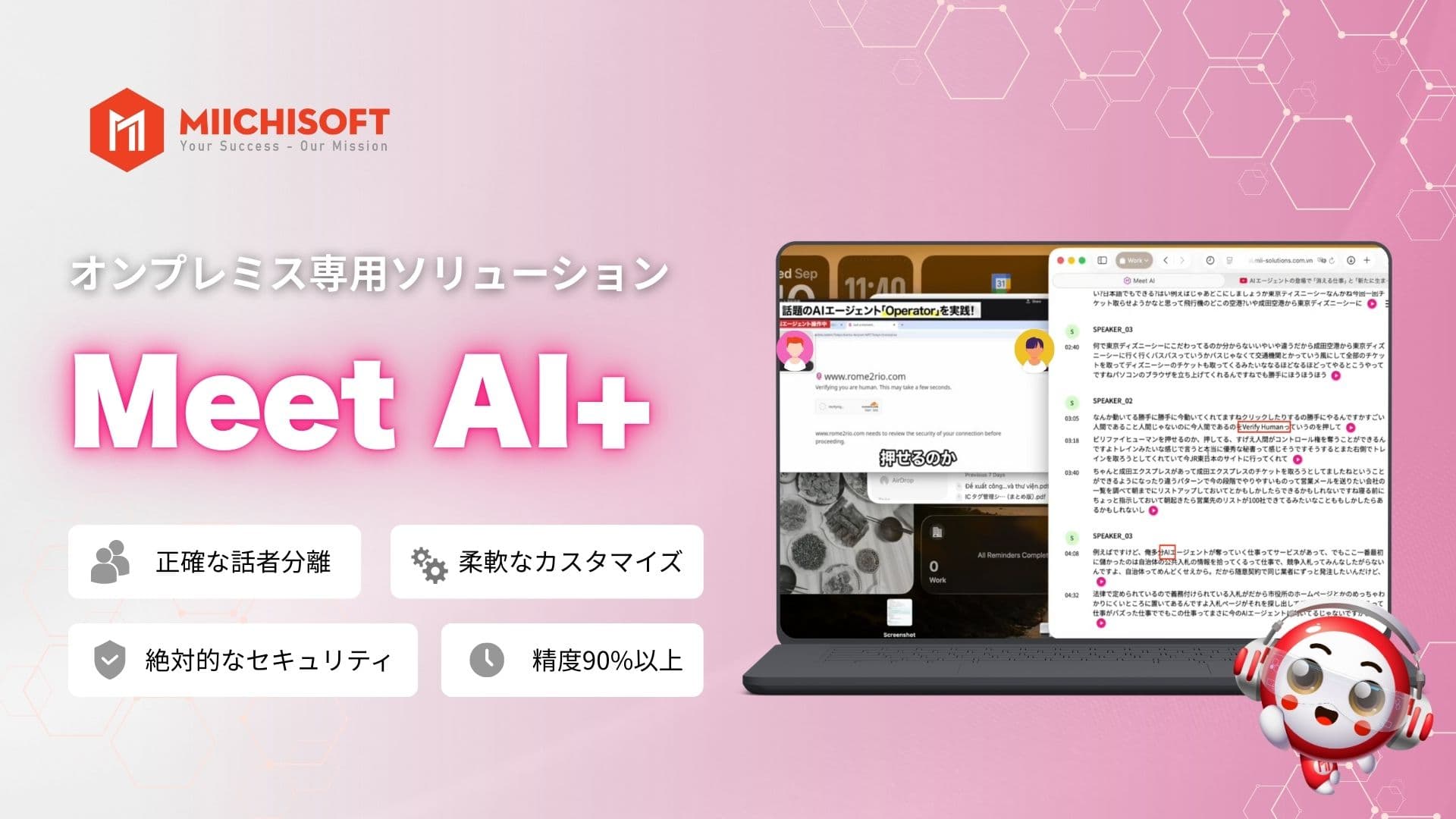
Miichisoft Launched Meet AI+ - AI Meeting Assistant Optimized For On-site Meetings, Reducing Meeting Minutes Creation Time By Up To 90%
6 Criteria for Dify Implementation Vendor Selection you must know! [Free RFP Template]