Home › Blog › Development Solutions
What Is PaaS? Its Features, Future, and the Differences Between IaaS, PaaS, and SaaS
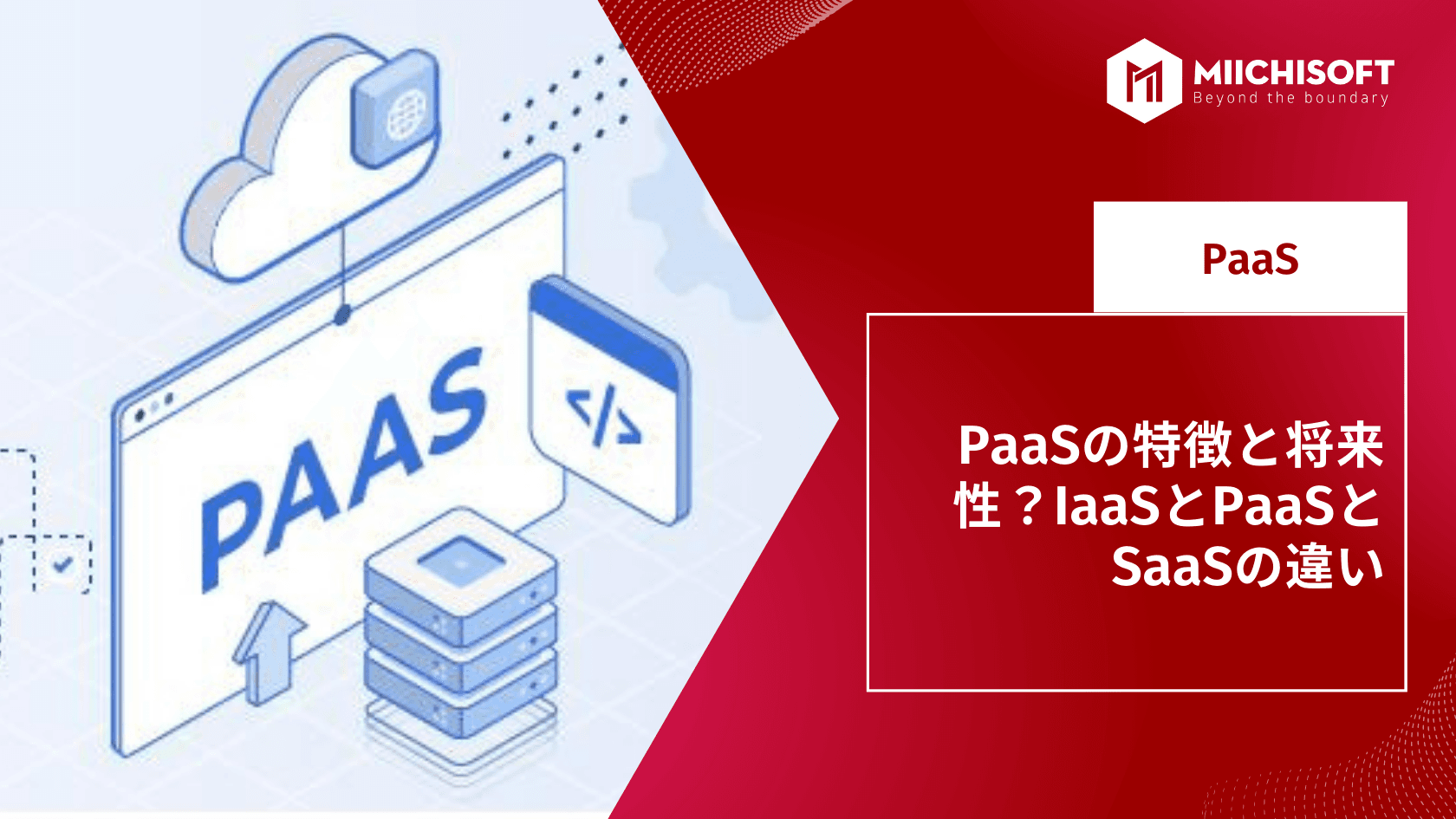
PaaS (Platform as a Service) is a cloud computing model in which a third-party provider delivers hardware and software tools to users over the internet.
It can reduce software and hardware costs when developing and managing applications. This article explains the definition, features, and benefits of PaaS, its representative services, and the differences between SaaS and PaaS.
1. What Is the Definition of PaaS (Platform as a Service Provider)?
PaaS stands for Platform as a Service Provider, an online platform that lets individuals and businesses develop, manage, and optimize applications without purchasing the underlying infrastructure.
Customers can deploy PaaS under one of the following three cloud deployment models defined by the U.S. National Institute of Standards and Technology (NIST).
1.1 Private Cloud Development
Platform development built on infrastructure provisioned for exclusive use by a single organization made up of multiple consumers. This infrastructure may be owned, managed, and operated by the organization, a third party, or a combination of both, and may exist on-premises or off-premises.
1.2 Public Cloud Development
Platform development built on infrastructure provisioned for use by multiple organizations (also called a multi-tenant model). The infrastructure may be owned, managed, and operated by a business, an academic institution, a government body, or a combination of these, and it resides on the cloud provider's premises.
1.3. Hybrid Cloud Development
A platform built across both public and private clouds. The two cloud models remain distinct entities but are bound together by standardized or proprietary technology that enables data and application portability. Hybrid cloud development is rarely used for PaaS solutions.
2. Key Features of PaaS
A PaaS platform is a cloud development platform that offers convenience for web application development. It can deliver apps quickly and shorten the software development cycle.
2.1. Integrated Development With Managed Infrastructure
One of the platform's key features is managed infrastructure combined with integrated development. The vendor manages the underlying hardware, including compute servers, data centers, storage, and network equipment. The vendor is responsible for managing and updating the underlying infrastructure.
Integrated development means developers have access to all the tools they need to design, debug, and deploy apps. Because the app is integrated into a web development environment, the cost and complexity of maintaining development infrastructure are reduced.
Some vendors also provide the collaboration and project management tools needed to manage remote teams.
2.2. Middleware Support
PaaS platforms also come with operating platform resources. They provide an environment for running apps and access to managed databases. Most vendors also offer middleware support with the tools needed to integrate user applications with the OS.
2.3. Opinionated Development
PaaS enables "opinionated" app development suited to greenfield application development. PaaS provides templates for app development that developers can use as a foundation for building web apps.
3. Benefits of PaaS Technology
PaaS suits small and medium-sized businesses and startups for two fundamental reasons. First, cost-effectiveness: even small companies can access cutting-edge resources without high costs.
Most small and medium-sized businesses can't build a robust development environment in-house, so PaaS provides a path to accelerate software development. Second, it lets them focus on their own area of expertise without being bogged down by maintaining basic infrastructure.
Other benefits include the following.
- Cost-effectiveness. No need to purchase hardware or bear the cost of downtime.
- Time savings. No need to spend time setting up and maintaining the core stack.
- Faster time to market. Speeds up app creation.
- Future readiness. Access to cutting-edge data centers, hardware, and operating systems.
- Improved security. PaaS providers invest heavily in security technology and expertise.
- Dynamic scalability. Quickly add capacity during peak times and scale down as needed.
- Custom solutions. Provides operational tools that let developers build custom software.
- Flexibility. Lets employees log in and work on applications from anywhere.
- Challenges of PaaS Technology
Every story has two sides. PaaS is easy to use, but it also comes with several challenges. Some of these hurdles are simply the flip side of the positives and are inherent to the model. Others can be overcome with advance planning and preparation.
Below are examples of PaaS technology challenges.
- Vendor dependency. Heavy reliance on vendor capability creates a risk of vendor lock-in.
- Lock-in risk. Customers may be tied to a language, interface, or program they no longer need.
- Compatibility. Compatibility issues may arise when using PaaS alongside existing development platforms.
- Security risk. PaaS providers secure the infrastructure and platform, but businesses remain responsible for the security of the applications they build.
4. The Differences Between IaaS, PaaS, and SaaS
IaaS (Infrastructure as a Service) is one of the three most common cloud computing services. IaaS is typically a pay-as-you-go service that includes services, storage, networking, virtualization, and more. So how does IaaS compare to its sibling service models?
PaaS (Platform as a Service) consists of hardware and software tools built on top of an IaaS platform. PaaS reduces the need for system administration, letting end users focus on application development instead of infrastructure management.
Meanwhile, SaaS (Software as a Service) is ready-to-use software available over the internet through a third party. Many recent SaaS applications are built on top of IaaS or PaaS platforms.

It's no surprise that newer cloud models are entering this space alongside IaaS. Containers and serverless architecture are service models that offer new options for how applications are operated. For now, simple IaaS solutions remain the most mature choice, but trend watchers are keeping an eye on containers and serverless architecture as emerging technologies.
The range of services offered by IaaS providers is vast and constantly evolving, but you should always assess and prioritize your business needs before choosing a cloud service provider. Companies need capable IT professionals who can analyze, evaluate, and design cloud computing solutions that fit both current and future needs.
5. Frequently Asked Questions About PaaS
5.1 What is PaaS?
PaaS stands for Platform as a Service Provider, an online platform that lets individuals and businesses develop, manage, and optimize applications without purchasing the underlying infrastructure.
5.2 How does SaaS differ from PaaS and IaaS?
SaaS manages operations all the way up to the application used by the end user; PaaS manages operations up to the middleware and server OS that provide the development environment; and IaaS mainly handles hardware maintenance and management.
5.3 How PaaS Works
Generally speaking, a PaaS solution has three main parts.* Cloud infrastructure, including virtual machines (VMs), OS software, storage, networking, and firewalls* Software for building, deploying, and managing applications* A graphical user interface that lets development and DevOps teams handle all the work across the entire application lifecycle
6. The Market Size of PaaS

The iPaaS market posted revenue of 2.8 billion yen in fiscal 2021, a strong 36.6% year-on-year increase. Fiscal 2022 is forecast to grow even faster, at 42.9%, surpassing fiscal 2021's growth.
As more businesses adopt SaaS applications and increasingly move toward hybrid and multi-cloud environments, demand for iPaaS is gradually rising.
With more new vendors entering the market and awareness growing, the market is projected to reach 11.5 billion yen by fiscal 2026, with a CAGR (fiscal 2021–2026) of a strong 32.7%.
Reference: ITR Market View: ERP Market 2021
7. In Closing
Technology keeps evolving, and PaaS is no exception. Major cloud service providers have begun offering AI-platform-as-a-service (AIPaaS), platforms that deliver artificial intelligence (AI) applications. These platforms may include pre-trained machine learning models that businesses can use as-is, along with APIs for integrating specific AI capabilities into applications.
In fact, cloud computing is no longer just about computing — cloud-native design in new architectures is becoming increasingly standard.
If you'd like to get involved in cloud computing or simply broaden your knowledge, we invite you to check out our other cloud computing resources.
Related Articles
[Case Study Dify] AI ERP Query Bot Using Natural Language - Retrieve data in seconds
Dify Chatbot Pricing: Complete Guide to Deployment & Operating Costs
[2025] 12 PWA App Case Studies, Explained in Detail
What Comes After Proof of Concept (PoC)? [2025 Edition]
Top 10 IT Outsourcing Companies in Vietnam Experienced in Working with Japanese Enterprises