Home › Blog › AI & Generative AI
The Potential Value of Prompt Engineering in Customer Experience (CX)

In today’s business world, customer experience (CX) is becoming increasingly important. To deliver a great customer experience, companies need to use just-in-time engineering techniques to detect and resolve customer issues in Prompt fashion. This article analyzes the potential value of just-in-time engineering techniques in CX, along with future trends and innovations in this field.
1. Defining Prompt Engineering in the Context of Customer Experience
Prompt Engineering in the context of customer experience (CX) is the strategic design and implementation of timely, relevant cues and responses to improve the overall customer journey and satisfaction.
1.1. What Is Prompt Engineering in the Context of CX?
Prompt Engineering involves carefully crafting interactions, messages, or signals within a customer’s interaction with a product, service, or brand. These prompts aim to:
- Provide guidance: Offer users clear instructions or suggestions at key moments to move the process forward effectively.
- Trigger action: Encourage customers to take specific actions that match their needs and choices.
- Anticipate needs: Proactively resolve issues by addressing potential concerns or questions before they arise.
This approach is rooted in understanding customer behavior and preferences in order to provide timely, personalized prompts that optimize the CX journey.
1.2. An Example of Prompt Engineering in the Context of CX
Consider an example of an online retail platform using Prompt Engineering:
- Scenario: A customer added a product to their cart but left the checkout page.
- Applying Prompt Engineering: The platform might send the customer a personalized notification reminding them of the items left in their cart and encouraging them to complete the purchase. This may include incentives such as a discount or free shipping. This prompt is strategically timed to re-engage the customer.
This example shows how Prompt Engineering in CX leverages insights into customer behavior to deliver timely interventions that positively influence their actions and experience.
2. Common Challenges in Delivering an Effective Customer Experience
Delivering an effective customer experience (CX) can face various challenges that hinder seamless interactions and customer satisfaction.
CTA: Common Challenges in Delivering an Effective Customer Experience
2.1. Identifying Common Challenges in Delivering Effective CX
Some common challenges include the following:

Common Challenges in Delivering an Effective Customer Experience
Fragmented touchpoints: Inconsistent experiences across different touchpoints can result in a disjointed customer journey.
Data silos and integration issues: The difficulty of integrating customer data from different sources can hinder a comprehensive understanding of customer behavior and preferences.
Lack of personalization: Limited insights or resources can prevent companies from delivering experiences tailored to each customer’s needs.
Managing customer expectations: Meeting or exceeding customer expectations in an increasingly competitive environment.
Adapting to changing customer trends: Adapting to shifting customer preferences and behavior in a rapidly changing market.
Addressing these challenges is critical to improving the effectiveness of CX.
2.2. The Role of Prompt Engineering in Addressing CX Management Challenges
Prompt Engineering plays an important role in addressing these CX management challenges:
Unified customer journey: By strategically deploying prompts across various touchpoints, companies can avoid creating a disjointed customer journey and achieve a unified, consistent one instead.
Data-driven insights: Leveraging customer interactions with prompts generates valuable data for understanding preferences, behavior, and pain points, contributing to better personalization.
Expectation management: Prompt Engineering helps manage customer expectations and align them with a brand’s capabilities by providing timely information and guidance.
Agile adaptation: Through the analysis and adaptation of prompts, brands can respond quickly to changing customer trends and ensure a more agile approach to addressing evolving needs.
Prompt Engineering acts as a catalyst in mitigating these challenges, driving a more effective and integrated CX strategy.
3. The Importance of Incorporating Prompt Engineering into CX in Healthcare
Incorporating Prompt Engineering into the medical school curriculum holds significant value in shaping the ability of future healthcare workers to deliver excellent patient care.

The Importance of Incorporating Prompt Engineering into the Medical School Curriculum
3.1. Prompt Engineering Can Help Improve Customer Satisfaction and Loyalty
In healthcare, patients are similar to customers, and their satisfaction and loyalty significantly impact the quality of care. By teaching Prompt Engineering, medical schools enable students to:
- Improve communication: Effective Prompt Engineering fosters clear, timely communication between healthcare workers and patients, improving understanding of medical information and treatment plans.
- Build trust and rapport: Interactions shaped by Prompt Engineering create a sense of reliability and attentiveness, which is important for building trust between healthcare workers and patients, thereby improving satisfaction and fostering loyalty.
By prioritizing Prompt Engineering, medical education can instill practices that put patient-centered care first, increasing satisfaction and loyalty toward healthcare services.
3.2. Prompt Engineering Can Lead to Faster Problem-Solving and Higher Customer Satisfaction
Medical errors or delays in responding to patient needs can negatively affect satisfaction. By incorporating Prompt Engineering into medical education, future doctors are able to:
- Respond quickly to patient needs: Teaching Prompt Engineering techniques enables healthcare workers to respond quickly to patient concerns and questions, leading to faster problem-solving and higher satisfaction.
- Manage workflows efficiently: Understanding Prompt Engineering helps streamline processes, minimize bottlenecks, and optimize care pathways, ultimately improving overall satisfaction.
By training medical students in Prompt Engineering, medical schools contribute to a more efficient, patient-centered healthcare system.
3.3. Prompt Engineering Influences Personalization and Proactive Customer Engagement
A personalized healthcare experience and proactive engagement significantly affect patient outcomes. By incorporating Prompt Engineering into the medical curriculum, future healthcare workers will be able to:
- Customize care plans: With Prompt Engineering training, students can personalize interactions based on each patient’s needs and preferences, and adapt treatment and care plans accordingly.
- Anticipate patient needs: By teaching advanced prompt strategies, healthcare providers can anticipate patient requirements, stay ahead in delivering proactive care, and improve patient outcomes.
By instilling these Prompt Engineering principles, medical schools can shift patient interactions from merely reactive to predictive and personalized, thereby improving the overall healthcare experience.
4. Future Trends and Innovations in Prompt Engineering for Customer Experience
Let’s return to our journey through the vast field of Prompt Engineering. Having discussed its fundamentals, techniques, ethical aspects, and advanced practices, let’s now look ahead and explore the dynamic trends and groundbreaking innovations that will redefine Prompt Engineering.

Future Trends and Innovations in Prompt Engineering for Customer Experience
4.1 Emerging Trends in Prompt Engineering
4.1.1. Explainable AI (XAI)
Transparency in AI systems is becoming increasingly important. Future Prompt Engineering will place greater emphasis on making AI responses easier to interpret. Users are demanding clearer insight into how the AI model arrives at its conclusions, and prompt engineers will play a key role in achieving that transparency.
4.1.2. Multimodal Prompts
Beyond text-based interactions, Prompt Engineering will expand into multimodal interactions incorporating images, video, and audio. Engineers will adapt their techniques to handle various data types, expanding AI applications across many domains.
4.1.3. Dynamic, Context-Aware Prompts
For advanced AI systems, the ability to generate dynamic, context-aware prompts is essential. Future Prompt Engineering will place importance on creating prompts that adapt as a conversation evolves, fostering more natural and nuanced interactions between users and AI.
4.2. Innovations Shaping the Future
4.2.1. Neurodiversity-Aware Prompt Engineering
Advances in brain technology may give rise to innovations in neurodiversity-aware Prompt Engineering, providing prompts tailored to different cognitive styles and preferences, fostering inclusivity in AI interactions.
4.2.2. Co-Creation With AI
In the future, co-creation between AI systems and humans may increase in Prompt Engineering, with AI assisting in generating prompts while humans provide creativity and ethical oversight.
4.2.3. Adversarial Robustness in Prompt Design
As AI systems become integrated into mission-critical applications, the need for adversarial robustness in prompt design grows. Future prompt engineers will focus on creating prompts that can withstand deliberate attempts to manipulate AI model, ensuring reliability and security.
4.3. Realizing the Future
4.3.1. Industry-Specific Prompt Engineering
In the future, customizing Prompt Engineering for specific industries will become important. From healthcare to finance, providing prompts tailored to each sector’s unique requirements is essential for maximizing AI applications.
4.3.2. Global Collaboration on Prompt Design Standards
As the global influence of AI grows, future collaboration toward standardizing prompt design may emerge, ensuring a shared ethical framework and consistent quality for AI-generated content.
4.3.3. Continuous Learning and Adaptation
Prompt Engineering is not a static field but a continuous learning journey. Future engineers will need ongoing education to keep pace with evolving technology and ethical considerations, ensuring they can perform their role effectively.
5. FAQs
About the Example of Prompt Engineering in the Context of CX
Prompt Engineering in CX leverages insights into customer behavior to deliver timely interventions that positively impact their experience.Prompt Engineering best practices, users of Prompt Engineering can be reminded that AI can help solve many issues, including customer service (CX).Beyond the field of CX (Customer Experience), an area where Prompt Engineering demonstrates its potential, along with virtually limitless speed and creativity, is marketing. If you’re interested, please refer to the link below:https://miichisoft.com/prompt-in-digital-marketing/
How Does Prompt Engineering Contribute to Customer Satisfaction and Loyalty in Healthcare?
This section explains in detail the impact of Prompt Engineering on medical education and healthcare services. It focuses on how Prompt Engineering improves communication between healthcare workers and patients, builds trust and rapport, and strengthens the ability to practice patient-centered care in medical education.
What Does the Emerging Trends in Prompt Engineering Include?
This section covers emerging trends such as explainable AI (XAI), multimodal prompts, and dynamic, context-aware prompts, helping readers understand the future direction of AI technology and Prompt Engineering.
6. What Are the Basic Elements of a Prompt Engineering Strategy for Customer Experience?
A robust Prompt Engineering strategy includes several key elements:
- Understanding customer needs: Customizing prompts to address specific customer queries and preferences.
- Personalization: Creating prompts that resonate with individual customers, ensuring a personalized experience.
- Adaptability: Creating prompts that evolve alongside changing customer interactions and context.
- Technology integration: Leveraging AI and machine learning to improve the quality and speed of prompts.
- Continuous improvement: Refining prompts through regular data analysis to improve effectiveness.
- How Can Organizations Evaluate the ROI of Prompt Engineering for Customer Experience?
Evaluating the ROI of Prompt Engineering includes the following:
- Defining metrics: Identifying key performance indicators (KPIs) such as customer satisfaction scores, response time, and conversion rate.
- Comparative analysis: Comparing these metrics before and after implementing Prompt Engineering.
- Cost analysis: Evaluating the costs associated with Prompt Engineering against benefits such as improved customer retention, acquisition, and operational efficiency.
- Customer feedback: Collecting and analyzing feedback on customer experience after implementation.
- What Are the Potential Ethical Implications of Prompt Engineering in Customer Experience?
- Privacy concerns: Collecting and using customer data to personalize prompts must respect privacy regulations and user consent.
- Bias and fairness: Ensuring prompts are free from bias and provide fair, equitable responses to all customers.
- Transparency: Disclosing the use of AI-generated prompts to customers and maintaining transparency in interactions.
- Over-reliance on AI: Balancing AI-driven prompts with human touch to avoid excessive dependence on automated interactions, especially in sensitive situations.
7. Conclusion
Prompt Engineering’s key role in CX goes beyond smart interactions — it shapes a distinctive CX centered on customer comfort and satisfaction. This spans everything from crafting diverse messages to enhancing human–AI interaction, deepening understanding of customer needs and building a flexible, personalized dialogue environment.
The impact and potential value of Prompt Engineering extend beyond improving customer experience to enhancing predictive capability, enabling faster responses, and building two-way connections — all of which contribute to forming strong, sustainable relationships with customers.
Miichisoft is a technology company based in Vietnam with a strong track record of success in cross-platform development for the Japanese market. Through more than 150 successful projects, we have built extensive experience. In particular, our core members have lived and worked in Japan for many years and have a deep understanding of Japanese culture and technical requirements. This broad knowledge and experience has been key to our leadership on IT projects and has contributed to our customers’ success. More recently, Miichisoft completed and released dxGAI Business | Enterprise, a comprehensive, future-ready AI solution powered by ChatGPT. dxGAI seamlessly combines prompt engineering with customer experience to create an outstanding solution built on GPT chat. To bring users a wonderful experience, we offer free consulting — please feel free to contact us.
Related Articles
Dify Implementation Consulting | A Comprehensive Guide and Detailed Cost Breakdown

[Dify Case Study] Dify AI Contract Review Chatbot in 2 Minutes - Standardized to Internal Compliance Requirements
What Causes Dify Implementation Projects to Fail Midway? A Management Guide to Succeeding with Your Dify Implementation Vendor
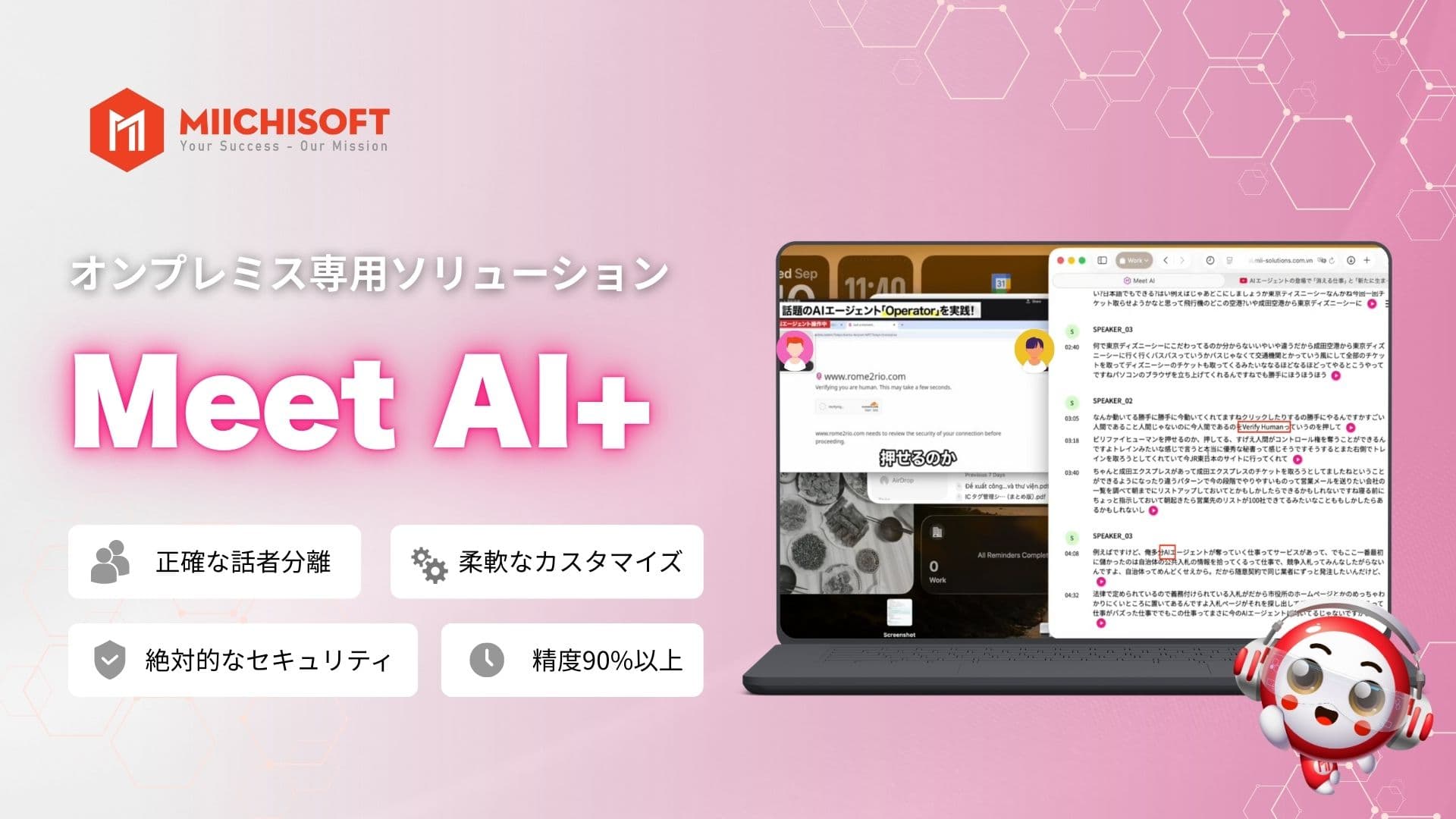
Miichisoft Launched Meet AI+ - AI Meeting Assistant Optimized For On-site Meetings, Reducing Meeting Minutes Creation Time By Up To 90%
6 Criteria for Dify Implementation Vendor Selection you must know! [Free RFP Template]