
Home › Blog › AI & Generative AI
Understanding Prompt Engineering: Meaning, Detailed Definition, Benefits, and Concrete Examples

Prompt engineering plays a pioneering role in transforming today's technology industry. The approach to problem-solving and project management through Prompt Engineering is redefining how the industry works, guaranteeing fast, efficient solutions to challenges. In this article, let's learn more about Prompt Engineering.
1. Introduction to Prompt Engineering
Prompt Engineering is a critical process for fine-tuning the input a user provides to an AI system in order to generate the desired text or image output. This technique benefits not only everyday users but also AI engineers who refine large language models. In this process, the accuracy and relevance of the prompt are key, playing an important role in improving the AI model. By deepening their understanding of Prompt Engineering, developers can craft better prompts and master effective methodologies for getting AI systems to produce the desired results.
For more details on prompt engineering, please see below.
Reference: https://en.wikipedia.org/wiki/Prompt_engineering

Introduction to Prompt Engineering
2. Why Is Prompt Engineering Important in Generative AI?
The concept of Prompt Engineering plays an important role in improving the performance and accuracy of generative AI systems, as well as providing security measures to protect the integrity of the system. To understand the Importance of Prompt Engineering, please read below.
- Develop more effective, efficient services: Prompt Engineering techniques are essential for AI engineers to develop more effective, efficient services, such as customer-service chatbots and automated legal-document generation. For generative AI services such as ChatGPT to deliver high-quality output, engineers need to develop code and train AI models using broad, accurate data.
- Organize large volumes of data: In today's data-driven world, training AI models has become an essential tool that replaces the need to manually organize large volumes of data, delivering more effective solutions. Accurate Prompt Engineering helps AI models process and analyze large-scale data with greater accuracy and speed.
- Protect the integrity of generative AI systems: In addition, Prompt Engineering also functions as a security measure, identifying and eliminating potential injection attacks to protect the integrity of generative AI systems.
3. Benefits of Prompt Engineering

Benefits of Prompt Engineering
3.1. Improved Efficiency and Productivity
Prompt Engineering enables optimized output while minimizing extra effort. In other words, because AI-generated content aligns with goals and standards, the need for thorough review and correction is reduced. As a result, Prompt Engineering boosts the efficiency and productivity of AI systems.
3.2. Cost Effectiveness and Resource Optimization
By crafting accurate prompts, Prompt Engineers ensure that AI-generated output meets the required standards, eliminating the need for extra resources to revise or enhance the content. This enables Prompt Engineering to achieve cost effectiveness and resource optimization, minimizing the time and effort needed for post-processing.
3.3. Improved Project Outcomes and Customer Satisfaction
A well-crafted prompt guides the AI model to generate more relevant, accurate, and personalized responses. As a result, project outcomes and customer satisfaction improve, enabling effective, satisfying, long-term interactions with AI.
In short, Prompt Engineering delivers a range of benefits, including improved efficiency and productivity, cost effectiveness and resource optimization, and improved project outcomes and customer satisfaction
4. Implementing Prompt Engineering
4.1. Steps and Strategies for Integrating Prompt Engineering into an Organization
Integrating Prompt Engineering within an organization requires a structured approach and strategic implementation to effectively harness its benefits.
- Assess existing processes: Start by assessing current workflows and systems. Identify areas where Prompt Engineering can streamline processes or improve outcomes.
- Train and educate employees: Conduct comprehensive training sessions to help your team understand the concepts and techniques of Prompt Engineering. Emphasize the importance of crafting prompts to achieve the right results.
- Establish protocols and guidelines: Develop clear protocols and guidelines for creating and refining prompts. These guidelines should outline best practices for crafting prompts that generate the desired output.
- Implement iteratively: Start small, and gradually expand your use of Prompt Engineering. Begin with pilot projects to evaluate effectiveness and gather feedback for refinement.
- Continuously evaluate and improve: Regularly evaluate the effectiveness of Prompt Engineering within your organization. Encourage feedback from users and teams, and continuously improve and optimize the process.
4.2. Tools and Technologies Supporting the Prompt Engineering Process
Implementing Prompt Engineering relies on leveraging a variety of tools and technologies that support the creation, refinement, and use of prompts. The tools and technologies that support the Prompt Engineering process are described below.
- Prompt-creation platforms: Use platforms with user-friendly interfaces to easily create and modify prompts. These platforms may be integrated with prompt evaluation features.
- Natural language processing (NLP) libraries: Use NLP libraries and frameworks for data preprocessing, text analysis, and generating prompts that fit specific language patterns.
- Machine learning frameworks: Use machine learning frameworks to fine-tune models based on changes in prompts, improving their accuracy and response quality.
- Evaluation and monitoring tools: Use tools to evaluate prompt performance. This includes systems for tracking model output, assessing prompt effectiveness, and identifying areas for improvement.
- Collaborative environments: Use collaborative platforms and project-management tools to jointly create, test, and refine prompts.
- Version control systems: prompt design — use a version control system to track its changes and iterations. This ensures transparency and makes collaborative editing easier.
By combining these tools and technologies with a structured approach, integrating Prompt Engineering can effectively strengthen an organization's workflows and improve the capabilities of AI systems in generating text and images.
5. Case Studies

Prompt Engineering: Case Studies
5.1. Successful Implementations of Prompt Engineering Across Various Industries
Prompt Engineering has proven effective across a variety of industries, transforming operations and improving project outcomes. Below are some notable case studies showcasing its successful implementation.
5.1.1. Healthcare Sector
In the healthcare industry, Prompt Engineering is streamlining the patient-care process. By using specific prompts, AI-powered systems can efficiently classify patient symptoms and support faster diagnosis and treatment recommendations. For example, one major hospital implemented Prompt Engineering to classify medical records, significantly reducing time spent on administrative tasks and letting healthcare workers focus more on patient care.
5.1.2. Financial Services
Financial institutions are adopting Prompt Engineering to improve customer interactions and automate routine tasks. With well-crafted prompts, AI-powered chatbots support customers and guide them through complex financial products and services. This has improved customer satisfaction and operational efficiency. In addition, Prompt Engineering systems quickly analyze market trends to provide real-time insights for better decision-making.
5.1.3. E-commerce
In the e-commerce sector, Prompt Engineering is transforming personalized recommendations and customer support. AI algorithms guided by well-crafted prompts analyze customer behavior and preferences to make customized product suggestions. Additionally, Prompt Engineering-powered chatbots efficiently handle customer inquiries, driving higher engagement, higher conversion rates, and ultimately increased sales.
5.2. Impact on Business Operations and Project Success
The integration of Prompt Engineering is driving significant transformation in business operations, as shown below, and impacting project success.
5.2.1. Operational Efficiency
Companies that leverage Prompt Engineering are experiencing greater operational efficiency, less manual work, and higher productivity. By automating repetitive tasks and optimizing workflows, organizations are allocating resources more effectively and boosting efficiency across departments.
5.2.2. Improved Decision-Making
The accuracy and speed of AI models prompted with specific instructions have given decision-makers data-driven insights. This enables timely, informed decision-making, improving business strategy and ultimately boosting outcomes and competitiveness.
5.2.3. Customer Experience
Introducing Prompt Engineering into customer interactions improves the overall experience. AI-powered systems deliver personalized solutions, offering fast responses and efficient support, strengthening relationships with customers.
5.2.4. Innovation and Adaptability
Organizations that use Prompt Engineering show agility in adapting to evolving market needs. By continuously improving prompts and AI models, companies stay at the forefront of innovation and quickly adapt to changing demands and technological advances.
The successful integration of Prompt Engineering across various industries not only optimizes operations but also drives significant profit growth, ensuring sustained growth and competitiveness in today's dynamic business environment.
6. FAQs
What Is Prompt Engineering?
Prompt Engineering is a technique for optimizing the interaction between humans and machines by providing specific instructions and detailed information to an artificial intelligence (AI) system or process.
Prompt Engineering — How Is It Applied Across Different Industries?
Prompt Engineering is widely used across various industries, including healthcare, finance, and e-commerce. In practice, it optimizes business processes, improves customer experience, and enables data-driven decision-making.
Prompt Engineering — What Impact Does It Have on Business Performance and Projects?
Prompt Engineering improves business performance by increasing operational efficiency, reducing manual work, and enabling smart, data-driven decision-making. This strengthens adaptability to changes in customers and the market.
Does Adopting Prompt Engineering Require Businesses to Undergo Major Transformation?
At times, adopting Prompt Engineering may require changes to an organization's structure or operations. However, this often brings mid- to long-term benefits — especially when the effort is planned and well-integrated.
7. Conclusion
As we wrap up our exploration of Prompt Engineering, let's revisit its tremendous importance and the many benefits it brings. Let's also take a look at future trends and developments that may continue to shape the landscape of Prompt Engineering. Prompt Engineering represents not only a current necessity but also the next frontier for intelligent problem-solving and operational advantage in the digital age.
Miichisoft is a technology company leading the information technology sector in Vietnam. We specialize in Prompt Engineering consulting, providing the best solutions for your business. We offer free consultations, so please feel free to contact us.
Related Articles
Dify Implementation Consulting | A Comprehensive Guide and Detailed Cost Breakdown

[Dify Case Study] Dify AI Contract Review Chatbot in 2 Minutes - Standardized to Internal Compliance Requirements

What Causes Dify Implementation Projects to Fail Midway? A Management Guide to Succeeding with Your Dify Implementation Vendor
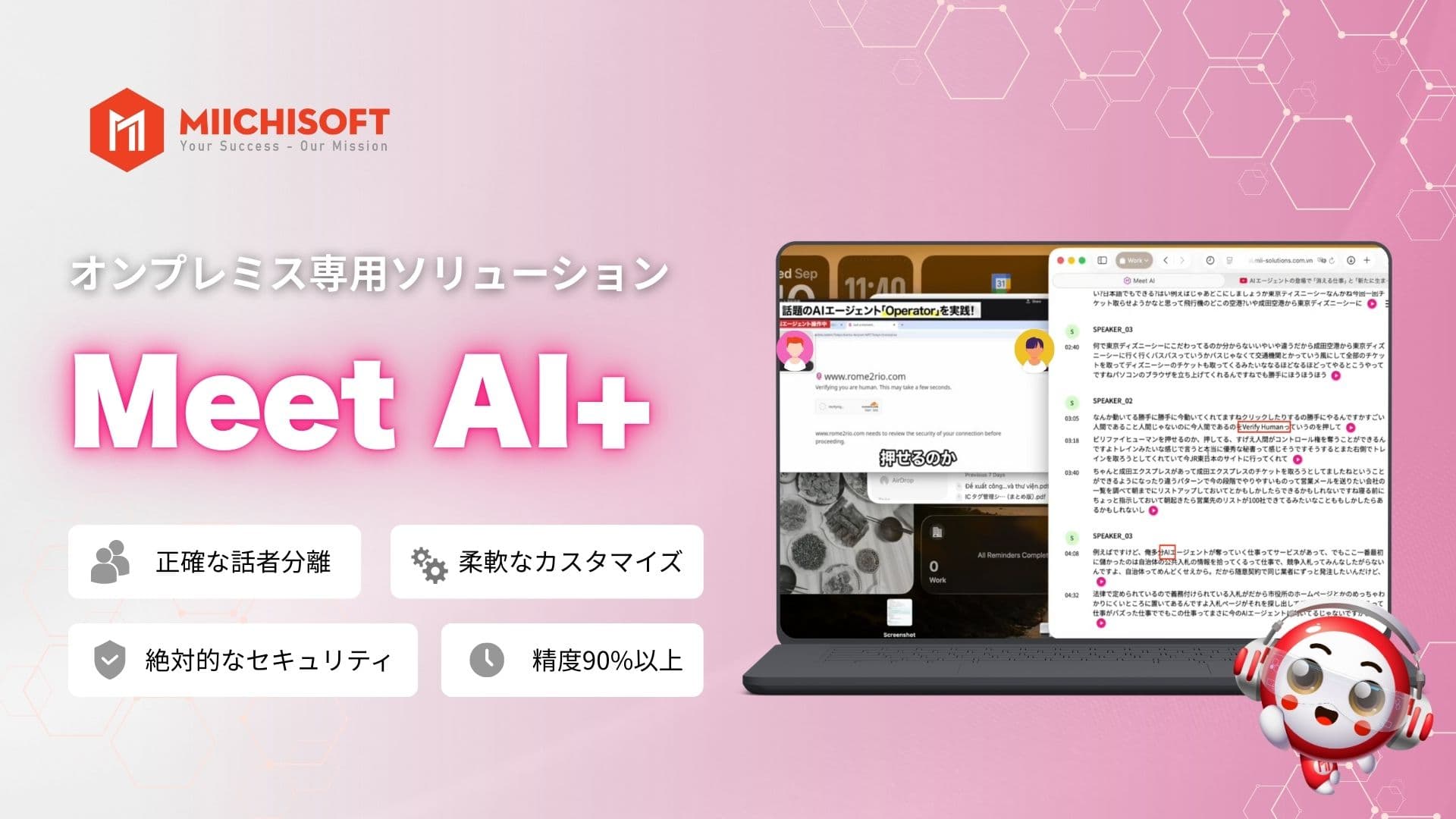
Miichisoft Launched Meet AI+ - AI Meeting Assistant Optimized For On-site Meetings, Reducing Meeting Minutes Creation Time By Up To 90%
6 Criteria for Dify Implementation Vendor Selection you must know! [Free RFP Template]