Home › Blog › AI & Generative AI
What Is Prompt Engineering? Best Practices for 2024

In the ever-evolving landscape of artificial intelligence, the concept of a "prompt" carries significant weight. At its core, a prompt is the gateway to human-AI interaction, encompassing user queries and instructions. Prompt engineering therefore emerges as a critical discipline that seeks to optimize these inputs, drawing precise, relevant, and accurate outputs from AI models.
1. What Is Prompt Engineering
1.1. What Is a Prompt
In the realm of AI, a prompt represents the input — a query, command, or context — presented to an AI model. It serves as the blueprint that guides the model's decision-making process, directing it toward the intended outcome. Whether natural language, code, or contextual cues, a prompt frames the interaction between humans and AI systems.
1.2. Prompt Engineering Overview
Prompt engineering aims to draw optimal performance from AI models through the strategic construction and refinement of these prompts. It is the art of crafting inputs that encompass the desired task or query, enabling the model to interpret, process, and generate accurate responses. It involves not just words, but building prompts that convey the depth and specificity the AI model needs to understand and execute.

2. Advancing AI Prompt Engineering: Best Practices Revealed
2.1. Conceptualizing Prompt Engineering
Effective prompt engineering focuses on understanding the subtle nuances of AI models. This includes understanding the capabilities, limitations, and biases inherent to these models. By understanding these subtleties, developers can fine-tune prompts to optimize model performance while mitigating potential errors.
2.2. The Importance of Effective Prompts in AI
The importance of prompt engineering lies in its direct relationship to the quality of output generated by AI. A poorly constructed prompt can be misleading, triggering irrelevant or inaccurate responses. Conversely, a well-constructed prompt ensures that the AI model accurately grasps user intent, improving the overall user experience.

3. Five Best Practices for Prompt Engineering
3.1. Prompt Specificity
Prompt specificity is the foundation of effective AI prompt engineering. Prompts with meticulous detail and precision eliminate ambiguity, guiding the AI model toward accurate responses aligned with user expectations. Specific prompts include clear instructions, parameters, or contextual cues needed for the desired outcome. For example, a generic prompt like "Generate a blueberry muffin recipe" lacks the precision to address specific needs. A more specific prompt like "Create a recipe for 50 vegan blueberry muffins" lets the AI model grasp the exact requirements, producing a response that accounts for quantity, dietary restrictions, and other details.
3.2. Using Context for Effective Prompts
Leveraging contextual information in a prompt deepens the quality of interaction between the user and the AI model. Adding context such as the intended task, environment, or user preferences helps the model grasp subtle nuances in a query or command. For instance, having the model respond as a professional chef yields more detailed output with advanced cooking techniques and industry terminology. Leveraging context lets AI models generate more nuanced, relevant responses and improves user satisfaction.
By providing specific context, users of prompt engineering are reminded that AI can be leveraged to resolve numerous operational challenges. This is why the importance of prompt engineering is increasingly being demonstrated across a variety of fields, including the financial sector and customer service. If you're interested, Miichisoft offers two articles on this topic — please refer to them below.https://miichisoft.com/the-potential-value-of-prompt-engineering-in-customer-experience/
3.3. Providing Examples to the Model
Providing examples alongside a prompt guides the AI model. Examples reveal the expected outcomes or patterns in a prompt, letting the model generate responses based on the cases shown. For instance, a prompt like "Here are a few coding samples I like. Create new code based on these" guides the AI model to draw inspiration from the examples and produce customized code. This technique aids task understanding by giving the model a reference framework, generating output aligned with user preferences.
3.4.Experimenting with Prompts and Personas
Iterative experimentation with different prompts and personas enriches a developer's understanding of a model's interpretive capabilities. By exploring various language structures and keywords, or adopting different personas, developers gain insight into how AI models process and respond to varied inputs. This exploration helps fine-tune the model's responses based on observed patterns and preferences. Experimenting with prompts that mimic different professions or perspectives improves adaptability to various scenarios, yielding diverse and accurate outputs.
3.5. Chain-of-Thought Prompting: Strengthening AI Reasoning
Chain-of-thought prompting is a powerful technique for improving an AI model's reasoning capabilities. This method breaks complex queries down into smaller, connected steps, having the model provide intermediate reasoning for each step. Through this step-by-step guide to logical reasoning, developers ensure the model gains a deeper understanding of complex problems and generates more accurate, insightful responses. This technique strengthens the AI model's reasoning capabilities, enabling a more comprehensive understanding of complex queries and improving the quality of generated output.

4. FAQ
Prompt engineering? What role does specificity play in prompt engineering?
Specificity is critical in prompt engineering, guiding AI models to reduce ambiguity and generate more accurate, tailored responses. Specific prompts containing detailed instructions provide a clearer understanding of user requirements, minimizing misunderstandings.
How do examples enhance the effectiveness of a prompt?
Examples provide the AI model with a reference framework, helping it understand the expected outcomes and patterns within a prompt. They guide the model in inferring and tailoring responses based on the examples provided, facilitating a clearer understanding of the task.
Why is experimenting with prompts important?
Experimentation helps developers understand how AI models interpret different inputs. Exploring diverse prompts and personas helps grasp the model's processing, enables fine-tuning of prompts, and optimizes the model's responses.
What is the importance of contextual cues within a prompt?
Contextual cues, such as task details or persona mimicry, help AI models grasp the subtle aspects of a query or command. These empower the model to generate nuanced output aligned with contextual cues, improving the overall quality of responses.
5. Conclusion
In the dynamic landscape of AI, the essence of timely engineering lies in its critical role as a mediator between human intent and machine understanding. Rapid techniquesbest practices — through this practice, developers can fine-tune their interactions with AI models, maximizing their potential while ensuring the generated output is accurate, relevant, and precise.
Miichisoft has built a strong team in prompt engineering and developed the dxGAI solution by combining the two to achieve its goals in the dynamic landscape of artificial intelligence. The agile nature of this engineering plays a critical role as a mediator between human intent and machine understanding in the dynamic landscape of artificial intelligence. The fastest techniquesin practice — with these practices, developers can fine-tune their interactions with AI models while ensuring the accuracy, relevance, and precision of the results generated, maximizing AI's potential. We offer free consultations, so please feel free to contact us.
Related Articles
Dify Implementation Consulting | A Comprehensive Guide and Detailed Cost Breakdown

[Dify Case Study] Dify AI Contract Review Chatbot in 2 Minutes - Standardized to Internal Compliance Requirements
What Causes Dify Implementation Projects to Fail Midway? A Management Guide to Succeeding with Your Dify Implementation Vendor
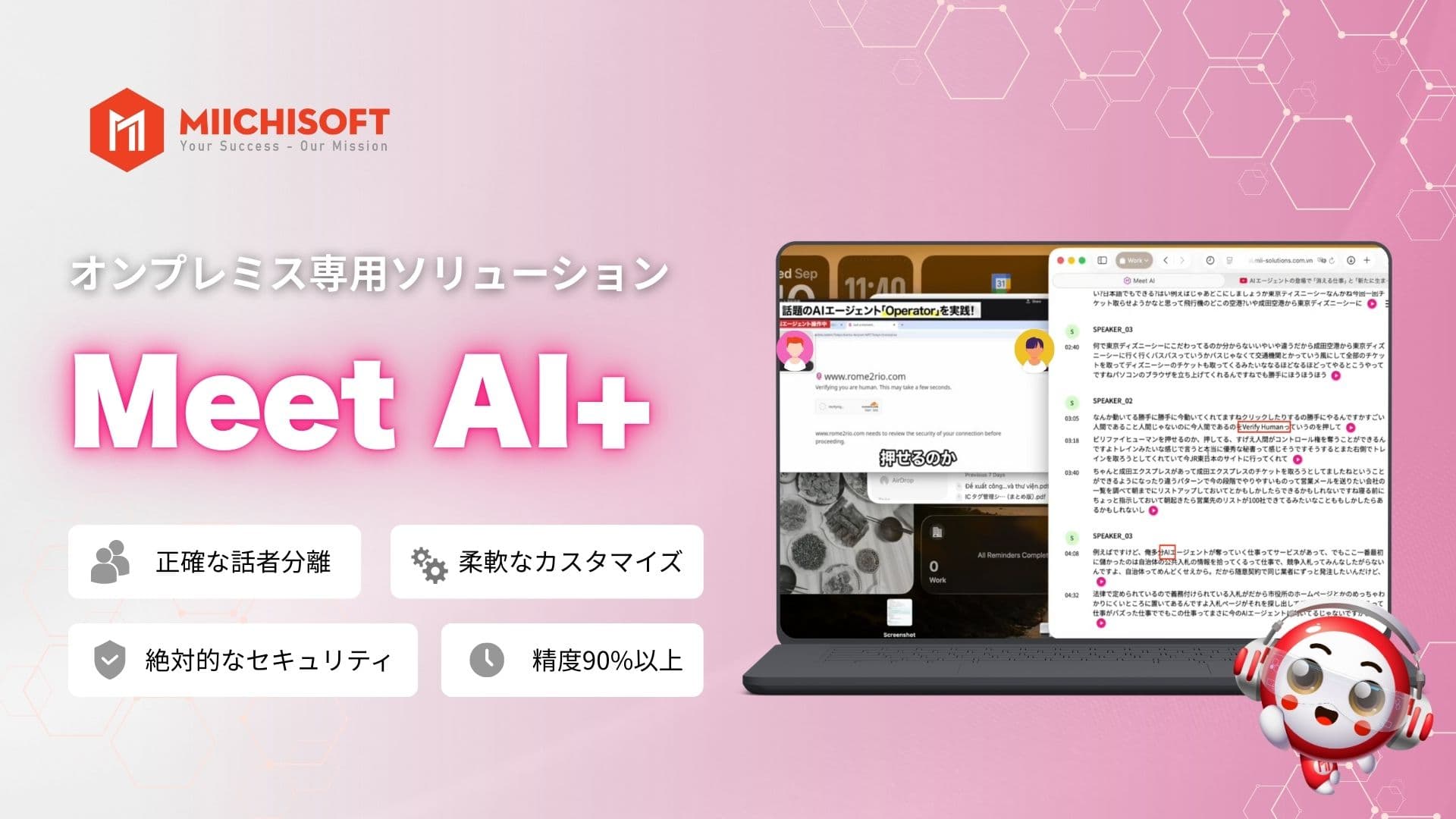
Miichisoft Launched Meet AI+ - AI Meeting Assistant Optimized For On-site Meetings, Reducing Meeting Minutes Creation Time By Up To 90%
6 Criteria for Dify Implementation Vendor Selection you must know! [Free RFP Template]