Home › Blog › Development Solutions
What Is the Difference Between a Website, a Web System, and a Web Application?
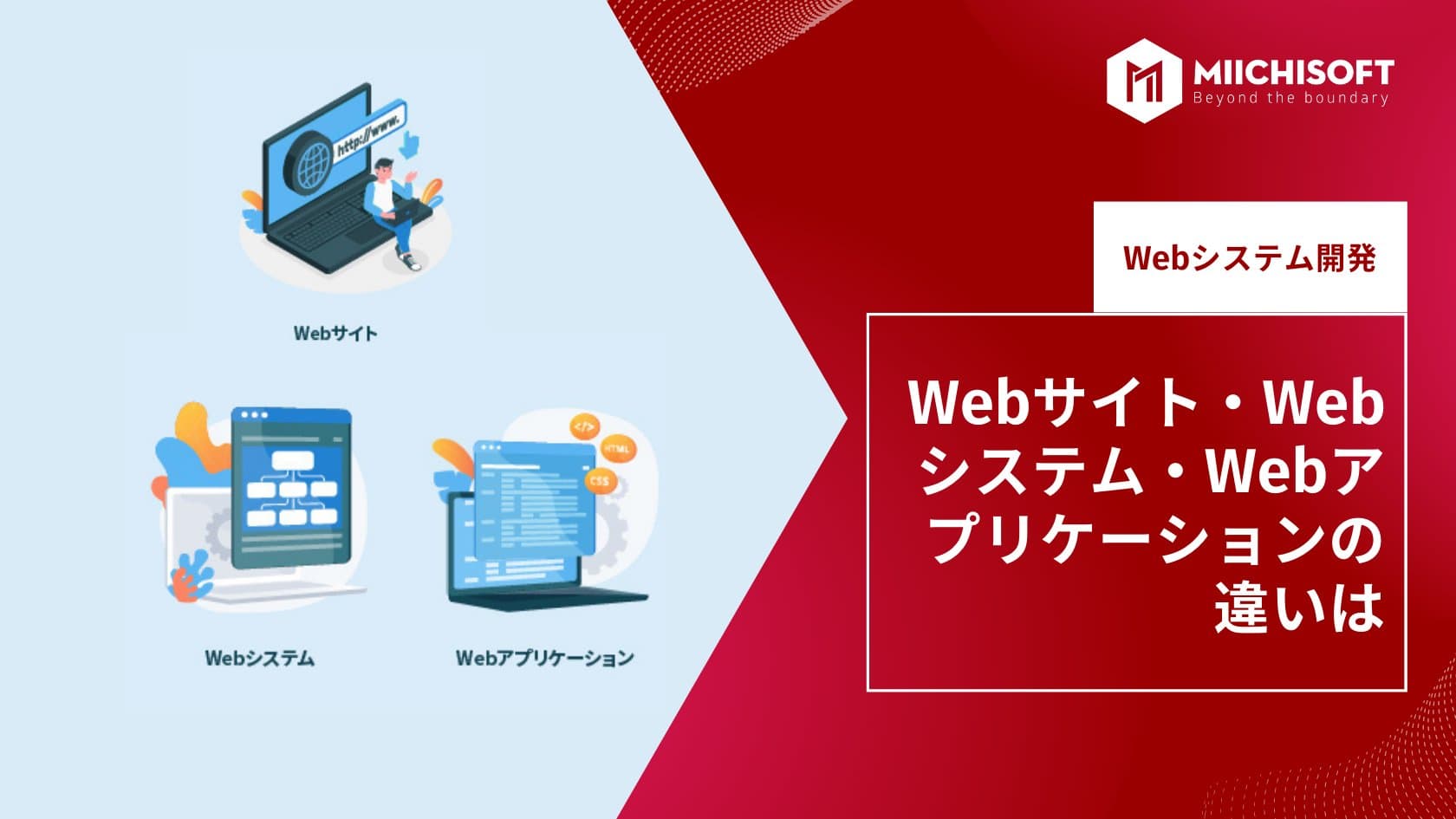
Normally, it's difficult for an end user to tell the difference between a website, a web system, and a web application. You just type in a URL and the results appear.
However, as a developer, it is you who has to build these products for users. So you need to have a good understanding of the differences between them. Do you know the difference between a website, a web system, and a web application?
This article explains the difference between a website, a web system, and a web application.
1. What is a website?

A website is a publicly accessible collection of interlinked web pages that share a single domain name. Websites can be created and maintained for individuals, groups, companies, or organizations to use for various purposes.
Together, all publicly accessible websites make up the World Wide Web.
A website is sometimes called a "web page," but this is incorrect, since a website is made up of multiple web pages. A website is also called a "web presence," or simply a "site."
2. What is a web system?

A web system is a service or system that can be accessed using the internet. It can be used on any device with a web browser, such as a PC, smartphone, or tablet, regardless of operating system.
3. What is a web application?

A web application (web app) is an application program that is stored on a remote server and delivered over the internet through a browser interface. By definition, a web service is a web app, and while not every website includes a web app, many do. According to Jarel Remick, editor of Web App Storm, any website component that performs some function for the user qualifies as a web app.
4. Difference between a website, a web system, and a web application
A "website" usually refers to a collection of web pages published under a specific domain. The actual pages may be static HTML files, or they may be generated dynamically by a program such as a CMS. Other "web systems" and "web applications" typically work by returning pages generated for the user. In other words, a website can be static or dynamic, but a web system and a web application are always dynamic. Also, a "website" is intended for "one-way information delivery" from the owner to visitors. A "website" plays an important role in delivering information in one direction.
For a "web system" and a "web application," the main function of the site is to let users other than the administrator register and enter information. In other words, a website is mainly for delivering information, while a web system and a web application are for two-way communication. As for the difference between a "web system" and a "web application," I think there is almost no difference in how they are actually used. A web system refers to a system that handles the web in general, or a system that is specifically related to the web.
A "web application," on the other hand, is more specific, referring to "a software application that is installed on a server and responds to requests across the entire web." I think traditional system administrators tend to use the term "web system" more often, while younger companies tend to use "web application" more often.
However, in terms of how they are actually used, there is no real difference. I don't think there's much benefit in drawing a strict line, such as "this is a website up to here, and a web application from here."
Incidentally, the term "web system" corresponds to "Web System" and is not widely used in English-speaking countries. Web Information Systems (WIS) and the web are closely related. Together, they collect and create information that is accessible from the internet.
5. Summary
Now that you understand the difference between a website, a web system, and a web application, it should be easier to see which online solution fits your business needs. If you want to display information on most of your web pages, choose a website. If you need extra features, such as interaction with users or the ability to carry out transactions online, or if you want to actively benefit from integration with other systems and a high level of security, choose a web application. Rather than blindly following trends, be sure to weigh all the pros and cons first.
Related Articles

[Case Study Dify] AI ERP Query Bot Using Natural Language - Retrieve data in seconds

Dify Chatbot Pricing: Complete Guide to Deployment & Operating Costs

[2025] 12 PWA App Case Studies, Explained in Detail

What Comes After Proof of Concept (PoC)? [2025 Edition]

Top 10 IT Outsourcing Companies in Vietnam Experienced in Working with Japanese Enterprises