Home › Blog › Development Solutions
The Difference Between Front-End and Back-End Development
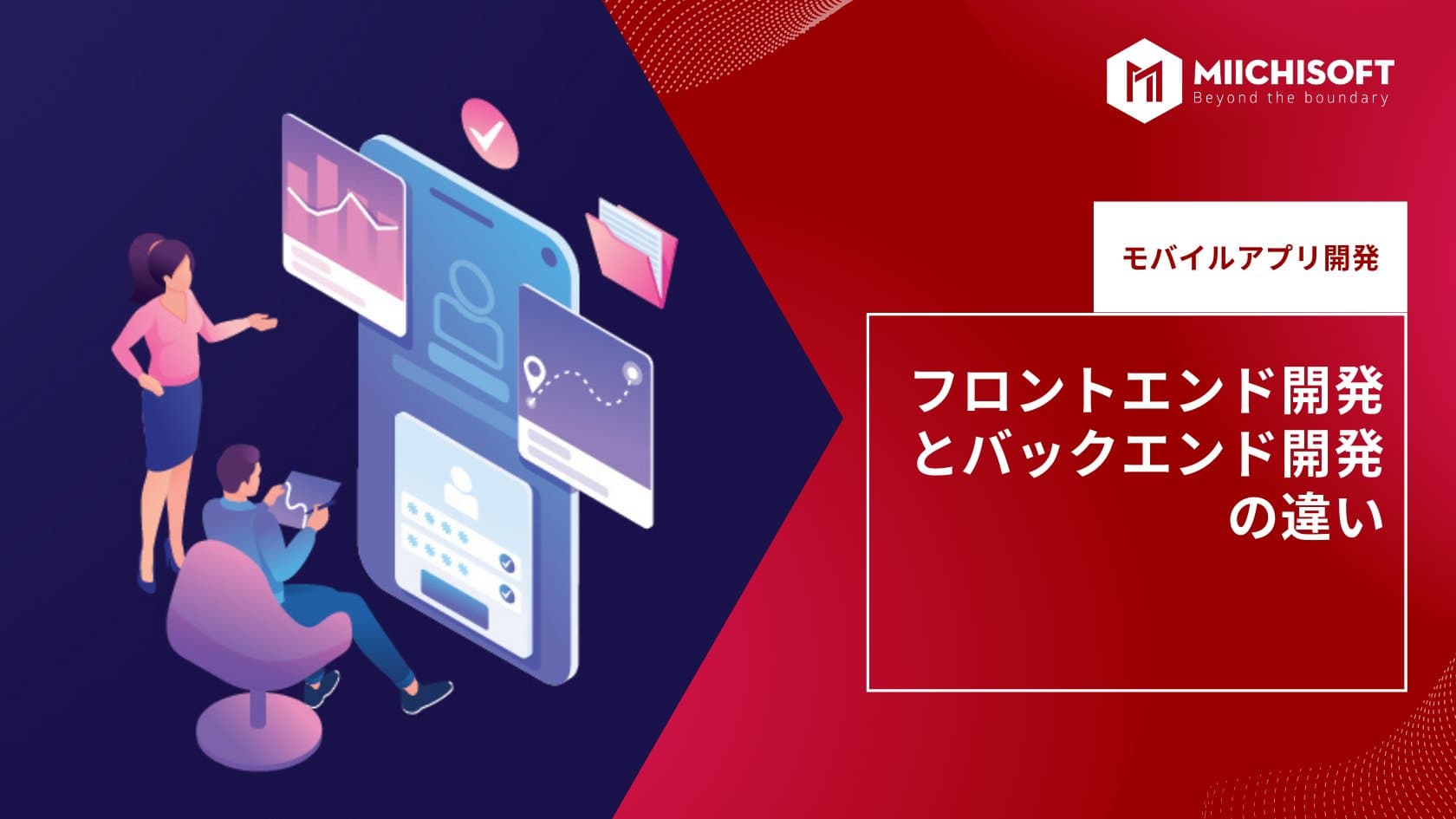
While back-end developers build the infrastructure that supports it, front-end developers work on what users can actually see.
Both are essential components of any high-functioning application or website.
It's not unusual for companies to get tripped up by the difference between "front-end development" and "back-end development" when navigating the development of new software.
After all, with so many tools on the market aimed at helping developers become more "full-stack" oriented, non-technical people tend to assume there isn't much difference between front-end and back-end specialists.
Front-end developers and back-end developers work together to build the systems an application or website needs to function properly. However, their concerns are essentially opposite.
The term "front-end development" refers to the user interface, while "back-end development" refers to the servers, applications, and databases that work behind the scenes to deliver information to users.
Users enter requests through the interface.
The request is then validated and communicated to the server, which retrieves the necessary data from the database and sends it back to the user.
Let's take a closer look at the differences between front-end and back-end development.
What is front-end development?

Front-end development is built by combining technologies such as Hypertext Markup Language (HTML), JavaScript, and Cascading Style Sheets (CSS).
Front-end developers design and build the user experience elements of a web page or app, such as buttons, menus, pages, links, and graphics.
HTML
Hypertext Markup Language is the core of a website, providing its overall design and functionality.
The latest version was released in late 2017 and is known as HTML5.2.
The updated version adds tools for web application developers, as well as adjustments to improve interoperability.
CSS
Cascading Style Sheets give developers the flexibility and precision to create attractive, interactive website designs.
JavaScript
This event-driven language helps create dynamic elements on static HTML web pages.
It allows developers to access elements separate from the main HTML page or respond to server-side events.
Front-end frameworks such as Angular, Ember, Backbone, and React are also popular.
These frameworks have earned their place as standard development tools because they let developers keep up with the growing demand for enterprise software without sacrificing quality.
One of the main challenges of front-end development (also called "client-side development") is that the tools, techniques, and technologies used to create the user experience of an application or website are changing rapidly.
The seemingly simple goal of creating a clear, intuitive user interface is difficult because mobile devices and computer screens vary widely in resolution and size.
Factoring in the Internet of Things (IoT) makes things even more complex.
With more screen sizes and network connection types than ever, developers need to balance all these concerns when building a user interface.
What is back-end development?

Also called server-side development, back-end development consists of the servers that deliver data on request, the applications that transfer data, and the databases that organize information.
For example, when a customer browses shoes on a website, they're interacting with the front end.
When they select the item they want, add it to the cart, and confirm the purchase, that information is stored in a database on the server.
A few days later, when the customer checks the shipping status, the server retrieves the relevant information, updates it with tracking data, and displays it through the front end.
Back-end development tools
Back-end developers' main concern is building applications that can retrieve data and deliver it to the front end.
Many of them use reliable, enterprise-grade databases such as Oracle, Teradata, Microsoft SQL Server, IBM DB2, EnterpriseDB, and SAP Sybase ASE.
There are also many other popular databases, including MySQL, NoSQL, and PostgreSQL.
There is a wide range of frameworks and languages used to code applications, including Ruby on Rails, Java, C++/C/C#, Python, and PHP.
Over the past few years, Backend as a Service (BaaS) providers have matured into a viable alternative.
This is especially useful when developing a mobile app and working on a tight schedule.
Differences between front-end and back-end development
Front-end developers work on what users can see, while back-end developers build the infrastructure that supports it.
Both are essential components of any high-functioning application or website.
It's not unusual for companies to get tripped up by the difference between "front-end development" and "back-end development" when navigating the development of new software.
After all, with so many tools on the market aimed at helping developers become more "full-stack" oriented, non-technical people tend to assume there isn't much difference between front-end and back-end specialists.
Front-end developers and back-end developers work together to build the systems an application or website needs to function properly.
The term "front-end development" refers to the user interface, while "back-end development" refers to the servers, applications, and databases that work behind the scenes to deliver information to users.
Users enter requests through the interface.
It's then validated and communicated to the server, which retrieves the necessary data from the database and sends it back to the user.
How do front-end and back-end development work together?
Front-end and back-end development are quite different from each other, yet both are key players in the same game. Without a proper back-end architecture, the front end won't function properly. And without the front end, the back end wouldn't function at all.
To keep the user experience optimal, front-end and back-end development constantly communicate with each other. The front end sends client requests to the back end, and the back end retrieves the needed information via APIs and sends it back.
For example, say you want to pay for an online order by clicking one of the payment options on the checkout page.
If you click the PayPal option, that click triggers the front end to send a request to the back end to connect to PayPal. The back end connects to PayPal's external service via an API and sends PayPal's login screen back to the front end, where the user can enter their credentials.
This constant back-and-forth ensures the application behaves as intended. Front-end and back-end development play different roles and use different languages, but both work toward the same goal: solving the user's needs.
Summary
By now, the difference between front-end and back-end development should be clearer, along with the activities carried out by developers on either end of the wire. In practice, front-end means the browser, while back-end means the server, or these days, the cloud.
Anyone who loves user interfaces, cares about sound design, and enjoys the visual side of building an app will likely be most drawn to front-end development. It's exciting not just visually but from a programming standpoint too — you'll spend endless hours writing the logic that makes a site look and behave exactly as its designer intended.
If you'd rather spend your time solving business problems, writing algorithms, working in the cloud, and building services and APIs, back-end development is the better fit.
If you enjoy both, and feel equally excited and comfortable with every aspect of mobile app development, a career as a full-stack developer is what you're looking for.
Whichever path you choose, there's never been a better time to become a software developer.
Related Articles
[Case Study Dify] AI ERP Query Bot Using Natural Language - Retrieve data in seconds
Dify Chatbot Pricing: Complete Guide to Deployment & Operating Costs
[2025] 12 PWA App Case Studies, Explained in Detail
What Comes After Proof of Concept (PoC)? [2025 Edition]

Top 10 IT Outsourcing Companies in Vietnam Experienced in Working with Japanese Enterprises