Home › Blog › Development Solutions
What Is a Crypto Wallet? Types, Development Process, and Key Features Explained
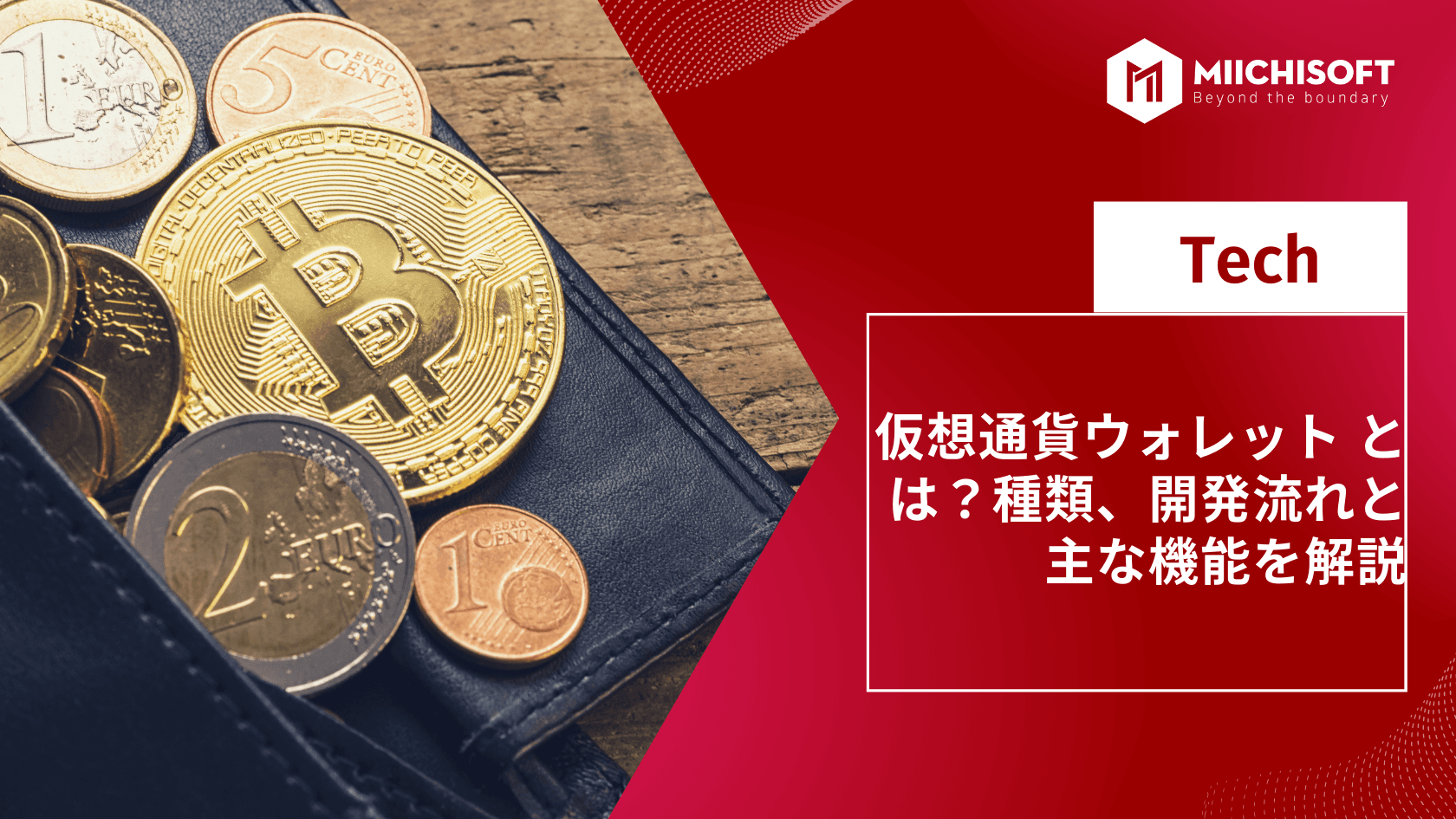
Few people doubt that cryptocurrency has become a deep and permanent fixture of the global financial landscape. As a result, a whole category of complementary products has emerged to help expand this ecosystem and make it easier to use. Having a currency means you need somewhere to store it — and that's how crypto wallets came to be, letting users carry out cryptocurrency transactions quickly and securely.
That said, technology that's too complicated to use will never gain enough popularity to spread widely. That's why the decision to build apps for crypto asset wallets has proven highly successful and practical.
In this article, we'll cover what a crypto wallet is, how to build one, and what to keep in mind when developing such an application.
1. What Is a Crypto Wallet?
A crypto wallet is an app that transfers digital transactions or cryptocurrency between participants on a given blockchain network, and triggers blockchain smart contracts.
Its storage function is similar to a physical wallet, except it applies to cryptocurrency. It's software that securely stores cryptocurrency and tracks transaction records (buying, selling, deposits). A wallet also functions as an identifier and blockchain account.
Crypto wallets are extremely convenient because they can be installed on a smartphone. You can keep one on your laptop, in any browser, or even in your pocket.
Wallets eliminate transaction intermediaries, letting customers act instantly. With a crypto asset wallet, transaction fees are significantly reduced, or even eliminated entirely. As a result, user satisfaction and engagement increase.
Reference: What Is Web 3.0? The Next-Generation Network Built on Blockchain
2. How Does a Crypto Asset Wallet Work?
A crypto asset wallet carries out transactions using a combination of a public key and a private key. The public key is essentially your wallet address (roughly analogous to a bank account), and you can share this address with a financial institution or another counterparty without worry. Continuing the banking analogy, the private key works like your debit card's PIN — the password for your public key.
For a wallet to receive money from a sender, you need to give the recipient your public key (crypto wallet address). Cryptocurrency isn't stored directly in the digital wallet — it remains on the blockchain.
Because cryptocurrency has no physical representation, a crypto wallet doesn't contain money but rather encrypted information. So even if you're holding a crypto wallet in your hand, the money itself isn't actually there. What is it, then? We'll go into more detail below.

3. Types of Crypto Wallets
Just like ordinary e-wallets, crypto asset wallets come in variations, customized to the holder's needs.
A cold wallet is a hardware wallet. This variant suits crypto holders who consider it a long-lived, active asset and don't intend to use it in the near future.
Essentially, a cold wallet is like a flash drive — or, in the case of a paper wallet (sometimes considered a separate type), your public and private key information printed on a sheet of paper. That may sound a little strange.
Still, since it's impossible to "hack" a physical wallet, crypto holders feel more confident with this type of storage (though in this case, it isn't protected against "good old-fashioned" theft or accidental loss — so appropriate precautions are needed from the start).
A hot wallet is a software-based wallet. This variant is best suited to active crypto traders who transact almost daily or several times a day. Because of that, this type of crypto wallet is less protected. Hot wallets fall into subtypes depending on where they're stored.
- Desktop wallets
- Mobile wallets
- Web/online wallets
Each of these subtypes has its own advantages. For example:
- Desktop wallets are stored on a computer or laptop. This type is very secure (aside from viruses), though it has some drawbacks (you can't drag your laptop everywhere). Examples include Bitcoin Core, Bitcoin Knots, MultiBit, Armory, and Electrum.
- Mobile wallets are anonymous, encrypted, cheap, and decentralized. Examples include Bitcoin Wallet and Hive Android. This type of crypto wallet is also the most user-friendly, so it's downloaded frequently — in fact, 62% of all blockchain storage is for mobile blockchain wallets.
- Web wallets make crypto access easy from any browser, mobile device, and so on. They run in the cloud. Because private keys are stored online, they're very convenient — but since a third party controls them indirectly, they can be vulnerable to hacker attacks.
4. Growth in Crypto Wallet Development
Cryptocurrency has already proven its resilience. Many financial analysts once thought it was just a passing modern trend, but that didn't happen. Instead, Bitcoin emerged in 2009 and has done extremely well since. And it now has roughly 18,000 competitors, ranging from serious to not-so-serious.
According to Statista, the number of crypto wallets has grown steadily since 2011. At the end of 2016 there were about 11 million, but from January 2021 to January 2022 alone, that number rose from 66 million to 81 million.

In total, there are over 80 wallets worldwide. The Ledger Nano S (a hardware platform) wallet, for example, supports 472 digital currencies. Currently, the most popular crypto wallets are as follows.

Some support hundreds of cryptocurrencies, others just a few dozen. So whether it makes sense to get into crypto asset wallet development comes down to that alone.
Looking at the number of cryptocurrencies and wallets, it's clear the market is far from saturated. What's more, an increasing number of companies are deciding to obtain crypto wallets for personal use and integrate them with payments and other business solutions.
In the first half of 2021, Coinbase's total revenue was $4 billion. That figure covers everything from cryptocurrency trading to wallets. A Visa crypto card is also available.
5. How Can You Create a Crypto Wallet?
Most cryptocurrencies, like Bitcoin and Ethereum, offer their own crypto wallets, apart from integrations aimed at traders who want to invest in multiple cryptocurrencies. Of course, these crypto wallets can be integrated easily and used for simple tasks. Even so, it's entirely possible to develop a crypto wallet app to implement more complex business logic and features.
You can hire Miichisoft to build a crypto wallet, develop a cryptocurrency wallet application, or build an entire digital ecosystem that goes beyond crypto assets — including integrated stock purchase features and other functions specific to neobanks.

6. Crypto Wallet Development Process
Developing a crypto wallet isn't really a uniquely special task. Every product needs precise planning and needs to be broken down into stages.
6.1. Business Planning and Technical Analysis
Building a custom wallet requires a clear goal, from which further features should be derived. Before starting work, you need to understand what process management method your team will use and what team structure will handle development within a clearly defined timeframe.
6.2. Consider Your Budget
The budget takes shape based on your needs, the team you've outlined, and the timeline. It should also be properly divided into stages.
You'll also need an extra financial safety cushion you can tap into if necessary, since various ideas can come up at any stage and lead to unexpected costs. That's why an MVP is built first, with additional features "layered" on top of it afterward.
6.3. UI & UX
A great idea needs an equally great visual design. A crypto wallet packed with useful features will never become popular if its interface is too complicated for a broad audience to accept, risking becoming a niche product limited to experts.
That doesn't rule out the possibility that your target audience is exactly that kind of expert user — but they, too, want a usable product.
Reference: Promising DeFi Services and the Development Process Explained
6.4. Development
Once you understand the wallet's business and technical characteristics, you build the wallet application's architecture and agree on it with the client. This step defines communication between the wallet's front end and back end, how the wallet is created, how data is stored and retrieved, and how transactions are executed. The architecture serves as the template for every subsequent stage of development, with the back end providing the link between the front end and the smart contracts.
6.5. Testing
Some clients prefer to skimp on this unavoidable step. At this stage, though, the team eliminates every bug and glitch found in the application.
6.6. Deployment
This is the stage where the crypto wallet goes out into the world. Initial downloads and the natural user experience reveal how well the product was built, and what can be fixed as quickly as possible.
6.7. Support
A crypto wallet is a technology that requires ongoing support and updates, both for security and for improving existing features.
Reference: What Is DeFi? Understanding Decentralized Finance at Its Core

7. 2023 Guide to Crypto Wallet App Development
Having covered the stages involved in building a crypto wallet itself, let's now introduce the essential feature set typical of such applications, with an emphasis on usability and security.
Even the most promising mobile wallet development idea can fail without an understanding of blockchain and cloud technology, without using APIs and standard open-source cryptocurrency libraries, and without ultimately matching the tech stack correctly to the specific case.
7.1. Key Features of a Crypto Asset Wallet App
- Authorization: an essential part of most applications, especially financial ones, and also a matter of trust.
- Session duration: important for financial apps for security reasons.
- QR code scanner: automatically scanning wallet addresses and public keys improves the speed, convenience, simplicity, and security of in-app transactions.
- Multi-currency support: if your app isn't targeting one specific cryptocurrency, it's a good idea to add the option to handle multiple currencies, including fiat. This significantly expands your target user base.
- Consistency: another advantage of the app is being able to import a mobile wallet into a more secure paper wallet using the same QR code.
- Push notifications: messages that notify users of transaction status, exchange rate movements, conversion rate changes, and so on.
- Commissions: a crypto wallet app must always be able to calculate variable commissions.
- Blockchain: every completed transaction is forwarded to and stored on the blockchain network.
Reference: What Is an NFT? A Thorough Explanation of Non-Fungible Token Examples, Characteristics, and Future Potential
7.2. Revisiting Security in Crypto Wallet App Development
Blockchain is widely believed to be far more secure than any other Web 2.0 technology, thanks to its "distributed" nature. That said, blockchain itself doesn't guarantee a wallet is crack-proof, so there are several security aspects developers need to worry about.
- Two-factor authentication, or better yet, multi-factor authentication using a unique PIN code or biometric data as the second factor.
- Wallet backups that need to be stored in several different locations.
- Suppose a company uses a crypto wallet profile for business purposes with multiple authorized users. In that case, each user can only dispose of the cryptocurrency after every other user has granted permission.
- Security updates are the single most important element of ongoing cooperation between the client and the development team. Since hacking techniques never stand still, you can't develop one fixed set of security services and stop there.

8. In Closing
Like any other financial product, a crypto wallet is a complex piece of technology that requires the maximum involvement of experienced professionals, from developers and testers to business analysts and marketers.
Most failed crypto products rarely get a second chance, at least not under the same brand. Find a capable crypto asset wallet development team that understands user-centered design and blockchain technology equally well.
At Miichisoft, you'll find talented people who understand exactly that. Let us help you build the application your company needs.
We look forward to hearing from you.
Thank you.
Source: The App Solutions (A Guide to Crypto Wallet Development)
Related Articles
[Case Study Dify] AI ERP Query Bot Using Natural Language - Retrieve data in seconds
Dify Chatbot Pricing: Complete Guide to Deployment & Operating Costs

[2025] 12 PWA App Case Studies, Explained in Detail
What Comes After Proof of Concept (PoC)? [2025 Edition]

Top 10 IT Outsourcing Companies in Vietnam Experienced in Working with Japanese Enterprises