Home › Blog › AI & Generative AI
What Is a Data Lakehouse? Achieving Your AI Goals with the Data Lakehouse Approach
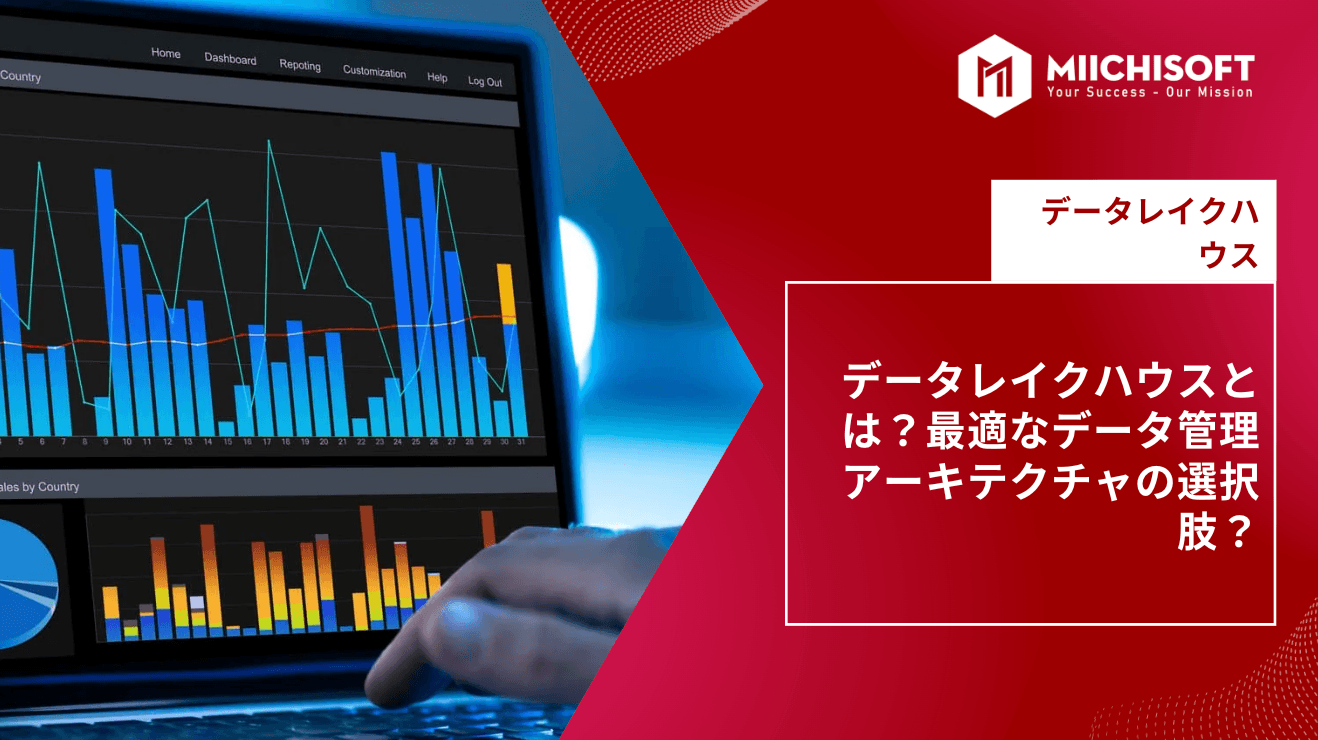
Even though AI-driven data analytics is now widely used, much of the data organizations hold still goes untapped. Effective AI adoption requires an open Data Lakehouse architecture. The concept emerged as global organizations sought a storage solution to properly manage the challenges of big data — data volume, latency, availability, and access requirements. Data lakehouse systems arrived as a new hybrid architecture capturing the best of both data warehouses and data lakes while eliminating the weaknesses of each. If you want to learn how to effectively adopt AI solutions and the latest tech trends, don't miss this article, which explains what a data lakehouse is and how pairing it with AI delivers valuable insight.

1. What Is a Data Lakehouse
1.1. About the Data Lakehouse
A data lakehouse is a modern data architecture that combines the key benefits of a data lake (a large repository of raw data in its original format) and a data warehouse (a set of organized, structured data) into a single platform. By leveraging a data lakehouse, organizations can store large volumes of raw data using low-cost storage while also gaining structure and data-management capabilities.

Traditionally, data warehouses and data lakes had to be implemented as separate, siloed architectures to avoid overloading underlying systems or creating contention for the same resources. Companies stored structured data for BI and reporting in a data warehouse, while using a data lake for unstructured and semi-structured data for ML workloads. But processing data from both together meant regularly moving it between two separate systems — adding complexity and cost, and creating issues around freshness, duplication, and consistency. A data lakehouse aims to eliminate these silos, giving data the flexibility, scalability, and agility it needs to generate business value efficiently.
There are several existing examples of data lakehouses, such as the Databricks Lakehouse Platform and Amazon Redshift Spectrum. However, as technology keeps evolving and data lakehouse adoption grows, implementations have moved on from simply bolting lakehouse components onto a specific data lake.
1.2. Data Lakehouse and Achieving AI Goals
Effective AI adoption requires an open data lakehouse architecture, because the data lakehouse model combines the performance of a data warehouse with the flexibility of a data lake to handle today's complex data environments and scale AI effectively.
An open data lakehouse architecture supports AI by combining new and existing data. The data lakehouse approach provides a shared metadata layer and supports open data formats, allowing organizations to run analytics and AI projects reliably.
To prepare for the scale of data and AI impact, adopting an open data lakehouse approach is essential. An open data lakehouse architecture provides scalability for AI workloads across all data sources.
2. Data Lakehouse vs. Data Lake vs. Data Warehouse
The term "data lakehouse" refers to a concept that unifies two existing data repositories: the data warehouse and the data lake. So what exactly are the differences between a data lakehouse, a data lake, and a data warehouse?

2.1. Data Warehouse
A data warehouse gives business users who need reports and insights for decision-making fast data access and SQL compatibility. All data passes through an ETL (extract, transform, load) phase that optimizes it into a specific format or schema for the use case, supporting high-performance queries and consistency. However, this limits flexible data access and adds cost when data must later be moved.
2.2. Data Lake
A data lake stores large volumes of unstructured and structured data in its native format. Unlike a data warehouse, data is processed, cleaned, and transformed during analysis — faster to load and ideal for big data, ML, and predictive analytics. However, it requires data science expertise, limiting who can use it, and quality can degrade over time without proper upkeep. Since the data is unprocessed, real-time queries are harder too, so it must be cleaned, processed, ingested, and integrated before use.
2.3. What Is a Data Lakehouse
A data lakehouse unifies these two approaches into a single structure that lets data be accessed and used for a wide range of purposes, from BI to data science to machine learning. In short, a data lakehouse gathers all of an organization's unstructured, structured, and semi-structured data and stores it in low-cost storage, giving every user the ability to organize and explore data as needed.
By unifying these benefits within a single data architecture, data teams no longer need to span two different data systems to run and scale advanced analytics like machine learning, effectively speeding up data processing.
3. Data Lakehouse Components and Features
3.1. Components of the Data Lakehouse Architecture
The data lakehouse architecture is built from the following layers.
3.1.1. Storage Layer
The storage layer is the data lake layer that stores raw data, typically a low-cost object store for unstructured, structured, and semi-structured datasets. It's independent of compute resources, which allows compute to scale independently.
3.1.2. Staging Layer
The staging layer is a metadata layer that sits on top of the data lake layer. It provides a detailed catalog of every data object in storage and makes it possible to apply data-management capabilities such as schema enforcement, ACID properties, indexing, caching, and access control.
3.1.3. Semantic Layer
The lakehouse layer, which serves as the semantic layer, exposes all data and makes it available for use. Users can access this data through client apps and analytics tools, using it for experimentation and for business intelligence presentations.
3.2. Data Lakehouse Features
To understand how a data lakehouse functions, it's important to first consider what it's trying to achieve. A data lakehouse aims to let every user within an organization become a data user, to centrally manage heterogeneous data sources, and to simplify engineering work.

A data lakehouse uses the same low-cost cloud object storage as a data lake, making it easy to provision and scale storage on demand. Like a data lake, it captures and stores large volumes of all kinds of raw data. A lakehouse then adds a metadata layer on top, providing data-warehouse-like capabilities: structured schemas, ACID transaction support, data governance, and other management and optimization features.
The main features of a data lakehouse include the following.
- A single low-cost data store that supports every data type (structured, unstructured, semi-structured)
- Data-management capabilities that enforce schemas, strengthen data governance, and provide ETL processes and data cleansing
- Transaction support for ACID (atomicity, consistency, isolation, durability) properties, ensuring data consistency when multiple users read and write data at the same time.
- A standardized storage format usable by many software programs
- End-to-end streaming that supports real-time data ingestion and insight generation
- Separation of compute and storage resources to ensure scalability across different workloads
4. Benefits of a Data Lakehouse
4.1. Simplified Architecture
By eliminating the silos between two separate platforms, a data lakehouse lets management and maintenance focus on a single data repository. Tools can connect directly to source data, so there's no need to extract or prepare data in a separate data warehouse.
4.2. Improved Data Quality
In a data lakehouse architecture, enforcing schemas for structured data and data integrity helps ensure consistency. In addition, a lakehouse shortens the time before new data becomes available, keeping data fresher.
4.3. Cost Reduction
Storing large volumes of data in low-cost storage removes the need to maintain both a data warehouse and a data lake. A data lakehouse also helps cut costs through streamlined ETL processes and deduplication.
4.4. Improved Reliability
A data lakehouse reduces ETL data transfers between multiple systems, lowering the chances of quality or technical issues arising from moving data around.
4.5 Improved Data Governance
Because a data lakehouse consolidates data and resources into one place, it becomes easier to implement, test, and deliver governance and security controls.
4.6. Reduced Data Duplication
As more copies of data exist across systems, consistency suffers and reliability tends to drop. A data lakehouse creates a single data source shared across the business, preventing inconsistencies and extra storage costs from duplication.
4.7. Diverse Workloads
Multiple tools can connect directly to the lakehouse, supporting analytics, SQL, machine learning, and data science workloads from the same repository.
4.8. High Scalability
Using a data lakehouse's low-cost cloud object storage separates compute from storage almost without limit, providing instant scalability. Compute power and storage can be scaled independently to match business needs.
5. Challenges of Using a Data Lakehouse
The data lakehouse is still a relatively new architecture, and one of the biggest challenges is that it's still evolving, with best practices still being defined by early adopters. Building one from scratch is also complex, so most organizations either choose a ready-to-use solution or acquire the components needed for an open lakehouse architecture from platforms such as Google Cloud.
6. FAQ
Q1: What is a Data Lakehouse?
A data lakehouse closes the gap between a data lake and a data warehouse. It's an architecture for effectively storing, consolidating, and managing large volumes of heterogeneous data. It can handle structured and unstructured data in one centralized place, bringing a real innovation to enterprise data management.
Q2: How does the data lakehouse approach support AI goals?
The data lakehouse approach makes it easier to access massive datasets, improving the training and development of AI models. This makes it possible to build more accurate, sophisticated artificial intelligence, helping achieve business goals.
Q3: What makes a data lakehouse superior to other data-management approaches?
A data lakehouse closes the gap between a data lake and a data warehouse. Data can move easily into a data warehouse through the data lake's low-cost, flexible storage, while still giving easy access to data-warehouse tools that implement schema and governance powered by ML and AI for data cleansing. The result is a repository combining the data lake's affordable, unstructured collection with the data warehouse's robust preparation — a space to gather curated data and, with the right tools, quickly prepare it for business use.
In short, a data lakehouse offers excellent flexibility and scalability, along with the ability to integrate heterogeneous data. This allows it to adapt to changing business needs and enables real-time data analysis.
7. Conclusion
In summary, the data lakehouse skillfully merges the benefits of the traditional data warehouse and data lake, standing at the forefront of modern data management. This innovative architecture gives organizations a unified platform for efficiently storing, managing, and analyzing diverse data types. By solving the data-silo problem and delivering scalability, flexibility, and real-time analytics, the data lakehouse has emerged as a truly transformative solution — key to unlocking data assets' full potential in today's AI-driven digital landscape.
Miichisoft is a technology company with a team of highly qualified developers who have helped numerous Japanese clients tackle their business challenges. We have extensive experience building solutions on Data Warehouse, Data Lake, and Data Lakehouse technologies. If you're facing business data challenges, feel free to use Miichisoft's free consultation.
Related Articles
Dify Implementation Consulting | A Comprehensive Guide and Detailed Cost Breakdown
[Dify Case Study] Dify AI Contract Review Chatbot in 2 Minutes - Standardized to Internal Compliance Requirements

What Causes Dify Implementation Projects to Fail Midway? A Management Guide to Succeeding with Your Dify Implementation Vendor
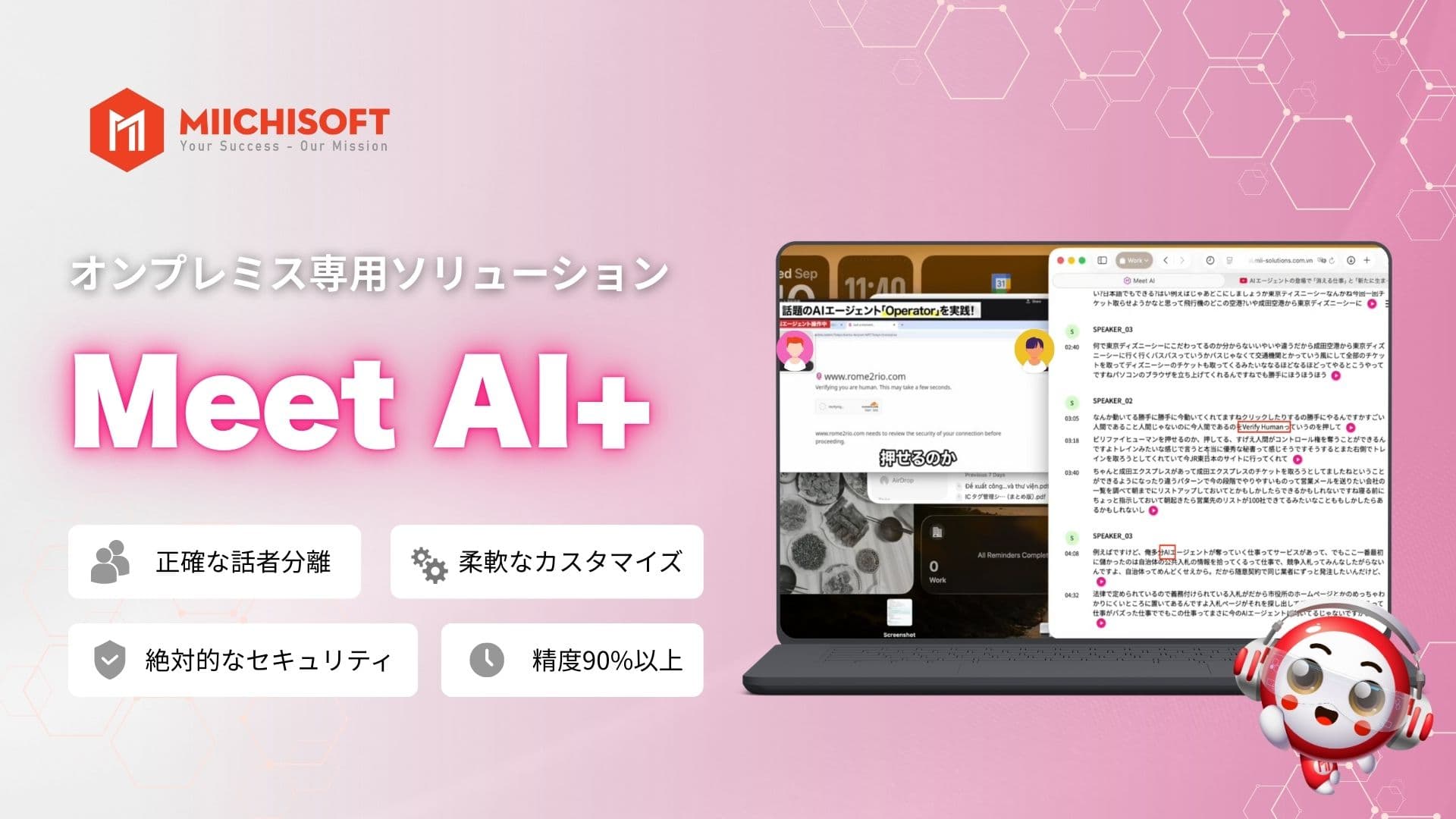
Miichisoft Launched Meet AI+ - AI Meeting Assistant Optimized For On-site Meetings, Reducing Meeting Minutes Creation Time By Up To 90%
6 Criteria for Dify Implementation Vendor Selection you must know! [Free RFP Template]